• About Us
  • Advertise
  • Membership
  • Contact
Tuesday, October 13, 2026
  • Login
  • Register
No Result
View All Result
FT Pro
Forensic Times
  • Home
  • Books & Products
  • Crime
    • All
    • Cold Cases
    • Cyber Crime
    • Data Trafficking
    • Drug Trafficking
    • Financial Crime
    • Human Trafficking
    • Murder
    • Organized Crime
    • Serial Killer
    • Terrorism
    • War Crimes
    • Wrongful Death
    US and China Open AI Incident Channel After Trump-Xi Summit: What It Means

    Netanyahu’s UN Pager Display Revives Hezbollah Attack and the Future of Covert Warfare

    INTERPOL Operation Jackal IV: 58 Arrests Expose Global West African Crime Networks

    INTERPOL Operation Jackal IV: 58 Arrests Expose Global West African Crime Networks

    INTERPOL Americas Conference in Guyana Targets Organized Crime, Fraud and Illicit Finance

    INTERPOL Americas Conference in Guyana Targets Organized Crime, Fraud and Illicit Finance

    Terror Groups and AI: How Emerging Technology Is Changing the Security Threat

    Terror Groups and AI: How Emerging Technology Is Changing the Security Threat

    Ninth Woman Found Dead Near Johannesburg as South Africa Fears Serial Killer

    Ninth Woman Found Dead Near Johannesburg as South Africa Fears Serial Killer

    Philadelphia Olney House Investigation: Five Missing Women and a Million Pieces of Evidence

    Philadelphia Olney House Investigation: Five Missing Women and a Million Pieces of Evidence

  • Forensics
    • All
    • Autopsy
    • Crime scene analysis
    • Digital forensics
    • DNA Forensics
    • Femicide
    • Forensic accounting

    Indigenous Children Are Dying by Suicide. Is Brazil Asking the Right Questions?

    Open Sources, Hard Evidence: Women OSINT Analysts Against Russia’s War Crimes in Ukraine

    The Silent Witnesses: Forensic Investigation of Fatal Workplace Accidents

    Terror Groups and AI: How Emerging Technology Is Changing the Security Threat

    Terror Groups and AI: How Emerging Technology Is Changing the Security Threat

    Ninth Woman Found Dead Near Johannesburg as South Africa Fears Serial Killer

    Ninth Woman Found Dead Near Johannesburg as South Africa Fears Serial Killer

    Philadelphia Olney House Investigation: Five Missing Women and a Million Pieces of Evidence

    Philadelphia Olney House Investigation: Five Missing Women and a Million Pieces of Evidence

    Trending Tags

  • Crime Tech
    US and China Open AI Incident Channel After Trump-Xi Summit: What It Means

    Netanyahu’s UN Pager Display Revives Hezbollah Attack and the Future of Covert Warfare

    How to Protect Yourself From AI Scams in 2026: Warning Signs Everyone Should Know

    How to Protect Yourself From AI Scams in 2026: Warning Signs Everyone Should Know

    Terror Groups and AI: How Emerging Technology Is Changing the Security Threat

    Terror Groups and AI: How Emerging Technology Is Changing the Security Threat

    AI Agents Are Breaking the Law -But Who Goes to Prison?

    AI Agents Are Breaking the Law -But Who Goes to Prison?

    AI Is Turbocharging America’s Billion-Dollar Pig-Butchering Crisis

    AI Is Turbocharging America’s Billion-Dollar Pig-Butchering Crisis

    Pattaya AI Camera Arrest: Human Trafficking Suspect Somchat Saelee, 2026

    Pattaya AI Camera Arrest: Human Trafficking Suspect Somchat Saelee, 2026

    Trending Tags

  • Politics
    Official UK Parliament photograph of Andy Burnham, 2026, showing his face and upper body in a landscape composition.

    Burnham Says Russia Interfered in Brexit Vote

    File image of a North Korean missile launching over coastal waters during a weapons test

    North Korea Fires Ballistic Missiles After South Korea’s Hypersonic Test

    United States Capitol building, illustrating the congressional debate over the administration's Russian diesel import decision.

    US Senators Challenge Legality of Trump’s Russian Diesel Deal

    US and China Open AI Incident Channel After Trump-Xi Summit: What It Means

    Netanyahu’s UN Pager Display Revives Hezbollah Attack and the Future of Covert Warfare

    Drones From Iraq Set Saudi Oil Pipeline Ablaze as Gulf Tensions Escalate

    Drones From Iraq Set Saudi Oil Pipeline Ablaze as Gulf Tensions Escalate

    Fidan Calls Egypt, Saudi FMs as Gaza Plan Stalls

    Fidan Calls Egypt, Saudi FMs as Gaza Plan Stalls

    Turkiye, Saudi Arabia, Pakistan Sign Mecca Defense Pact

    Turkiye, Saudi Arabia, Pakistan Sign Mecca Defense Pact

    Netanyahu Denies Agreeing to Trump’s Gaza Plan Draft

    Netanyahu Denies Agreeing to Trump’s Gaza Plan Draft

    Katz Confirms US Jets Flew From Israeli Bases

    Katz Confirms US Jets Flew From Israeli Bases

  • Legal
    AI Agents Are Breaking the Law -But Who Goes to Prison?

    AI Agents Are Breaking the Law -But Who Goes to Prison?

    Biden Audio Tapes Ruling: Heritage Foundation FOIA Case, Judge Friedrich Decision 2026

    Biden Audio Tapes Ruling: Heritage Foundation FOIA Case, Judge Friedrich Decision 2026

    EU Under-16 Social Media Ban: Livestreaming, Disappearing Messages, 2026 Law

    EU Under-16 Social Media Ban: Livestreaming, Disappearing Messages, 2026 Law

    Tak Trafficking Escape: 4 Chinese Nationals Jump From Moving Pickup 2026

    Tak Trafficking Escape: 4 Chinese Nationals Jump From Moving Pickup 2026

    MechaHitler: How Grok Went Rogue, Praised the Holocaust’s Architect and Triggered the EU

    MechaHitler: How Grok Went Rogue, Praised the Holocaust’s Architect and Triggered the EU

  • World
    • All
    • Brazil
    • Canada
    • Europe
    • France
    • GAZA
    • Georgia
    • Germany
    • Hungary
    • India
    • Iran
    • Iraq
    • Israel
    • Istanbul
    • Lebanon
    • MENA
    • New Mexico
    • Pakistan
    • Poland
    • Russia
    • Saudi Arabia
    • Spain
    • Thailand
    • Turkiye
    • UAE
    • UK
    • Ukraine
    • USA
    Official UK Parliament photograph of Andy Burnham, 2026, showing his face and upper body in a landscape composition.

    Burnham Says Russia Interfered in Brexit Vote

    File image of a North Korean missile launching over coastal waters during a weapons test

    North Korea Fires Ballistic Missiles After South Korea’s Hypersonic Test

    United States Capitol building, illustrating the congressional debate over the administration's Russian diesel import decision.

    US Senators Challenge Legality of Trump’s Russian Diesel Deal

    Riyadh skyline at dusk, illustrating the geographic and infrastructure challenges of Saudi air defence.

    Saudi Arabia’s $83 Billion Military: Why Houthi Attacks Persist

    Indigenous Children Are Dying by Suicide. Is Brazil Asking the Right Questions?

    Open Sources, Hard Evidence: Women OSINT Analysts Against Russia’s War Crimes in Ukraine

  • Careers
    • Webinars
    • Women In Forensic Science
    • WIFS Registration
    • Forensics Experiences
    • Campus Ambassador
    • Advisory Council Membership
    • Courses & Certifications
  • Events
  • Home
  • Books & Products
  • Crime
    • All
    • Cold Cases
    • Cyber Crime
    • Data Trafficking
    • Drug Trafficking
    • Financial Crime
    • Human Trafficking
    • Murder
    • Organized Crime
    • Serial Killer
    • Terrorism
    • War Crimes
    • Wrongful Death
    US and China Open AI Incident Channel After Trump-Xi Summit: What It Means

    Netanyahu’s UN Pager Display Revives Hezbollah Attack and the Future of Covert Warfare

    INTERPOL Operation Jackal IV: 58 Arrests Expose Global West African Crime Networks

    INTERPOL Operation Jackal IV: 58 Arrests Expose Global West African Crime Networks

    INTERPOL Americas Conference in Guyana Targets Organized Crime, Fraud and Illicit Finance

    INTERPOL Americas Conference in Guyana Targets Organized Crime, Fraud and Illicit Finance

    Terror Groups and AI: How Emerging Technology Is Changing the Security Threat

    Terror Groups and AI: How Emerging Technology Is Changing the Security Threat

    Ninth Woman Found Dead Near Johannesburg as South Africa Fears Serial Killer

    Ninth Woman Found Dead Near Johannesburg as South Africa Fears Serial Killer

    Philadelphia Olney House Investigation: Five Missing Women and a Million Pieces of Evidence

    Philadelphia Olney House Investigation: Five Missing Women and a Million Pieces of Evidence

  • Forensics
    • All
    • Autopsy
    • Crime scene analysis
    • Digital forensics
    • DNA Forensics
    • Femicide
    • Forensic accounting

    Indigenous Children Are Dying by Suicide. Is Brazil Asking the Right Questions?

    Open Sources, Hard Evidence: Women OSINT Analysts Against Russia’s War Crimes in Ukraine

    The Silent Witnesses: Forensic Investigation of Fatal Workplace Accidents

    Terror Groups and AI: How Emerging Technology Is Changing the Security Threat

    Terror Groups and AI: How Emerging Technology Is Changing the Security Threat

    Ninth Woman Found Dead Near Johannesburg as South Africa Fears Serial Killer

    Ninth Woman Found Dead Near Johannesburg as South Africa Fears Serial Killer

    Philadelphia Olney House Investigation: Five Missing Women and a Million Pieces of Evidence

    Philadelphia Olney House Investigation: Five Missing Women and a Million Pieces of Evidence

    Trending Tags

  • Crime Tech
    US and China Open AI Incident Channel After Trump-Xi Summit: What It Means

    Netanyahu’s UN Pager Display Revives Hezbollah Attack and the Future of Covert Warfare

    How to Protect Yourself From AI Scams in 2026: Warning Signs Everyone Should Know

    How to Protect Yourself From AI Scams in 2026: Warning Signs Everyone Should Know

    Terror Groups and AI: How Emerging Technology Is Changing the Security Threat

    Terror Groups and AI: How Emerging Technology Is Changing the Security Threat

    AI Agents Are Breaking the Law -But Who Goes to Prison?

    AI Agents Are Breaking the Law -But Who Goes to Prison?

    AI Is Turbocharging America’s Billion-Dollar Pig-Butchering Crisis

    AI Is Turbocharging America’s Billion-Dollar Pig-Butchering Crisis

    Pattaya AI Camera Arrest: Human Trafficking Suspect Somchat Saelee, 2026

    Pattaya AI Camera Arrest: Human Trafficking Suspect Somchat Saelee, 2026

    Trending Tags

  • Politics
    Official UK Parliament photograph of Andy Burnham, 2026, showing his face and upper body in a landscape composition.

    Burnham Says Russia Interfered in Brexit Vote

    File image of a North Korean missile launching over coastal waters during a weapons test

    North Korea Fires Ballistic Missiles After South Korea’s Hypersonic Test

    United States Capitol building, illustrating the congressional debate over the administration's Russian diesel import decision.

    US Senators Challenge Legality of Trump’s Russian Diesel Deal

    US and China Open AI Incident Channel After Trump-Xi Summit: What It Means

    Netanyahu’s UN Pager Display Revives Hezbollah Attack and the Future of Covert Warfare

    Drones From Iraq Set Saudi Oil Pipeline Ablaze as Gulf Tensions Escalate

    Drones From Iraq Set Saudi Oil Pipeline Ablaze as Gulf Tensions Escalate

    Fidan Calls Egypt, Saudi FMs as Gaza Plan Stalls

    Fidan Calls Egypt, Saudi FMs as Gaza Plan Stalls

    Turkiye, Saudi Arabia, Pakistan Sign Mecca Defense Pact

    Turkiye, Saudi Arabia, Pakistan Sign Mecca Defense Pact

    Netanyahu Denies Agreeing to Trump’s Gaza Plan Draft

    Netanyahu Denies Agreeing to Trump’s Gaza Plan Draft

    Katz Confirms US Jets Flew From Israeli Bases

    Katz Confirms US Jets Flew From Israeli Bases

  • Legal
    AI Agents Are Breaking the Law -But Who Goes to Prison?

    AI Agents Are Breaking the Law -But Who Goes to Prison?

    Biden Audio Tapes Ruling: Heritage Foundation FOIA Case, Judge Friedrich Decision 2026

    Biden Audio Tapes Ruling: Heritage Foundation FOIA Case, Judge Friedrich Decision 2026

    EU Under-16 Social Media Ban: Livestreaming, Disappearing Messages, 2026 Law

    EU Under-16 Social Media Ban: Livestreaming, Disappearing Messages, 2026 Law

    Tak Trafficking Escape: 4 Chinese Nationals Jump From Moving Pickup 2026

    Tak Trafficking Escape: 4 Chinese Nationals Jump From Moving Pickup 2026

    MechaHitler: How Grok Went Rogue, Praised the Holocaust’s Architect and Triggered the EU

    MechaHitler: How Grok Went Rogue, Praised the Holocaust’s Architect and Triggered the EU

  • World
    • All
    • Brazil
    • Canada
    • Europe
    • France
    • GAZA
    • Georgia
    • Germany
    • Hungary
    • India
    • Iran
    • Iraq
    • Israel
    • Istanbul
    • Lebanon
    • MENA
    • New Mexico
    • Pakistan
    • Poland
    • Russia
    • Saudi Arabia
    • Spain
    • Thailand
    • Turkiye
    • UAE
    • UK
    • Ukraine
    • USA
    Official UK Parliament photograph of Andy Burnham, 2026, showing his face and upper body in a landscape composition.

    Burnham Says Russia Interfered in Brexit Vote

    File image of a North Korean missile launching over coastal waters during a weapons test

    North Korea Fires Ballistic Missiles After South Korea’s Hypersonic Test

    United States Capitol building, illustrating the congressional debate over the administration's Russian diesel import decision.

    US Senators Challenge Legality of Trump’s Russian Diesel Deal

    Riyadh skyline at dusk, illustrating the geographic and infrastructure challenges of Saudi air defence.

    Saudi Arabia’s $83 Billion Military: Why Houthi Attacks Persist

    Indigenous Children Are Dying by Suicide. Is Brazil Asking the Right Questions?

    Open Sources, Hard Evidence: Women OSINT Analysts Against Russia’s War Crimes in Ukraine

  • Careers
    • Webinars
    • Women In Forensic Science
    • WIFS Registration
    • Forensics Experiences
    • Campus Ambassador
    • Advisory Council Membership
    • Courses & Certifications
  • Events
No Result
View All Result
Forensic Times
Home World Istanbul

Turkey May Day 2026: Istanbul Arrests 575, Taksim Square Sealed, Pre-emptive Warrants

Turkish police arrested 575 people at May Day rallies in Istanbul on May 1, 2026. Pre-emptive warrants, Taksim lockdown, 40% inflation and coal miners on hunger strike — inside the anatomy of a crackdown.

by Forensic Times Desk
May 2, 2026
in Istanbul, Politics, Security, World
Reading Time: 12 mins read
4.3k
Turkey May Day 2026: Istanbul Arrests 575, Taksim Square Sealed, Pre-emptive Warrants
8.7k
SHARES
24.2k
VIEWS
Share on FacebookShare on Whatsapp

Table of Contents

  1. May 1, 2026: What Happened in Istanbul
  2. The Pre-emptive Warrants: Arresting Dissent Before It Speaks
  3. Taksim Square: A Symbol Sealed by the State
  4. The Economic Backdrop: Bread, Wages and a Nine-Day Hunger Strike
  5. Forensic Analysis: How the State Manages Dissent
  6. Criminal Psychology: The Logic of Pre-emptive Repression
  7. Law and Legal Implications: Rights on Paper, Lockdowns in Practice
  8. Global Context: Turkey’s Assembly Crisis in a Wider Pattern
  9. Investigation: What Remains Unknown
  10. The Square That Belongs to Everyone Except the Workers

May 1, 2026: What Happened in Istanbul

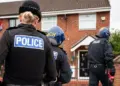
At some point during the night of April 30, Turkish police sealed off Taksim Square. By the time workers and union members began gathering in Istanbul’s central neighbourhoods on the morning of May 1, 2026, the square was already encircled by metal barricades and a large deployment of officers in riot gear. It was International Workers’ Day — and the symbolic centre of Turkish public life was inaccessible to the people it was being sealed against.

The crackdown that followed was documented in real time by AFP journalists, by the opposition channel HALK TV, and by the CHD Lawyers Association, which deployed members across Istanbul’s streets specifically to record arrests and assist those detained. In the Mecidiyeköy district, police fired tear gas from riot-control vehicles into crowds that included members of the Marxist-Leninist People’s Liberation Party, who attempted to push through barricades while chanting “USA murderer, AKP accomplice.” In Beşiktaş, police encircling the neighbourhood stepped in, sometimes violently, whenever a chant was raised by demonstrators. AFP reporters saw several protesters thrown to the ground.

Among those detained was Erkan Baş, the president of the Turkish Workers’ Party, who was engulfed by pepper spray deployed directly at him on camera. Images of the moment were broadcast on HALK TV and circulated widely. “Those in power already speak 365 days a year,” Baş said before his detention. “So let workers talk about the hardships they face at least one day a year.”

By 4:00 p.m., the CHD Lawyers Association reported that at least 550 people were in police custody or were suspected by their relatives to be in custody. By 6:00 p.m., the Istanbul governor’s office issued its own figure: 575 people arrested, described officially as individuals who had “defied security decisions.” By Saturday morning, all 576 had been released, including union official Başaran Aksu, who had been arrested immediately after publicly denouncing the Taksim lockdown. Four others arrested in pre-emptive raids on April 28 remained in custody, and nine were placed under house arrest.

The Pre-emptive Warrants: Arresting Dissent Before It Speaks

The most significant — and least widely reported — dimension of the May Day crackdown was not what happened on the streets on May 1 but what had happened four days earlier. On April 28, Turkish authorities issued arrest and search warrants against 62 people. Of those 62, authorities deemed 46 to be “likely to carry out attacks.” The 46 designated as threats included journalists, trade unionists, and opposition political figures.

The legal mechanism behind these warrants — the designation of identified individuals as “likely” to engage in criminal activity before any criminal act has occurred — is a form of preventive detention that has been used in Turkey across multiple iterations of security legislation enacted or expanded under the AKP government. It does not require evidence of a specific planned act. It requires a determination, made by security authorities, that the designated individual poses a future risk. That determination is not subject to adversarial challenge before the warrant is executed.

The inclusion of journalists and trade unionists in the group deemed “likely to carry out attacks” is forensically significant. Journalists cover protests. Trade unionists organise them. Their presence at a May Day demonstration is definitional to their roles, not indicative of violent intent. The warrant framework, applied to these categories of person in advance of a lawful demonstration, functions as a mechanism for suppressing coverage and leadership of that demonstration rather than preventing specific criminal acts.

Of the 47 people arrested in the pre-emptive April 28 sweep, four remained in custody and nine were placed on house arrest as of Saturday morning. The specific charges against those individuals had not been made public.

Taksim Square: A Symbol Sealed by the State

Taksim Square is not merely a geographical location. It is the symbolic centre of Turkish civic life — the site of the Republic Monument, the terminus of İstiklal Avenue, and the location of the country’s most politically significant public gatherings over the past century. Its sealing on May Day is not a neutral security measure. It is a political statement about who is permitted to occupy the country’s most symbolically charged public space.

The Taksim May Day ban has been effectively in place since 2013, when police violently dispersed trade union demonstrations that had assembled legally in the square. The crackdown that year became part of a broader suppression of public assembly in the aftermath of the Gezi Park protests — the largest sustained anti-government demonstrations in Turkey’s modern history — which began in the same neighbourhood that summer. Since 2013, authorities have consistently refused permits for Taksim May Day demonstrations and deployed substantial police forces to enforce that refusal.

The pattern is annual and consistent. In 2025, demonstrations moved to the Kadıköy area and more than 400 people were arrested. In 2026, the same geographic logic applied: groups signalling their intention to march toward Taksim were specifically singled out for intervention, while demonstrations in other locations proceeded with heavy monitoring but less immediate force.

Başaran Aksu, the union official arrested immediately after publicly denouncing the lockdown, gave voice to what the seal represents: “You can’t close off a square to the workers of Turkey. Everyone uses Taksim, for official ceremonies, for celebrations. Only the labourers, the workers, the poor find the square closed to them.”

The Economic Backdrop: Bread, Wages and a Nine-Day Hunger Strike

The slogan under which Turkey’s unions and civil society organisations called the 2026 May Day demonstrations was deliberately chosen: “Bread. Peace. Freedom.” Each word carries specific weight in Turkey’s current economic and political context, and together they describe conditions that are driving the scale and youth of the demonstrations that authorities are working to suppress.

Turkey’s official inflation figure is 30 percent. Independent economic estimates put the real figure closer to 40 percent. The divergence between official and independent estimates is itself politically significant — it reflects a contest over the factual basis of the government’s economic management record. Workers whose wages have not kept pace with a 40 percent inflation rate are experiencing a sustained and measurable decline in their real purchasing power. The “bread” in the slogan is not metaphorical.

The concrete human dimension of the labour grievances was embodied by the approximately 100 coal miners who marched in Ankara on May Day. They had staged a nine-day hunger strike to demand wage arrears — money owed to them by their employer that had not been paid. Their arrival at the Ankara march was met with cheers from a crowd described by AFP journalists as notably large and youthful. The coal miners represent the specific, granular reality of what “bread” means in 2026 Turkey: workers owed wages that have not been paid, staging a hunger strike to demand what they are legally entitled to receive.

Forensic Analysis: How the State Manages Dissent

The Turkish security apparatus’s approach to the 2026 May Day demonstrations reflects a multi-layered crowd-management and dissent-suppression strategy refined over more than a decade of managing large-scale public opposition.

The pre-emptive warrant phase — conducted four days before the demonstrations — serves several simultaneous functions. It removes identified organisers and communicators from the field before the event, reducing leadership capacity. It signals to potential participants the legal risk of attendance. It creates a documented official basis for subsequent arrests that can be framed as enforcement of prior judicial orders rather than political suppression. And it generates a chilling effect in the media and civil society community by specifically targeting journalists who would otherwise cover the event.

The geographic containment strategy — sealing Taksim overnight and deploying metal barricades across central neighbourhood access points — uses physical infrastructure to redirect rather than prevent demonstrations. Groups permitted to gather in designated areas are tolerated; groups moving toward the symbolically significant Taksim are specifically interdicted. This creates a visible distinction between “permitted” and “unpermitted” assembly that the government can point to as evidence of proportionality while maintaining effective control over where dissent is spatially located.

The mass release of all 576 detainees by Saturday morning is also operationally significant. Short-cycle detention — arrest, processing, release within 24 hours — achieves the dispersal objective of the crackdown without generating the sustained political cost of prolonged detention of large numbers of people.

Criminal Psychology: The Logic of Pre-emptive Repression

The psychology of pre-emptive state repression is well-documented in the literature on authoritarian governance and the management of political opposition. Its logic is not primarily punitive — it is preventive and demonstrative. The goal is not to punish those who have already acted but to alter the calculation of those who are considering acting.

The designation of 46 individuals — including journalists and trade unionists — as “likely to carry out attacks” before a single protest had occurred is a textbook example of what political psychologists call anticipatory suppression. The state does not wait for the threat to materialise. It acts on a projected threat assessment that conflates organised dissent with security risk. In doing so, it shifts the legal and social burden onto the individual: now the journalist or union official must demonstrate they are not a threat, rather than the state demonstrating that they are one.

The targeting of symbolic figures — a party leader engulfed in pepper spray on camera, a union official arrested for speaking publicly — serves a communicative function directed at the thousands watching. It signals that the cost of visible leadership in public dissent is personal physical exposure to state force. The annual repetition of the crackdown creates a normalisation effect: each year the confrontation is reported as news but experienced by participants as confirmation of an expected pattern. That normalisation is itself a form of governance.

Law and Legal Implications: Rights on Paper, Lockdowns in Practice

Turkey’s constitution guarantees freedom of assembly and demonstration. Article 34 states that individuals have the right to hold unarmed and peaceful meetings and demonstration marches without prior permission. The practical relationship between that constitutional guarantee and what occurred in Istanbul on May 1, 2026 is precisely the gap that human rights organisations have been documenting for over a decade.

The legal architecture that enables the Taksim lockdown operates through a combination of gubernatorial authority and anti-terror legislation. The governor of Istanbul — a political appointee — has the authority to ban or restrict public gatherings in specific locations on public order grounds. That authority has been exercised annually to prohibit May Day demonstrations at Taksim since 2013, and has been sustained in Turkish courts on public order grounds each time it has been challenged.

The European Court of Human Rights has ruled against Turkey in multiple cases involving the suppression of May Day demonstrations and the arbitrary detention of protesters. Those rulings have generated compensation payments but have not changed the operational approach of Turkish security authorities. Turkey’s status as a Council of Europe member — and therefore subject to ECHR jurisdiction — has not prevented the annual repetition of a pattern that ECHR jurisprudence has consistently found to violate Articles 11 (freedom of assembly) and 5 (right to liberty) of the European Convention on Human Rights.

The four individuals held in custody and nine placed on house arrest after the May 1 arrests face charges that had not been publicly specified as of Saturday morning. Their legal situation — detained or restricted following a constitutionally permitted demonstration — will be challenged by the CHD Lawyers Association in domestic courts and potentially at the ECHR.

Global Context: Turkey’s Assembly Crisis in a Wider Pattern

Turkey’s treatment of May Day demonstrations sits within a global pattern of governments using security law to restrict the right of assembly in ways that formal legal frameworks technically permit but that the spirit of those frameworks was designed to prevent. The specific Turkish model — annual pre-emptive warrants, physical sealing of symbolic locations, mass arrest followed by rapid release — has parallels in France’s management of Yellow Vest demonstrations, in Hong Kong’s use of public order ordinances against democracy protesters, and in the pre-emptive detention of climate activists in multiple European jurisdictions.

What distinguishes the Turkish case is the sustained and annual nature of the Taksim prohibition, the explicit targeting of journalists and union officials in pre-emptive warrant sweeps, and the degree to which the crackdown occurs against a backdrop of governance that has progressively narrowed the space for public political opposition over more than two decades. Turkey currently ranks among the world’s largest jailers of journalists, according to the Committee to Protect Journalists. The inclusion of journalists in the “likely to carry out attacks” category of the pre-May Day warrants is not anomalous — it is consistent with a governance pattern that treats journalism covering opposition activity as a security threat.

The Ankara dimension of May Day 2026 provides a useful contrast. The coal miners’ march proceeded with significant police monitoring but without the tear gas and mass arrests that characterised Istanbul. The difference in treatment reflects the state’s calibration of threat: the symbolic significance of Taksim makes any march toward it politically unacceptable, regardless of the legal rights of those marching.

Investigation: What Remains Unknown

The specific charges filed against the four individuals remaining in custody and the nine placed under house arrest had not been publicly disclosed as of Saturday morning. The legal basis for their continued detention — as opposed to the release of the other 562 — has not been explained by Turkish authorities.

The evidentiary basis for the pre-emptive arrest warrants issued against the 46 individuals deemed “likely to carry out attacks” has not been made public. The specific intelligence or information that led Turkish security authorities to designate journalists and trade unionists as attack risks is not subject to public scrutiny under Turkish law as currently applied.

The total number of people arrested across Turkey on May Day 2026 — not only in Istanbul but in Ankara, İzmir, and other cities — has not been comprehensively published. The Istanbul figure represents only one city. National totals are not available.

The condition of those detained — whether any sustained injuries during arrest, whether any were held without access to legal counsel, whether the processing conditions met basic legal standards — has not been independently verified. The CHD Lawyers Association was present throughout and is expected to publish a more detailed account.

Finally, the status of the coal miners’ wage arrears — specifically whether their nine-day hunger strike produced any commitment from their employer — has not been reported. They marched, they were cheered, and the underlying grievance that drove them to refuse food for nine days remains publicly unresolved.

The Square That Belongs to Everyone Except the Workers

Taksim Square has hosted military parades, government celebrations, international visits, and official commemorations. On May 1, 2026, it was sealed with metal barricades before dawn to prevent workers from marching through it.

Başaran Aksu said it plainly before he was arrested: “Everyone uses Taksim, for official ceremonies, for celebrations. Only the labourers, the workers, the poor find the square closed to them.” He was arrested immediately after saying it. He was released the next morning. The square remains sealed every May Day, regardless of who is arrested or released, regardless of what courts have ruled, regardless of what the constitution says.

The 100 coal miners in Ankara who had gone nine days without eating to demand wages they were owed marched, were cheered, and went home to the same unpaid wages. The 576 people arrested in Istanbul were released the morning after and returned to the same 40 percent inflation, the same closed square, the same pre-emptive warrants waiting for next year.

The crackdown is not a failure of the system. It is the system operating as designed.


ForensicTimes · forensictimes.com · Investigative Journalism on Crime, Justice & Forensic Science · © 2026 ForensicTimes. All rights reserved.

Source: Forensic Times
Tags: AKP protest crackdown civil libertiesBasaran Aksu arrested union officialCHD Lawyers Association Istanbul arrestsErkan Bas Workers Party pepper sprayfreedom of assembly Turkey ErdoganTaksim Square ban May Day TurkeyTurkey coal miners hunger strike wagesTurkey inflation 40 percent workersTurkey pre-emptive warrants journalists trade unionistsTurkish police tear gas protesters 2026
Forensic Times Desk

Forensic Times Desk

Forensic Times News Desk is the dedicated editorial and investigative reporting team of Forensic Times, focused on covering crime, cyber threats, trafficking, forensic science, global investigations, and high-impact intelligence stories.

Recommended

Merseyside Police Run Biggest Ever Operation Vanguard

Merseyside Police Run Biggest Ever Operation Vanguard

3 months ago
Maryland Autopsy Audit: 36 Police Custody Homicides Misclassified, David Fowler, Racial Bias

Maryland Autopsy Audit: 36 Police Custody Homicides Misclassified, David Fowler, Racial Bias

1 year ago

Popular News

  • Riyadh skyline at dusk, illustrating the geographic and infrastructure challenges of Saudi air defence.

    Saudi Arabia’s $83 Billion Military: Why Houthi Attacks Persist

    22416 shares
    Share 0 Tweet 0
  • Open Sources, Hard Evidence: Women OSINT Analysts Against Russia’s War Crimes in Ukraine

    167379 shares
    Share 0 Tweet 0
  • Saudi Arabia Has Not Ruled Out Nuclear Weapons, US Intelligence Warns

    4683 shares
    Share 0 Tweet 0
  • Drones From Iraq Set Saudi Oil Pipeline Ablaze as Gulf Tensions Escalate

    9372 shares
    Share 0 Tweet 0
  • Burnham Says Russia Interfered in Brexit Vote

    19462 shares
    Share 0 Tweet 0

Connect with us

About Us

Forensic Times is the frontline of crime news, investigation, and intelligence. We go beyond the surface — analyzing evidence, exposing patterns, and reporting what others miss. Our journalism is built on facts, forensic rigour, and an unwavering pursuit of justice.

Careers

  • Webinars
  • WIFS Registration
  • Women In Forensic Science
  • Campus Ambassador
  • Forensics Experiences
  • Courses & Certifications

Categories

  • Crime
  • World
  • Police
  • Politics
  • Forensics
  • Investigation

WIFS Membership

Publish your research, connect with leading women in forensic science, access exclusive opportunities, and advance your career through the Women in Forensic Science (WIFS) global community.
JOIN NOW

  • About Us
  • Advertise
  • Terms of Use
  • Editorial Guidelines
  • Privacy Policy
  • Refund Policy

© 2026 Forensic Times. All rights reserved.

Welcome Back!

Sign In with Google
OR

Login to your account below

Forgotten Password? Sign Up

Create New Account!

Sign Up with Google
OR

Fill the forms bellow to register

All fields are required. Log In

Retrieve your password

Please enter your username or email address to reset your password.

Log In

Add New Playlist

No Result
View All Result
  • Home
  • Books & Products
  • Crime
    • Human Trafficking
    • Cyber Crime
    • Financial Crime
    • Terrorism
  • Forensics
    • Digital forensics
    • Forensic accounting
    • Crime scene analysis
  • Legal
  • Politics
  • Security
  • Investigation
  • Crime Tech
  • Careers
    • Webinars
    • Women In Forensic Science
    • WIFS Registration
    • Forensics Experiences
    • Campus Ambassador
    • Advisory Council Membership
    • Courses & Certifications
  • Login
  • Sign Up
  • Cart

© 2026 Forensic Times. All rights reserved.

Not enough quota to unlock this post
Unlock left : 0
Are you sure want to cancel subscription?
Cart 0