






















• About Us
  • Advertise
  • Membership
  • Contact
Thursday, October 1, 2026
  • Login
  • Register
No Result
View All Result
FT Pro
Forensic Times
  • Home
  • Crime
    • All
    • Cold Cases
    • Cyber Crime
    • Data Trafficking
    • Drug Trafficking
    • Financial Crime
    • Human Trafficking
    • Murder
    • Organized Crime
    • Serial Killer
    • Terrorism
    • War Crimes
    • Wrongful Death
    US and China Open AI Incident Channel After Trump-Xi Summit: What It Means

    Netanyahu’s UN Pager Display Revives Hezbollah Attack and the Future of Covert Warfare

    INTERPOL Operation Jackal IV: 58 Arrests Expose Global West African Crime Networks

    INTERPOL Operation Jackal IV: 58 Arrests Expose Global West African Crime Networks

    INTERPOL Americas Conference in Guyana Targets Organized Crime, Fraud and Illicit Finance

    INTERPOL Americas Conference in Guyana Targets Organized Crime, Fraud and Illicit Finance

    Terror Groups and AI: How Emerging Technology Is Changing the Security Threat

    Terror Groups and AI: How Emerging Technology Is Changing the Security Threat

    Ninth Woman Found Dead Near Johannesburg as South Africa Fears Serial Killer

    Ninth Woman Found Dead Near Johannesburg as South Africa Fears Serial Killer

    Philadelphia Olney House Investigation: Five Missing Women and a Million Pieces of Evidence

    Philadelphia Olney House Investigation: Five Missing Women and a Million Pieces of Evidence

  • Forensics
    • All
    • Autopsy
    • Crime scene analysis
    • Digital forensics
    • DNA Forensics
    • Femicide
    • Forensic accounting

    The Silent Witnesses: Forensic Investigation of Fatal Workplace Accidents

    Terror Groups and AI: How Emerging Technology Is Changing the Security Threat

    Terror Groups and AI: How Emerging Technology Is Changing the Security Threat

    Ninth Woman Found Dead Near Johannesburg as South Africa Fears Serial Killer

    Ninth Woman Found Dead Near Johannesburg as South Africa Fears Serial Killer

    Philadelphia Olney House Investigation: Five Missing Women and a Million Pieces of Evidence

    Philadelphia Olney House Investigation: Five Missing Women and a Million Pieces of Evidence

    Former Kentucky Bank Manager Admits $335,000 Theft From Customers and Nonprofits

    Former Kentucky Bank Manager Admits $335,000 Theft From Customers and Nonprofits

    35 Years Later: DNA Cracks Charlotte’s Kim Thomas Murder Case

    35 Years Later: DNA Cracks Charlotte’s Kim Thomas Murder Case

    Trending Tags

  • Crime Tech
    US and China Open AI Incident Channel After Trump-Xi Summit: What It Means

    Netanyahu’s UN Pager Display Revives Hezbollah Attack and the Future of Covert Warfare

    How to Protect Yourself From AI Scams in 2026: Warning Signs Everyone Should Know

    How to Protect Yourself From AI Scams in 2026: Warning Signs Everyone Should Know

    Terror Groups and AI: How Emerging Technology Is Changing the Security Threat

    Terror Groups and AI: How Emerging Technology Is Changing the Security Threat

    AI Agents Are Breaking the Law -But Who Goes to Prison?

    AI Agents Are Breaking the Law -But Who Goes to Prison?

    AI Is Turbocharging America’s Billion-Dollar Pig-Butchering Crisis

    AI Is Turbocharging America’s Billion-Dollar Pig-Butchering Crisis

    Pattaya AI Camera Arrest: Human Trafficking Suspect Somchat Saelee, 2026

    Pattaya AI Camera Arrest: Human Trafficking Suspect Somchat Saelee, 2026

    Trending Tags

  • Politics
    US and China Open AI Incident Channel After Trump-Xi Summit: What It Means

    Netanyahu’s UN Pager Display Revives Hezbollah Attack and the Future of Covert Warfare

    Drones From Iraq Set Saudi Oil Pipeline Ablaze as Gulf Tensions Escalate

    Drones From Iraq Set Saudi Oil Pipeline Ablaze as Gulf Tensions Escalate

    Fidan Calls Egypt, Saudi FMs as Gaza Plan Stalls

    Fidan Calls Egypt, Saudi FMs as Gaza Plan Stalls

    Turkiye, Saudi Arabia, Pakistan Sign Mecca Defense Pact

    Turkiye, Saudi Arabia, Pakistan Sign Mecca Defense Pact

    Netanyahu Denies Agreeing to Trump’s Gaza Plan Draft

    Netanyahu Denies Agreeing to Trump’s Gaza Plan Draft

    Katz Confirms US Jets Flew From Israeli Bases

    Katz Confirms US Jets Flew From Israeli Bases

    Doval’s Busy Week: BRICS, Riyadh, and a National Award

    Doval’s Busy Week: BRICS, Riyadh, and a National Award

    Iran Warns Ukraine Over Caspian Sea Vessel Strike

    Iran Warns Ukraine Over Caspian Sea Vessel Strike

    Ozel and 90 Lawmakers Split From Turkey’s CHP

    Ozel and 90 Lawmakers Split From Turkey’s CHP

  • Legal
    AI Agents Are Breaking the Law -But Who Goes to Prison?

    AI Agents Are Breaking the Law -But Who Goes to Prison?

    Biden Audio Tapes Ruling: Heritage Foundation FOIA Case, Judge Friedrich Decision 2026

    Biden Audio Tapes Ruling: Heritage Foundation FOIA Case, Judge Friedrich Decision 2026

    EU Under-16 Social Media Ban: Livestreaming, Disappearing Messages, 2026 Law

    EU Under-16 Social Media Ban: Livestreaming, Disappearing Messages, 2026 Law

    Tak Trafficking Escape: 4 Chinese Nationals Jump From Moving Pickup 2026

    Tak Trafficking Escape: 4 Chinese Nationals Jump From Moving Pickup 2026

    MechaHitler: How Grok Went Rogue, Praised the Holocaust’s Architect and Triggered the EU

    MechaHitler: How Grok Went Rogue, Praised the Holocaust’s Architect and Triggered the EU

  • World
    • All
    • Brazil
    • Canada
    • Europe
    • France
    • GAZA
    • Georgia
    • Germany
    • Hungary
    • India
    • Iran
    • Iraq
    • Israel
    • Istanbul
    • Lebanon
    • MENA
    • New Mexico
    • Pakistan
    • Poland
    • Russia
    • Saudi Arabia
    • Spain
    • Thailand
    • Turkiye
    • UAE
    • UK
    • Ukraine
    • USA
    Saudi Arabia Has Not Ruled Out Nuclear Weapons, US Intelligence Warns

    Saudi Arabia Has Not Ruled Out Nuclear Weapons, US Intelligence Warns

    US and China Open AI Incident Channel After Trump-Xi Summit: What It Means

    Netanyahu’s UN Pager Display Revives Hezbollah Attack and the Future of Covert Warfare

    Trump Rejects Iran’s Seven-Day Hormuz Roadmap: What Happens Next?

    Trump Rejects Iran’s Seven-Day Hormuz Roadmap: What Happens Next?

    INTERPOL Americas Conference in Guyana Targets Organized Crime, Fraud and Illicit Finance

    INTERPOL Americas Conference in Guyana Targets Organized Crime, Fraud and Illicit Finance

    How to Protect Yourself From AI Scams in 2026: Warning Signs Everyone Should Know

    How to Protect Yourself From AI Scams in 2026: Warning Signs Everyone Should Know

    Terror Groups and AI: How Emerging Technology Is Changing the Security Threat

    Terror Groups and AI: How Emerging Technology Is Changing the Security Threat

  • Careers
    • Webinars
    • Women In Forensic Science
    • WIFS Registration
    • Forensics Experiences
    • Campus Ambassador
    • Courses & Certifications
  • Events
  • Home
  • Crime
    • All
    • Cold Cases
    • Cyber Crime
    • Data Trafficking
    • Drug Trafficking
    • Financial Crime
    • Human Trafficking
    • Murder
    • Organized Crime
    • Serial Killer
    • Terrorism
    • War Crimes
    • Wrongful Death
    US and China Open AI Incident Channel After Trump-Xi Summit: What It Means

    Netanyahu’s UN Pager Display Revives Hezbollah Attack and the Future of Covert Warfare

    INTERPOL Operation Jackal IV: 58 Arrests Expose Global West African Crime Networks

    INTERPOL Operation Jackal IV: 58 Arrests Expose Global West African Crime Networks

    INTERPOL Americas Conference in Guyana Targets Organized Crime, Fraud and Illicit Finance

    INTERPOL Americas Conference in Guyana Targets Organized Crime, Fraud and Illicit Finance

    Terror Groups and AI: How Emerging Technology Is Changing the Security Threat

    Terror Groups and AI: How Emerging Technology Is Changing the Security Threat

    Ninth Woman Found Dead Near Johannesburg as South Africa Fears Serial Killer

    Ninth Woman Found Dead Near Johannesburg as South Africa Fears Serial Killer

    Philadelphia Olney House Investigation: Five Missing Women and a Million Pieces of Evidence

    Philadelphia Olney House Investigation: Five Missing Women and a Million Pieces of Evidence

  • Forensics
    • All
    • Autopsy
    • Crime scene analysis
    • Digital forensics
    • DNA Forensics
    • Femicide
    • Forensic accounting

    The Silent Witnesses: Forensic Investigation of Fatal Workplace Accidents

    Terror Groups and AI: How Emerging Technology Is Changing the Security Threat

    Terror Groups and AI: How Emerging Technology Is Changing the Security Threat

    Ninth Woman Found Dead Near Johannesburg as South Africa Fears Serial Killer

    Ninth Woman Found Dead Near Johannesburg as South Africa Fears Serial Killer

    Philadelphia Olney House Investigation: Five Missing Women and a Million Pieces of Evidence

    Philadelphia Olney House Investigation: Five Missing Women and a Million Pieces of Evidence

    Former Kentucky Bank Manager Admits $335,000 Theft From Customers and Nonprofits

    Former Kentucky Bank Manager Admits $335,000 Theft From Customers and Nonprofits

    35 Years Later: DNA Cracks Charlotte’s Kim Thomas Murder Case

    35 Years Later: DNA Cracks Charlotte’s Kim Thomas Murder Case

    Trending Tags

  • Crime Tech
    US and China Open AI Incident Channel After Trump-Xi Summit: What It Means

    Netanyahu’s UN Pager Display Revives Hezbollah Attack and the Future of Covert Warfare

    How to Protect Yourself From AI Scams in 2026: Warning Signs Everyone Should Know

    How to Protect Yourself From AI Scams in 2026: Warning Signs Everyone Should Know

    Terror Groups and AI: How Emerging Technology Is Changing the Security Threat

    Terror Groups and AI: How Emerging Technology Is Changing the Security Threat

    AI Agents Are Breaking the Law -But Who Goes to Prison?

    AI Agents Are Breaking the Law -But Who Goes to Prison?

    AI Is Turbocharging America’s Billion-Dollar Pig-Butchering Crisis

    AI Is Turbocharging America’s Billion-Dollar Pig-Butchering Crisis

    Pattaya AI Camera Arrest: Human Trafficking Suspect Somchat Saelee, 2026

    Pattaya AI Camera Arrest: Human Trafficking Suspect Somchat Saelee, 2026

    Trending Tags

  • Politics
    US and China Open AI Incident Channel After Trump-Xi Summit: What It Means

    Netanyahu’s UN Pager Display Revives Hezbollah Attack and the Future of Covert Warfare

    Drones From Iraq Set Saudi Oil Pipeline Ablaze as Gulf Tensions Escalate

    Drones From Iraq Set Saudi Oil Pipeline Ablaze as Gulf Tensions Escalate

    Fidan Calls Egypt, Saudi FMs as Gaza Plan Stalls

    Fidan Calls Egypt, Saudi FMs as Gaza Plan Stalls

    Turkiye, Saudi Arabia, Pakistan Sign Mecca Defense Pact

    Turkiye, Saudi Arabia, Pakistan Sign Mecca Defense Pact

    Netanyahu Denies Agreeing to Trump’s Gaza Plan Draft

    Netanyahu Denies Agreeing to Trump’s Gaza Plan Draft

    Katz Confirms US Jets Flew From Israeli Bases

    Katz Confirms US Jets Flew From Israeli Bases

    Doval’s Busy Week: BRICS, Riyadh, and a National Award

    Doval’s Busy Week: BRICS, Riyadh, and a National Award

    Iran Warns Ukraine Over Caspian Sea Vessel Strike

    Iran Warns Ukraine Over Caspian Sea Vessel Strike

    Ozel and 90 Lawmakers Split From Turkey’s CHP

    Ozel and 90 Lawmakers Split From Turkey’s CHP

  • Legal
    AI Agents Are Breaking the Law -But Who Goes to Prison?

    AI Agents Are Breaking the Law -But Who Goes to Prison?

    Biden Audio Tapes Ruling: Heritage Foundation FOIA Case, Judge Friedrich Decision 2026

    Biden Audio Tapes Ruling: Heritage Foundation FOIA Case, Judge Friedrich Decision 2026

    EU Under-16 Social Media Ban: Livestreaming, Disappearing Messages, 2026 Law

    EU Under-16 Social Media Ban: Livestreaming, Disappearing Messages, 2026 Law

    Tak Trafficking Escape: 4 Chinese Nationals Jump From Moving Pickup 2026

    Tak Trafficking Escape: 4 Chinese Nationals Jump From Moving Pickup 2026

    MechaHitler: How Grok Went Rogue, Praised the Holocaust’s Architect and Triggered the EU

    MechaHitler: How Grok Went Rogue, Praised the Holocaust’s Architect and Triggered the EU

  • World
    • All
    • Brazil
    • Canada
    • Europe
    • France
    • GAZA
    • Georgia
    • Germany
    • Hungary
    • India
    • Iran
    • Iraq
    • Israel
    • Istanbul
    • Lebanon
    • MENA
    • New Mexico
    • Pakistan
    • Poland
    • Russia
    • Saudi Arabia
    • Spain
    • Thailand
    • Turkiye
    • UAE
    • UK
    • Ukraine
    • USA
    Saudi Arabia Has Not Ruled Out Nuclear Weapons, US Intelligence Warns

    Saudi Arabia Has Not Ruled Out Nuclear Weapons, US Intelligence Warns

    US and China Open AI Incident Channel After Trump-Xi Summit: What It Means

    Netanyahu’s UN Pager Display Revives Hezbollah Attack and the Future of Covert Warfare

    Trump Rejects Iran’s Seven-Day Hormuz Roadmap: What Happens Next?

    Trump Rejects Iran’s Seven-Day Hormuz Roadmap: What Happens Next?

    INTERPOL Americas Conference in Guyana Targets Organized Crime, Fraud and Illicit Finance

    INTERPOL Americas Conference in Guyana Targets Organized Crime, Fraud and Illicit Finance

    How to Protect Yourself From AI Scams in 2026: Warning Signs Everyone Should Know

    How to Protect Yourself From AI Scams in 2026: Warning Signs Everyone Should Know

    Terror Groups and AI: How Emerging Technology Is Changing the Security Threat

    Terror Groups and AI: How Emerging Technology Is Changing the Security Threat

  • Careers
    • Webinars
    • Women In Forensic Science
    • WIFS Registration
    • Forensics Experiences
    • Campus Ambassador
    • Courses & Certifications
  • Events
No Result
View All Result
Forensic Times
Home Police

INTERPOL Americas Conference in Guyana Targets Organized Crime, Fraud and Illicit Finance

INTERPOL’s 2026 Americas Regional Conference in Guyana examined transnational organized crime, financial fraud, cryptocurrency, asset recovery and intelligence sharing

by Forensic Times Desk
September 26, 2026
in Police, Europe, Organized Crime, World
Reading Time: 11 mins read
3.3k
INTERPOL Americas Conference in Guyana Targets Organized Crime, Fraud and Illicit Finance
5.6k
SHARES
22k
VIEWS
Share on FacebookShare on Whatsapp

Across the Americas, criminal networks are exploiting borders, financial systems and digital infrastructure faster than many investigations can follow. INTERPOL’s regional conference in Guyana placed that problem at the centre of a two-day effort to strengthen intelligence sharing, disrupt illicit money flows and turn international cooperation into operational results.

Table of Contents

  1. The Regional Crime Problem Comes Into Focus
  2. Why Guyana Became the Meeting Point
  3. The Money Trail Moves to the Centre
  4. Cryptocurrency and the Changing Financial Battlefield
  5. The Intelligence Gap Across Borders
  6. A New Operational Model for Transnational Crime
  7. INTERPOL Tools and the Race to Recover Criminal Assets
  8. What the Americas Can Learn From Joint Operations
  9. What the Conference Actually Delivered
  10. The Test Begins After Georgetown

The Regional Crime Problem Comes Into Focus

Organized crime in the Americas is increasingly defined by movement. Drugs can be sourced in one country, financed through accounts in another, moved across several borders and sold through a network whose members may never meet the people running the operation. Firearms follow established trafficking corridors, people are exploited across jurisdictions, illegal natural-resource operations generate cash that can be laundered elsewhere, and cyber-enabled fraud allows offenders to reach victims without being physically present in the country where the loss occurs.

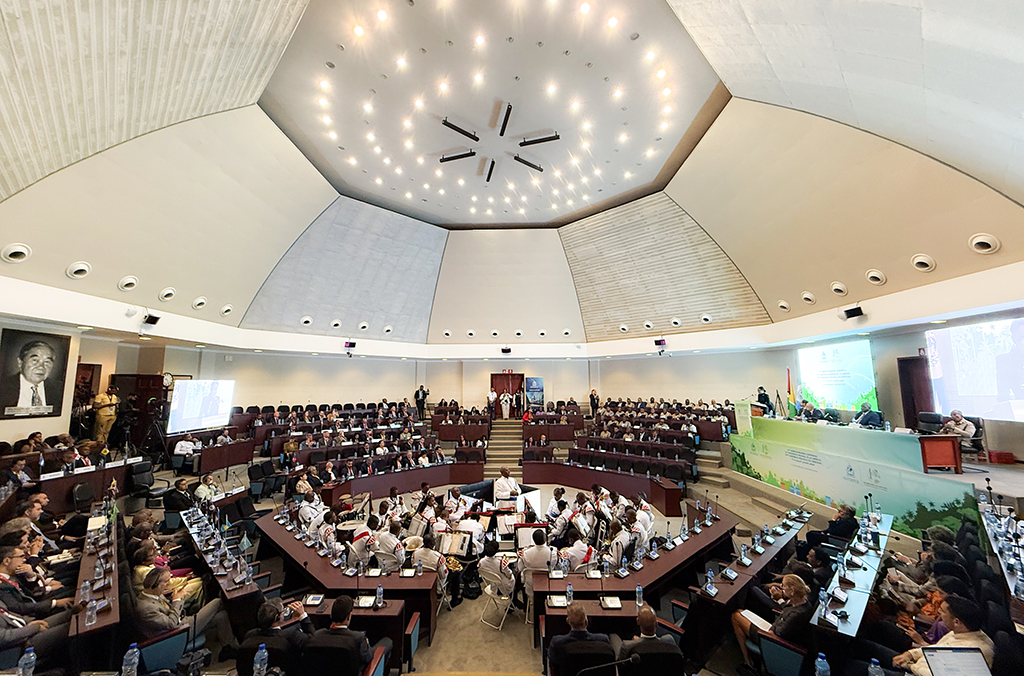
That cross-border reality was the central security problem confronting senior law-enforcement officials who gathered in Georgetown, Guyana, for the 2026 INTERPOL Americas Regional Conference on September 23 and 24. The meeting brought together around 80 senior law-enforcement officials from 27 countries across the region and beyond, alongside observers and representatives from regional and international organizations. INTERPOL said the discussions focused on emerging criminal trends, operational experience and practical ways to improve cooperation against transnational crime.

The significance of the meeting lies less in the speeches than in the investigative problem behind them. A criminal investigation that stops at a national boundary can leave investigators looking at only part of the network. Evidence may be held in another jurisdiction, money may already have moved through several financial institutions, suspects may use different identities in different countries, and digital evidence can be stored or accessed from almost anywhere.

For investigators, speed therefore becomes an evidentiary issue as well as an operational one. By the time a formal request for information travels through multiple institutions, an account may have been emptied, a digital service may have retained data for only a limited period, or a suspect may have crossed another border. Guyana’s Prime Minister Mark Phillips made that point directly at the opening, arguing that once an investigation crosses a national boundary, delay can shift the advantage toward the offender.

Why Guyana Became the Meeting Point

Guyana’s geography gives the conference an unusually relevant setting. The country sits between South America and the Caribbean and connects to the Atlantic through a network of ports and waterways. Its borders and commercial routes place it within a wider regional environment where legitimate trade and travel coexist with the routes that organized criminal groups can exploit.

The challenge is not that geography automatically produces crime. The investigative concern is that the same infrastructure that allows legal commerce to function can be manipulated by criminal networks. A shipment can move through a legitimate port while concealing an illicit commodity. A financial transaction can pass through a legitimate institution while representing the proceeds of fraud. A person can cross a border legally while concealing an identity or an outstanding international investigative interest.

Guyana also entered the conference with recent experience in multinational enforcement operations. INTERPOL’s regional discussions highlighted the importance of coordinated intelligence and operational responses, while Guyanese officials pointed to previous cooperation involving neighbouring jurisdictions. One example cited in opening discussions was Operation Guyana Shield in December 2025, which brought together authorities from Brazil, French Guiana, Guyana and Suriname in an operation targeting illegal gold mining and associated organized-crime activity. More than 24,500 checks were conducted and 198 arrests were reported.

Such operations illustrate why regional intelligence structures matter. Illegal mining, drug trafficking, weapons trafficking and financial crime do not necessarily exist as isolated categories. Criminal proceeds from one activity can finance another, while the same facilitators, transport routes, corrupt intermediaries or financial mechanisms can appear in multiple investigations.

The Money Trail Moves to the Centre

One of the strongest themes emerging from the Georgetown meeting was the movement of financial crime from a secondary investigative concern to a central target. INTERPOL’s second Global Financial Fraud Assessment Report found that fraud-related global alerts across the Americas and Caribbean increased by 40 percent between 2024 and 2025. That increase places financial investigation alongside traditional enforcement priorities rather than treating it as an afterthought.

The reason is straightforward: organized crime ultimately requires money. Drugs have to be purchased and transported. People must be recruited or moved. Weapons have to be obtained. Illegal extraction operations require equipment and logistics. Fraud proceeds have to be collected and transferred. The financial trail can therefore reveal relationships that are not immediately visible in the physical investigation.

Money laundering is particularly difficult when criminal proceeds move through multiple jurisdictions. Investigators may have to reconstruct transactions, identify beneficial owners, establish links between accounts and businesses, determine the origin of funds and distinguish legitimate commercial activity from transactions designed to disguise criminal proceeds.

At the conference, participants discussed cooperation between law-enforcement bodies, financial-intelligence units, asset-recovery offices and judicial authorities. That cooperation matters because financial evidence often sits across institutional boundaries. A police investigator may identify the suspected crime, while a financial intelligence unit sees the transaction pattern and a prosecutor or court ultimately determines what can be used in proceedings.

The conference subsequently concluded with recommendations focused on strengthening cooperation around illicit financial flows and improving information sharing concerning illicit finances and assets. INTERPOL also highlighted tools intended to help countries trace and recover criminal proceeds.

Cryptocurrency and the Changing Financial Battlefield

Cryptocurrency was another major component of the financial-crime discussion. Digital assets do not make money inherently anonymous, but they can introduce new investigative complications. Transactions can move rapidly, wallets can be controlled without conventional bank accounts, assets can pass through multiple services, and investigators may have to work across jurisdictions to identify the people behind transactions.

For law enforcement, the forensic question is not simply whether cryptocurrency was used. Investigators need to establish who controlled an address, how funds moved, where they originated, where they ultimately went and whether the movement can be connected to a criminal offence. That requires technical capability as well as legal authority and international cooperation.

The challenge becomes more complicated when cryptocurrency is combined with traditional laundering techniques. Digital assets can be converted into fiat currency, transferred through businesses or intermediaries, or moved alongside conventional banking activity. The resulting evidence may exist in different systems and jurisdictions, requiring investigators to build a single evidentiary picture from fragmented records.

INTERPOL’s emphasis on tracing, freezing and recovering criminal assets reflects this broader shift. The goal is not merely to identify an offender after a crime has occurred. Financial disruption can potentially reduce the resources available to a criminal network while also creating evidence capable of revealing its structure.

The Intelligence Gap Across Borders

Information sharing was repeatedly presented as one of the practical foundations of regional enforcement. INTERPOL’s I-24/7 secure communications network, Notices and Diffusions are designed to allow authorized law-enforcement personnel to exchange information and coordinate investigations internationally. But technology alone does not close an intelligence gap.

The information has to be accurate, timely and legally usable. A warning that arrives after a suspect has moved through a border is less useful than information received while an investigation can still act on it. Likewise, a record that cannot be properly authenticated or lawfully obtained may have limited value in a prosecution.

This creates a difficult balance. Police agencies need to exchange information quickly, but international information sharing also operates within national laws, safeguards and different legal systems. INTERPOL officials and Guyanese leaders both emphasized that cooperation must preserve public confidence and ensure information is handled responsibly.

Forensic investigators face a parallel challenge with digital evidence. A database hit, facial comparison, financial record or communications record can generate an investigative lead, but a lead is not automatically proof. The chain of custody, reliability of the underlying data, lawful acquisition and corroboration remain critical.

A New Operational Model for Transnational Crime

INTERPOL used the Georgetown meeting to highlight its Operational Task Force Model. The model is intended to support member countries confronting specific regional or transnational threats where stronger coordination and intelligence sharing are required.

The importance of such a model is that organized crime investigations rarely fit neatly inside one police department. A complex network may require customs officials, immigration authorities, financial investigators, cyber specialists, prosecutors and international liaison officers. Each may possess only one portion of the picture.

An operational task force can create a framework for bringing those pieces together. The objective is not simply to produce more intelligence but to close intelligence gaps that prevent agencies from connecting suspects, assets, communications, movements and criminal activity.

INTERPOL said the conference concluded with recommendations that included greater use of its Operational Task Force Model for intelligence-led policing against complex transnational organized crime.

INTERPOL Tools and the Race to Recover Criminal Assets

The conference also placed practical INTERPOL mechanisms in the context of financial investigations. Among them is the Global Rapid Intervention of Payments, or I-GRIP, which can support rapid action to intercept certain fraudulent payments. INTERPOL also highlighted Silver Notices, which can be used to seek information on assets such as properties, vehicles, financial accounts and businesses with a view to locating, identifying and potentially seizing criminal proceeds.

These tools matter because criminal proceeds can disappear faster than conventional investigations move. An account may be emptied within minutes. Assets can be transferred between jurisdictions. Property can be held through companies or intermediaries. Digital assets can be moved across blockchain networks. The investigative window can therefore be extremely narrow.

Asset recovery also creates a different form of pressure on organized crime. Arresting one participant may remove an individual from the network without eliminating its financial capacity. Following the money can expose the people financing the operation, the businesses facilitating it and the assets that sustain it.

That is why the conference’s focus on financial intelligence and asset recovery is significant. It treats organized crime not simply as a collection of offences, but as an economic system that requires money, infrastructure and relationships to survive.

What the Americas Can Learn From Joint Operations

The Americas contain jurisdictions with very different legal systems, resources and investigative capabilities. Large states may have specialized financial and cyber units that smaller jurisdictions cannot maintain at the same scale. Caribbean states may confront transnational networks whose resources exceed those available to individual national agencies.

Regional cooperation can help narrow those differences, but cooperation itself requires trust. Sensitive intelligence cannot simply be exchanged without controls. Agencies need confidence that information will be protected, used for legitimate law-enforcement purposes and handled according to applicable law.

Guyana’s experience with Operation Guyana Shield illustrates both the possibilities and the complexity. The operation involved authorities from multiple jurisdictions and produced significant enforcement activity, but the broader lesson is that regional operations depend on planning, communication and the ability to act on shared information.

The same principle applies to cybercrime and financial fraud. A victim may be in one country, the fraudulent account in another, the infrastructure in a third and the criminal organizers somewhere else. Investigators cannot solve such cases through national databases alone.

What the Conference Actually Delivered

The Georgetown meeting was not simply a discussion forum. At its conclusion on September 25, INTERPOL said participating countries had adopted recommendations aimed at improving operational effectiveness. These included stronger cooperation among law-enforcement, financial-intelligence and asset-recovery bodies; improved information sharing concerning illicit finances and assets; increased use of INTERPOL mechanisms such as I-GRIP and Silver Notices; and engagement with the Operational Task Force Model.

Around 80 law-enforcement officials from 27 countries took part in the two-day meeting. Observers and representatives included the Association of Caribbean Commissioners of Police, CARICOM’s regional coordinating structures, the Caribbean Customs Law Enforcement Council, the Organization of American States and the United Nations Office on Drugs and Crime.

The breadth of participation matters because organized crime is increasingly convergent. Drug trafficking can generate financial crime. Human trafficking can intersect with document fraud and money laundering. Illegal mining can involve corruption, environmental crime and cross-border financial flows. Cyber-enabled fraud can provide revenue that is moved through the same financial infrastructure used by other criminal networks.

That convergence makes isolated enforcement strategies less effective at the investigative level. Agencies may need to connect apparently unrelated cases before the larger criminal structure becomes visible.

The Test Begins After Georgetown

The most important measure of the Guyana conference will not be the number of speeches delivered or officials photographed around a conference table. It will be whether the systems discussed in Georgetown change what investigators can do when the next major cross-border case emerges.

INTERPOL’s own conclusion points toward that operational test. The organization said the conference strengthened a collective response to converging crime threats and emphasized practical cooperation around illicit financial flows, asset tracing and intelligence-led policing.

The pressure is unlikely to decrease. Criminal organizations can move money, people, commodities and digital information across borders with extraordinary speed. Investigators therefore face an asymmetry: offenders can exploit jurisdictional gaps immediately, while legitimate law-enforcement cooperation may require multiple approvals and legal processes.

Closing that gap will require more than technology. It will require trusted relationships between investigators, common procedures, secure information systems, financial expertise and legal mechanisms that allow evidence to move when an investigation crosses a national boundary.

Guyana’s hosting of the 2026 INTERPOL Americas Regional Conference has placed that challenge under a regional spotlight. The meeting has now ended, but the criminal networks discussed there remain active beyond conference rooms and national borders. The real forensic and investigative question is whether the intelligence exchanged between countries arrives early enough, reaches the right investigators and can be transformed into evidence capable of disrupting the network behind the crime.


ForensicTimes · forensictimes.com · Global Investigative Journalism on Crime, Justice, and Forensic Science · This report reflects verified open-source and wire reporting current as of publication. © 2026 ForensicTimes. All Rights Reserved.


Source: INTERPOL
Tags: AmericasAsset RecoveryCryptocurrencyfinancial crimeFraudGuyanaIntelligence SharingINTERPOLmoney launderingOrganized Crime
Forensic Times Desk

Forensic Times Desk

Forensic Times News Desk is the dedicated editorial and investigative reporting team of Forensic Times, focused on covering crime, cyber threats, trafficking, forensic science, global investigations, and high-impact intelligence stories.

Recommended

OSINT in 2026: What Investigators Must Verify Before Trusting Data

OSINT in 2026: What Investigators Must Verify Before Trusting Data

1 month ago
Nolan Wells Autopsy Leaves Cause of Death Unclear

Nolan Wells Autopsy Leaves Cause of Death Unclear

2 months ago

Popular News

  • Saudi Arabia Has Not Ruled Out Nuclear Weapons, US Intelligence Warns

    Saudi Arabia Has Not Ruled Out Nuclear Weapons, US Intelligence Warns

    4683 shares
    Share 0 Tweet 0
  • Netanyahu’s UN Pager Display Revives Hezbollah Attack and the Future of Covert Warfare

    5689 shares
    Share 0 Tweet 0
  • US and China Open AI Incident Channel After Trump-Xi Summit: What It Means

    4173 shares
    Share 0 Tweet 0
  • Trump Rejects Iran’s Seven-Day Hormuz Roadmap: What Happens Next?

    7389 shares
    Share 0 Tweet 0
  • INTERPOL Operation Jackal IV: 58 Arrests Expose Global West African Crime Networks

    6593 shares
    Share 0 Tweet 0

Connect with us

About Us

Forensic Times is the frontline of crime news, investigation, and intelligence. We go beyond the surface — analyzing evidence, exposing patterns, and reporting what others miss. Our journalism is built on facts, forensic rigour, and an unwavering pursuit of justice.

Careers

  • Webinars
  • WIFS Registration
  • Women In Forensic Science
  • Campus Ambassador
  • Forensics Experiences
  • Courses & Certifications

Categories

  • Crime
  • World
  • Police
  • Politics
  • Forensics
  • Investigation

WIFS Membership

Publish your research, connect with leading women in forensic science, access exclusive opportunities, and advance your career through the Women in Forensic Science (WIFS) global community.
JOIN NOW

  • About Us
  • Advertise
  • Terms of Use
  • Editorial Guidelines
  • Privacy Policy
  • Refund Policy

© 2026 Forensic Times. All rights reserved.

Welcome Back!

Sign In with Google
OR

Login to your account below

Forgotten Password? Sign Up

Create New Account!

Sign Up with Google
OR

Fill the forms bellow to register

All fields are required. Log In

Retrieve your password

Please enter your username or email address to reset your password.

Log In

Add New Playlist

No Result
View All Result
  • Home
  • Crime
    • Human Trafficking
    • Cyber Crime
    • Financial Crime
    • Terrorism
  • Forensics
    • Digital forensics
    • Forensic accounting
    • Crime scene analysis
  • Legal
  • Politics
  • Security
  • Investigation
  • Crime Tech
  • Careers
    • Webinars
    • Women In Forensic Science
    • WIFS Registration
    • Forensics Experiences
    • Campus Ambassador
    • Courses & Certifications
  • Login
  • Sign Up
  • Cart

© 2026 Forensic Times. All rights reserved.

Not enough quota to unlock this post
Unlock left : 0
Are you sure want to cancel subscription?