
















A handyman denied knowing the victim for three and a half decades. A DNA lab report changed everything, and cleared a man who had lived under suspicion since 1990.
Table of Contents
- 1. The Call That Came at 9:59 P.M.
- 2. A Crime Scene Frozen in 1990
- 3. The Husband Under the Cloud
- 4. The Handyman Who Kept Denying
- 5. Thirty-Five Years of Waiting for the Lab
- 6. February 2026: The Arrest
- 7. A Confession, With Conditions
- 8. Forensic Analysis and Intelligence
- 9. A Pattern That Predates This Case
- 10. What This Case Still Cannot Settle
1. The Call That Came at 9:59 P.M.
On the night of Friday, July 27, 1990, dispatchers in Charlotte, North Carolina received a call from a man named Edward Friedland. Someone had killed his wife, he told them. Officers, medics and fire crews arrived at a home on Churchill Road in the Cotswold neighborhood and found 32-year-old Kim Thomas dead inside. She was taken to the Mecklenburg County Medical Examiner’s Office, where her death was ruled a homicide.
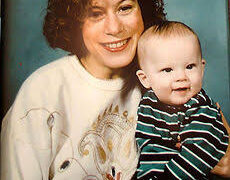
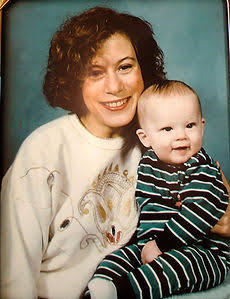
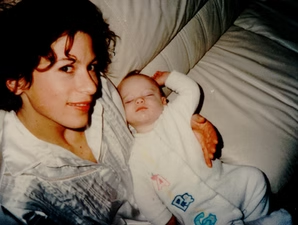
Thomas was a mother and community activist. She had been stabbed, and according to court records her hands were found bound behind her back. What began that night as a single 911 call would take thirty-five years, two named suspects, a civil trial, an $8.5 million judgment and a court-ordered release of sealed lab results before Charlotte-Mecklenburg Police made an arrest.
2. A Crime Scene Frozen in 1990
Homicide detectives who responded that night collected what evidence they could, including biological material later found on a rug near Thomas’s body and on a mattress cover in the home. Court documents also describe an unrelated report from earlier that same morning: at 5:40 a.m., a neighbor on Churchill Road told officers that a man had knocked on his door claiming to be a police officer and demanding to be let in.
In 1990, DNA testing existed but bore little resemblance to the technology available today. Forensic labs at the time could sometimes distinguish broad genetic categories from a sample, but rarely produce the kind of individualized profile that could be compared against a statewide or national database. Evidence could be preserved. It could not yet speak.
3. The Husband Under the Cloud
Investigators’ early suspicion fell on Thomas’s husband, Dr. Edward Friedland. He was arrested and charged, then had the charge dropped and never refiled for lack of evidence. That did not end the scrutiny. According to his attorney, David Rudolf, Friedland spent the next three decades publicly presumed guilty by many in the community despite no conviction ever being obtained.
In 1996, Friedland filed a wrongful death lawsuit alleging that a different man, Marion Gales, was responsible for his wife’s killing and had lied to police about his connection to her. A trial court initially dismissed the suit as filed too late under North Carolina’s two-year statute of limitations, but the North Carolina Court of Appeals reversed that ruling in 1998, allowing the case to proceed on the theory that Gales had fraudulently concealed his involvement. A jury ultimately found Gales liable for Thomas’s death and ordered him to pay $8.5 million in damages, a civil judgment that nonetheless carried no criminal consequence.
4. The Handyman Who Kept Denying
Marion Gales had done odd jobs at the Friedland home in the weeks before Thomas’s death. Detectives interviewed him multiple times over the following decades. Each time, according to court documents, he denied knowing Thomas, denied ever entering her home and denied any involvement in her death.
Gales was not, however, unknown to law enforcement. In 2008 he was arrested in connection with the killing of Lacoya Martin, a pregnant woman whose body was found behind a home on Oaklawn Avenue; his DNA was reportedly recovered from under her fingernails, and he pleaded guilty to manslaughter in 2009. As a teenager, he had also been convicted of shooting a woman during a break-in on the same Charlotte street where Thomas would later be killed. He was released from prison in that manslaughter case in March 2025 after serving roughly twenty years.
5. Thirty-Five Years of Waiting for the Lab
Charlotte-Mecklenburg Police reopened the Thomas case formally in 2010 and, according to CMPD, continued submitting evidence for testing as DNA technology advanced. A Mecklenburg County judge later ordered the department to release completed test results by December 31, 2021, prompted by Friedland’s attorney pressing for transparency.
Those unsealed results showed a 2009 test finding DNA on a mattress-cover stain consistent with both Gales and Friedland, an October 2021 test finding DNA from a comb used to collect pubic hair from Thomas’s body consistent with Gales, and a January 2022 test finding DNA on the rug near the crime scene also consistent with Gales. Kim Thomas’s sister, Lynn Thomas, publicly noted at the time that the match was described as partial rather than a complete profile, a distinction that kept the case short of an arrest for several more years.
6. February 2026: The Arrest
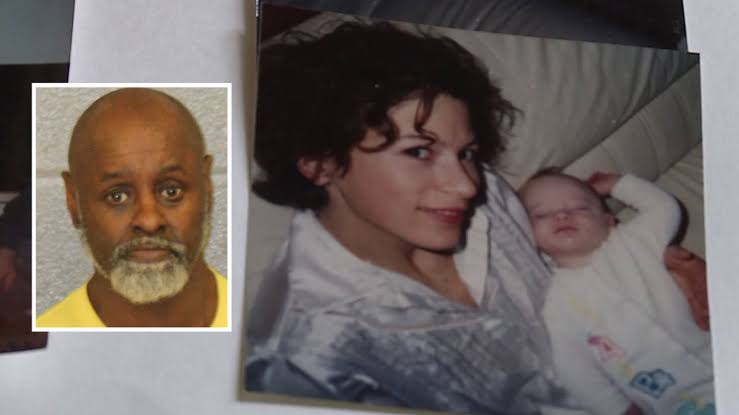
On February 17, 2026, CMPD’s Cold Case Unit received a new DNA lab report from the department’s own crime laboratory, generated by applying newer analytical technology to evidence collected in 1990. According to the department, the report supplied information sufficient to support an arrest. Detectives obtained warrants, and on the morning of February 19, 2026, CMPD’s Violent Criminal Apprehension Team located and arrested Gales, then 63, at a home in Charlotte.
He was charged with first-degree murder and taken to the Law Enforcement Center for questioning before being transferred to the Mecklenburg County Jail. Deputy Chief Ryan Butler told reporters that detectives had “direct, physical criminal evidence linking Mr. Gales to the incident location and to the victim.” A judge denied bond at Gales’s first court appearance, citing the severity of the charge; his public defender’s request, citing his age and medical needs, was rejected.
7. A Confession, With Conditions
Court documents indicate that after his arrest, Gales admitted for the first time to being inside the Friedland home on the day of the killing and to having had sexual contact with Thomas while her husband was at work. He stopped short of admitting to the killing itself, maintaining in a subsequent interview with a local television reporter that he had nothing to do with Thomas’s death and did not know how it happened.
The admission marked a sharp reversal from decades of flat denial, and it directly echoed a pattern from his 2009 manslaughter case, in which he similarly denied any connection to a victim before ultimately admitting to sexual contact without admitting to the killing. Butler noted that CMPD had spent years working the case on the assumption that two people might have been involved, and that investigators now believe only one person was responsible.
8. Forensic Analysis and Intelligence
The Thomas case is a textbook illustration of how forensic DNA analysis has evolved since 1990. Early testing in the case, including a 2009 sample, could only describe a profile as “consistent with” a suspect, a standard that reflects partial or degraded genetic material rather than a full, individualized match. Advances made between the 2021 and 2026 test rounds, described by CMPD as newly available technology applied to existing evidence, allowed detectives to extract more discriminating information from decades-old biological samples than earlier equipment could provide.
This progression mirrors a broader shift in cold-case forensics nationally. Probabilistic genotyping software, now used by crime labs including CMPD’s, applies statistical modeling to interpret complex, degraded or minute DNA samples, such as skin cells left by touch, that older testing methods could not reliably analyze. CMPD credited the Federal SAKI Grant, a Sexual Assault Kit Initiative program that funds testing of previously unprocessed evidence, along with an outside lab, DNA Labs International, for supporting the renewed analysis. Investigators caution that a DNA match, however strong, establishes presence rather than intent; it must still be weighed against witness accounts, a documented timeline and the physical layout of a scene, which is why CMPD said the arrest reflected “the totality of the evidence” rather than the lab report alone.
9. A Pattern That Predates This Case
Charlotte’s cold case unit is not alone in reaching back into DNA evidence that predates modern testing. Law enforcement agencies across the country have increasingly revisited decades-old homicides as forensic genetic genealogy and improved probabilistic software make previously unusable samples analyzable. A newly formed cold case unit in Utah identified a man whose body had gone unnamed for fourteen years using genetic genealogy techniques, while investigators in Minneapolis have used similar methods to pursue leads in a 2003 case tied to a victim’s likely heritage.
What distinguishes the Thomas case is the collateral effect the delay had on an innocent man’s reputation. Friedland was never convicted of any crime connected to his wife’s death, yet lived under public suspicion for thirty-five years before DNA evidence pointed elsewhere. His attorney has argued publicly that the case demonstrates why cold-case DNA testing should be prioritized and expedited, not only for victims’ families but for wrongly suspected survivors.
10. What This Case Still Cannot Settle
Gales has not been convicted, and his case is proceeding through the Mecklenburg County court system. His account of the day, that he was present and had sexual contact with Thomas but was not her killer, remains contested, and prosecutors will have to establish more than DNA presence to secure a first-degree murder conviction at trial.
For Kim Thomas’s family, the arrest closes one chapter without fully resolving the underlying loss. For Friedland, thirty-five years of suspicion cannot be erased by a single lab report, even one his own attorney says exonerates him. The case now moves toward trial in a Mecklenburg County courtroom, where a jury will be asked to do what DNA technology alone could not: reach a verdict.
ForensicTimes · forensictimes.com · Global Investigative Journalism on Crime, Justice, and Forensic Science · This report reflects verified open-source and wire reporting current as of publication. © 2026 ForensicTimes. All Rights Reserved.