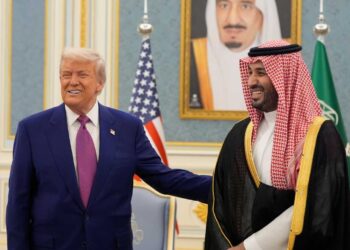











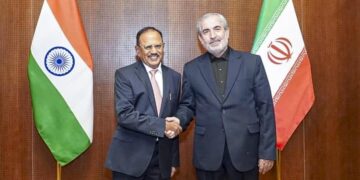
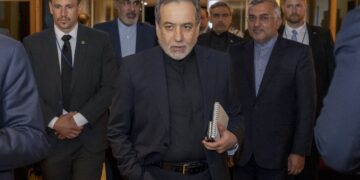




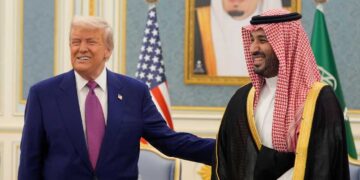
Iran has put forward a seven-day roadmap linking a reopening of the Strait of Hormuz to a pause in regional fighting and the resumption of negotiations with Washington. President Donald Trump has rejected the proposal, according to reports citing US officials and subsequent public remarks, leaving the world’s most important energy chokepoint at the centre of a widening diplomatic and military standoff.
Table of Contents
- The Seven-Day Proposal
- Why the Strait of Hormuz Matters
- What Trump Has Rejected
- Iran’s Position and Its Leverage
- The Nuclear Question Remains Unresolved
- Qatar, the UN and the Diplomatic Channel
- The Gulf States Face a Separate Security Problem
- The Economic and Energy Stakes
- What the Military Track Could Mean
- The Next Phase of the Crisis
The Seven-Day Proposal
A new diplomatic initiative from Tehran has placed the Strait of Hormuz at the centre of the latest attempt to stop the US-Iran conflict from escalating further. Iran’s Foreign Minister Abbas Araghchi said on September 25 that Tehran had formally transmitted a seven-day roadmap to Washington through Qatar. Under the proposal, a countdown would begin once the United States accepted the plan, with initial steps taking several days, the Strait of Hormuz reopening on the sixth day and broader talks with Washington beginning on the seventh.
The proposal was presented as a mechanism for moving from confrontation to negotiations rather than as a standalone ceasefire document. Iran said Washington would need to lift its naval blockade of Iranian ports, waive sanctions affecting Iranian oil sales, release frozen Iranian assets and observe a ceasefire covering the wider region. In return, Tehran would reopen Hormuz and resume talks concerning subjects including its nuclear programme.
The proposal is significant because it attempts to connect several problems that have previously been negotiated separately: military pressure, sanctions, oil exports, maritime access, frozen Iranian funds and nuclear diplomacy. Instead of asking the two governments to settle every disagreement before fighting stops, Tehran’s roadmap would sequence the steps over seven days.
That sequencing is also the source of one of the central problems. Each side is being asked to give up an important source of leverage before the other side has completed all of its commitments. Washington controls the economic and military pressure campaign. Iran controls, or can significantly affect, access through a strategic waterway. The proposal therefore depends on mutual confidence at precisely the moment when trust between the governments is weakest.
Why the Strait of Hormuz Matters
The Strait of Hormuz is not simply another maritime passage in the Middle East. Before the war, roughly one-fifth of the world’s traded oil and gas moved through the waterway. Its position between Iran and the Gulf states makes it an essential route for energy exports from some of the world’s largest producing economies.
Disruption at Hormuz therefore has consequences well beyond Iran and the United States. Tankers face greater risks and longer routes, insurance costs can rise, regional exporters can lose access to normal shipping channels and energy markets can react to uncertainty even before physical supply is completely interrupted.
For Iran, the strait also represents strategic leverage. Tehran’s ability to restrict or condition maritime movement gives it an instrument that can affect the economies of countries that otherwise have limited involvement in the conflict. For the United States and Gulf states, unrestricted navigation is a security and economic requirement.
That makes Hormuz a particularly difficult bargaining chip. The waterway is too important for either side to treat its status as a minor technical issue. Iran wants guarantees and relief from pressure; Washington wants freedom of navigation and commitments on Iran’s nuclear programme; Gulf governments want shipping restored without allowing any single power to dominate the chokepoint.
What Trump Has Rejected
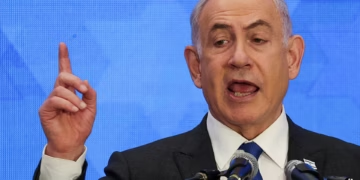
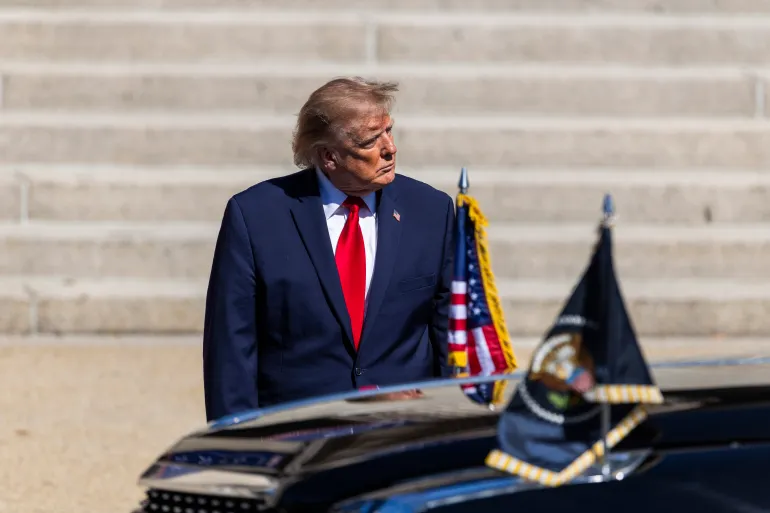
Reports on September 26 said Trump had rejected Iran’s seven-day proposal. The Wall Street Journal reported, citing US officials, that Trump was privately sceptical Tehran would meet his demands and expected military action to resume after the US midterm elections. Reuters reported that it could not immediately independently verify the Wall Street Journal account.
Trump subsequently publicly confirmed that Iran had made a proposal and said he rejected it. The precise terms of the administration’s preferred alternative remain less clear than the conditions outlined by Tehran. Earlier in the week, Trump had called for the economic isolation of Iran while also saying he believed a deal could eventually be reached after the November midterm elections.
The distinction between the reported rejection of this particular roadmap and a rejection of diplomacy altogether is important. US officials had previously described mediated discussions with Iran as positive and constructive. The two governments have also continued to communicate indirectly through intermediaries even while their public positions remain sharply opposed.
The immediate issue is therefore not simply whether negotiations exist. It is whether the two sides can agree on the sequence of concessions required to make negotiations meaningful. Iran has sought relief from the blockade and sanctions before reopening the strait. Washington has demanded substantial changes in Iranian behaviour, particularly around the nuclear programme, while maintaining pressure.
Iran’s Position and Its Leverage
Iran has framed the seven-day plan as an offer to create a structured path out of the war. Araghchi said the timetable would begin only after Washington accepted the proposal, while emphasizing that Tehran would not accept coercion or surrender what it describes as sovereign rights.
The position reflects two competing pressures inside the Iranian calculation. Continued confrontation carries economic and military costs, particularly under a blockade that restricts oil exports and other commercial activity. At the same time, making concessions before obtaining meaningful relief could leave Tehran with fewer tools to compel Washington to honour its side of an agreement.
The Strait of Hormuz is therefore more than a bargaining point. It is part of Iran’s strategy for preserving leverage. Tehran has also rejected the idea that it should surrender its administrative role over the waterway simply because the United States demands unrestricted navigation.
That does not mean every Iranian demand is likely to be accepted by Washington or by the Gulf states. The diplomatic problem is precisely that several governments have overlapping but incompatible security interests. Iran wants an end to the blockade and protection of its strategic position. Gulf states want freedom of navigation and protection from escalation. Washington wants guarantees concerning Iran’s nuclear capabilities and regional behaviour.
The Nuclear Question Remains Unresolved
The nuclear issue remains at the centre of the dispute. Iran has maintained that it will not surrender its rights under the Nuclear Non-Proliferation Treaty, including its stated right to peaceful nuclear activity. The United States has repeatedly said Iran must not acquire a nuclear weapon and has demanded limits that Tehran has resisted.
The seven-day roadmap does not appear to resolve that fundamental disagreement. Instead, it proposes that negotiations restart after the initial maritime and ceasefire steps. Araghchi indicated that the seventh day would mark the beginning of talks on mutually agreed subjects, including the nuclear programme.
That distinction matters. A reopening of Hormuz would not itself constitute a nuclear agreement. Likewise, a temporary ceasefire would not settle questions about enrichment, verification, sanctions or the future of Iran’s nuclear infrastructure. Those issues would still require detailed negotiations and mechanisms capable of surviving political pressure on both sides.
The previous diplomatic experience between Washington and Tehran illustrates the difficulty. A memorandum signed on June 17 after mediation by Qatar and Pakistan established a 60-day framework for talks, but disagreements over maritime arrangements and other issues led to its collapse within weeks. The new proposal resembles that earlier framework but compresses the timetable and changes the sequence of actions.
Qatar, the UN and the Diplomatic Channel
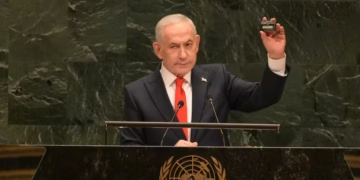
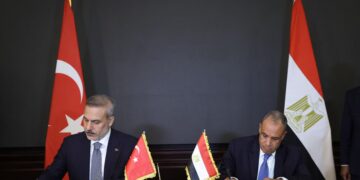
Qatar has become an important intermediary in the latest contacts. Iran transmitted its proposal through Doha, while the United Nations General Assembly in New York provided a setting where senior officials from multiple countries could meet and exchange messages.
Indirect diplomacy is particularly important when direct negotiations have become politically difficult. Mediators can carry proposals, clarify language and test whether one side is willing to adjust a position without requiring the governments to publicly acknowledge concessions before an agreement exists.
Qatar is also exposed to the conflict because of its geographic and security position in the Gulf. The country has repeatedly supported diplomatic efforts between regional and international actors. Its role in the current crisis gives it an interest in preventing the conflict from expanding while maintaining communication channels between parties that do not trust each other.
The UN setting adds another layer. The General Assembly brings the principal actors into the same diplomatic environment, but it cannot by itself force a settlement. The practical outcome depends on whether governments use the opportunity to negotiate terms they can implement.
The Gulf States Face a Separate Security Problem
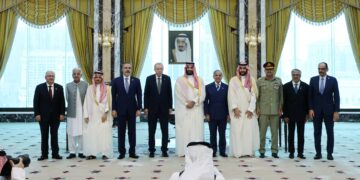
The Gulf states have a direct interest in ending the confrontation even when they are not parties to every element of the US-Iran dispute. Their economies depend heavily on maritime trade and energy exports, and several host US military facilities that have become part of the strategic environment surrounding the conflict.
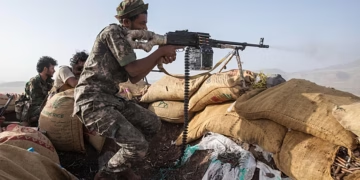
Saudi Arabia has faced additional pressure from fighting involving Houthi forces in Yemen. The broader regional conflict has therefore expanded beyond the immediate US-Iran confrontation, creating risks around both the Strait of Hormuz and the Bab el-Mandeb passage near the Red Sea.
Gulf governments have sought security assurances from Washington while also pursuing mechanisms for regional de-escalation. Qatar has proposed a broader regional security framework involving Iran and Arab Gulf states, with economic interdependence and security guarantees forming part of the concept.
The difficulty is that the Gulf states want two things simultaneously: protection from Iranian military pressure and an end to a war that can make the region less secure. A prolonged conflict threatens shipping, investment, energy infrastructure and civilian populations even when individual Gulf governments attempt to remain outside direct hostilities.
The Economic and Energy Stakes
The economic consequences of the confrontation extend far beyond oil prices. A prolonged disruption of Hormuz affects tanker availability, insurance, shipping schedules, refinery planning and the cost of energy-intensive goods. Countries dependent on Gulf supplies can face higher import costs even if they are geographically distant from the conflict.
Iran is also under severe economic pressure. Restrictions on oil exports and financial transactions reduce access to foreign currency and make ordinary trade more difficult. The proposed release of frozen Iranian assets and waiver of oil sanctions therefore represents a major part of Tehran’s demand for an agreement.
For Washington, sanctions and the blockade are instruments intended to increase pressure on Iran. For Tehran, removing that pressure is a prerequisite for meaningful negotiation. The two positions create a classic sequencing dispute: Washington wants pressure to generate concessions, while Iran wants concessions to remove the pressure before giving up strategic leverage.
The result is a negotiation in which economics and security cannot easily be separated. Every change in oil exports, shipping access or sanctions affects the bargaining position of both governments.
What the Military Track Could Mean
The reported rejection of the seven-day roadmap leaves the military track unresolved. Reuters reported that the Wall Street Journal’s account of Trump’s position had not been independently verified, while other reporting said the president had publicly rejected Iran’s proposal. The uncertainty surrounding the next military steps is therefore important to distinguish from confirmed decisions already taken.
Any renewed strikes would carry risks beyond the immediate targets. Military action could affect maritime traffic, energy infrastructure, US forces and regional partners. It could also reduce the space available for mediators to restart negotiations.
At the same time, the existence of a proposed diplomatic timetable indicates that both sides continue to confront incentives to explore an off-ramp. Iran faces economic pressure and the cost of prolonged war. Washington faces the challenge of achieving its stated security objectives without turning the conflict into an open-ended regional confrontation.
The military and diplomatic tracks therefore remain connected. Pressure can create incentives to negotiate, but excessive pressure can also make compromise politically or strategically harder.
The Next Phase of the Crisis
The immediate question is whether the reported rejection closes the latest diplomatic opening or becomes another stage in negotiations conducted through intermediaries. Iran has already placed a concrete timetable on the table. The United States has rejected that framework, while previous statements from American officials have left open the possibility of future discussions.
The next stage will depend heavily on whether the two sides can bridge the sequencing problem. Tehran wants the blockade and sanctions eased as part of the path toward reopening Hormuz. Washington wants confidence that Iran will make durable commitments on the nuclear issue and other security concerns. Neither side appears prepared to surrender its principal leverage without receiving something substantial in return.
The Strait of Hormuz makes the stakes unusually high. A diplomatic breakdown does not remain confined to negotiating rooms. It can affect shipping, energy markets, regional military deployments and the calculations of governments across the Gulf.
There is also a larger problem of credibility. The June memorandum collapsed after disagreements over implementation, leaving both sides with reasons to doubt whether another temporary arrangement would survive. Any future agreement will therefore need clearer sequencing, verification and enforcement mechanisms than a political announcement alone can provide.
For now, the seven-day roadmap has failed to produce an immediate ceasefire agreement. Iran says its proposal remains a path toward reopening Hormuz and restarting talks; reporting indicates Trump has rejected the framework as presented. What happens next will depend not only on the positions announced publicly, but on whether intermediaries can construct a sequence of reciprocal steps that neither Washington nor Tehran believes will leave it exposed.
The crisis has consequently entered another uncertain phase. The diplomatic channel has not disappeared, but neither has the military confrontation. With Hormuz at the centre of the dispute, the next decisions in Washington and Tehran will have consequences far beyond the two governments—affecting Gulf security, global energy flows and the prospects for a negotiated end to a conflict that has already lasted months.
ForensicTimes · forensictimes.com · Global Investigative Journalism on Crime, Justice, and Forensic Science · This report reflects verified open-source and wire reporting current as of publication. © 2026 ForensicTimes. All Rights Reserved.