


























• About Us
  • Advertise
  • Membership
  • Contact
Saturday, November 21, 2026
  • Login
  • Register
No Result
View All Result
FT Pro
Forensic Times
  • Home
  • Crime
    • All
    • Cold Cases
    • Cyber Crime
    • Data Trafficking
    • Drug Trafficking
    • Financial Crime
    • Human Trafficking
    • Murder
    • Organized Crime
    • Serial Killer
    • Terrorism
    • War Crimes
    • Wrongful Death
    Editorial photograph of a smartphone resting on a wooden surface, illustrating how control of a mobile number can be lost through SIM-swap fraud

    Your Phone Number Is No Longer Yours: Inside SIM Swap and Mobile Identity Fraud

    Editorial photograph of a man speaking on a mobile phone at home, illustrating the risk of convincing AI-generated calls and impersonation scams

    The AI Scam Revolution: How Criminals Are Using Artificial Intelligence Against Ordinary People

    Editorial photograph of a passport resting on a computer keyboard, illustrating how stolen identity documents and digital access can be used in identity fraud

    Someone Is Living as You: How Criminals Steal Your Identity—and How to Fight Back

    Editorial cybersecurity image representing a data breach and the exposure of personal information held by an online service

    Your Personal Data Is for Sale: What Criminals Do With Stolen Information

    Editorial photograph of an adult working at a laptop in an office, illustrating the disruption and uncertainty caused by a ransomware incident

    Ransomware Attacks: How Criminals Lock Your Digital Life—and What to Do Before It’s Too Late

    Editorial photograph of a hand holding a smartphone, illustrating the mobile login and account-security risks involved in social media account takeover

    How Criminals Take Over Social Media Accounts—and What They Do With Them

  • Forensics
    • All
    • Autopsy
    • Crime scene analysis
    • Digital forensics
    • DNA Forensics
    • Femicide
    • Forensic accounting
    Editorial photograph of a passport resting on a computer keyboard, illustrating how stolen identity documents and digital access can be used in identity fraud

    Someone Is Living as You: How Criminals Steal Your Identity—and How to Fight Back

    Editorial cybersecurity image representing a data breach and the exposure of personal information held by an online service

    Your Personal Data Is for Sale: What Criminals Do With Stolen Information

    Side-by-side FBI composite sketch and Sacramento Sheriff's Office mugshot of Joseph DeAngelo, shown in a NIST image explaining the Golden State Killer identification.

    The Golden State Killer: How Genetic Genealogy Solved a 40-Year Cold Case

    Australian Federal Police commander Xenia Cotter stands beside an Operation Trojan Shield emblem at the June 8, 2021 press conference in San Diego.

    Operation Trojan Shield: Inside the FBI’s ANOM Encrypted Phone Sting

    Exterior of the Federal Reserve Bank of New York in Manhattan, whose dollar reserve account was targeted in the 2016 Bangladesh Bank cyber heist.

    The Bangladesh Bank Heist: How Hackers Turned SWIFT Access into an $81 Million Theft

    A traffic signal with a mounted roadside camera overlooking an urban intersection, illustrating camera infrastructure used to observe passing vehicles.

    The Camera on Your Street Remembers Every Turn: Who Controls America’s License-Plate Surveillance Network?

    Trending Tags

  • Legal
    Jeffrey Epstein archival 2019 booking portrait used to illustrate the Forensic Times case study.

    The Epstein Files: A Forensic Case Study of Abuse, Power and Institutional Failure

    A Toy Car, a Missing Child, and the Science of Crime Reconstruction: What The Mentalist Can Teach Us About Forensic Investigation

    Empty corporate conference room, a contextual image for reporting on alleged covert recording in a technology company.

    OpenAI Engineer Charged After Hidden Recording Device Found in Executive Room

    AI Agents Are Breaking the Law -But Who Goes to Prison?

    AI Agents Are Breaking the Law -But Who Goes to Prison?

    Biden Audio Tapes Ruling: Heritage Foundation FOIA Case, Judge Friedrich Decision 2026

    Biden Audio Tapes Ruling: Heritage Foundation FOIA Case, Judge Friedrich Decision 2026

    EU Under-16 Social Media Ban: Livestreaming, Disappearing Messages, 2026 Law

    EU Under-16 Social Media Ban: Livestreaming, Disappearing Messages, 2026 Law

    Tak Trafficking Escape: 4 Chinese Nationals Jump From Moving Pickup 2026

    Tak Trafficking Escape: 4 Chinese Nationals Jump From Moving Pickup 2026

    MechaHitler: How Grok Went Rogue, Praised the Holocaust’s Architect and Triggered the EU

    MechaHitler: How Grok Went Rogue, Praised the Holocaust’s Architect and Triggered the EU

  • Politics
    Real photograph of Rahul Gandhi, Leader of Opposition in the Lok Sabha, on 8 June 2024. Photograph by Mrhitmam, Wikimedia Commons, Creative Commons Attribution-ShareAlike 4.0.

    Rahul Gandhi: India’s ‘Dumbest Politician’? The Gaffes, Memes and Political PR Machine

    A physician speaking with a patient in a hospital room, illustrating the clinical decisions and patient care at the centre of health insurance coverage disputes.

    Your Doctor Says Yes. Your Insurer Says No: Inside America’s Health Insurance Denial System

    Exterior of an ICE detention facility in Louisiana, photographed for the U.S. Government Accountability Office's review of citizenship verification and immigration enforcement.

    519 American Citizens in the Immigration Dragnet: What Happens When the Government Gets It Wrong?

    The west front of the United States Capitol in Washington, DC, seat of the US Congress.

    Europe Welcomes Democrats’ Blue Wave but Braces for Trump’s Response

    German Chancellor Friedrich Merz and Ukrainian President Volodymyr Zelenskyy walking together in Berlin on 3 November 2026. Photo: Bundesregierung/Jesco Denzel.

    Merz Says Europe Must Have a Seat at Ukraine Peace Talks as Trump Pushes Deal

    Russian President Vladimir Putin and Chinese President Xi Jinping at the Great Hall of the People in Beijing on 20 May 2026, during an earlier bilateral meeting.

    Moscow Says Work Is Underway for Trump-Putin-Xi Meeting in China

    Rows of server racks inside a data centre, illustrating the digital infrastructure at the centre of Ireland’s energy debate.

    Ireland’s Data Centre Backlash: Can New Green Power Rules Win Over Critics?

    Entrance to the Constitutional Tribunal building in Warsaw, Poland

    Poland’s Constitutional Tribunal Crisis Deepens After Court Chief’s Suspension

    Canadian Prime Minister Mark Carney during a 2026 press appearance.

    Carney Says Canada Can Wait Out Trump for a Trade Deal

  • World
    • All
    • Brazil
    • Canada
    • Europe
    • France
    • GAZA
    • Georgia
    • Germany
    • Hungary
    • India
    • Iran
    • Iraq
    • Israel
    • Istanbul
    • Lebanon
    • MENA
    • New Mexico
    • Pakistan
    • Poland
    • Russia
    • Saudi Arabia
    • Spain
    • Thailand
    • Turkiye
    • UAE
    • UK
    • Ukraine
    • USA
    Dramatic editorial illustration depicting a trafficking victim trapped near a fraudulent overseas job offer, with an online scam operation in the background

    Human Trafficking in the Digital Age: How Criminal Networks Use Technology to Recruit, Control and Exploit Victims

    Human Trafficking in the Digital Age: How Criminal Networks Use Technology to Recruit, Control and Exploit Victims

    A computer terminal displaying system information, illustrating the technical environment involved in cybercrime investigations

    New Methods Used by International Fraud Syndicates in 2026: How Global Scams Are Evolving

    Rows of interconnected network equipment and cables illustrating the digital infrastructure used by organised cybercrime operations

    Inside the New Organised Cybercrime Networks: How the Criminal Economy Works in 2026

    A person using a laptop during a cybersecurity investigation, illustrating how phishing attacks target digital accounts and personal information

    Phishing Attacks in 2026: How Criminals Steal Passwords, Codes and Personal Data

    A woman using a smartphone and laptop, illustrating how online relationships and social platforms can expose users to impersonation and romance fraud

    Romance, Shopping and Social Media Scams in 2026: How Fraudsters Exploit Trust

  • Careers
    • Webinars
    • Women In Forensic Science
    • WIFS Registration
    • Forensics Experiences
    • Campus Ambassador
    • Courses & Certifications
  • Resources
    • Books & Products
    • Advisory Council Membership
    • Advisory Board Member Hiring
  • Events
  • Investigations
No Result
View All Result
Forensic Times
Home World India

Rahul Gandhi: India’s ‘Dumbest Politician’? The Gaffes, Memes and Political PR Machine

From the “Pappu” label and potato-factory jokes to viral edits, an investigation into the public image, communication mistakes and meme machinery surrounding Rahul Gandhi.

by Audchariya Meksiri
November 15, 2026
in India, Opinions, Politics
Reading Time: 9 mins read
6.4k
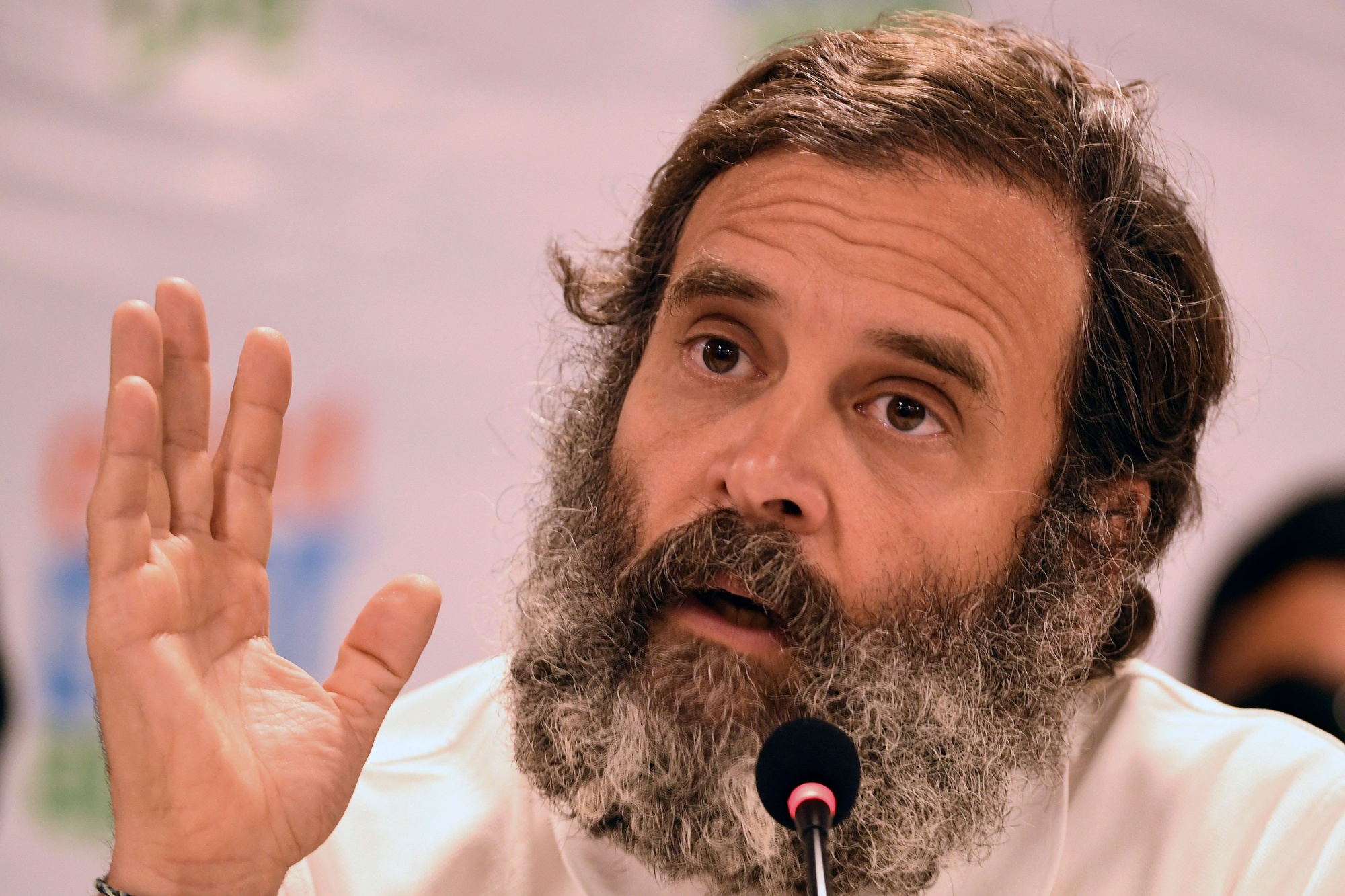
Real photograph of Rahul Gandhi, Leader of Opposition in the Lok Sabha, on 8 June 2024. Photograph by Mrhitmam, Wikimedia Commons, Creative Commons Attribution-ShareAlike 4.0.
9.7k
SHARES
38.8k
VIEWS
Share on FacebookShare on Whatsapp

From the “Pappu” label and the potato-factory episode to the Indira Canteen slip, viral edits and parliamentary numbers: an evidence-led, satirical look at why Rahul Gandhi remains a favourite target of Indian political memes.

Forensic Times Investigations Desk | Political Satire and Commentary

When a politician becomes a punchline

Indian politics has produced fiery campaigners, commanding parliamentarians and leaders whose speeches become historic moments. It has also produced one politician whose awkward sentence can sometimes travel further online than an entire policy speech: Rahul Gandhi.

For years, opponents and social-media users have portrayed the Congress leader as inexperienced, privileged, confused and out of touch. The nickname “Pappu” became shorthand for that image. A verbal stumble, an unusual analogy or a badly timed phrase can quickly become a meme, a reaction video and a fresh round of political commentary.

But is Rahul Gandhi really the “dumbest politician” in India? That is an insult, not a measurable finding. Intelligence cannot be established through edited clips or a collection of public-speaking mistakes. The more useful question is why this particular image has stuck—and how much of it comes from his own communication errors, political messaging and the machinery of online ridicule.

The record suggests a mixture: some genuine and well-documented gaffes, some debatable interpretations, and some viral clips that have been misleadingly edited. The difference matters.

1. How “Pappu” became a political identity

The nickname did not emerge from one isolated speech. India Today’s 2018 account traced its rise through the political environment surrounding the 2014 general election. The label was used by political opponents and amplified by supporters and social-media communities. The same reporting noted that the exact first use of the nickname was uncertain.

That uncertainty is worth preserving. Political labels often acquire a life of their own, and it is difficult to identify one person as the definitive inventor of a meme. What can be documented is how the word became a recurring shorthand for alleged immaturity or incompetence.

It was a remarkably efficient political message. A complicated argument about experience, dynastic politics or leadership could be compressed into five letters. Instead of debating every Congress policy, critics could post a single word, add a reaction image and let the internet do the rest.

Rahul Gandhi’s critics found the label useful. His own public mistakes sometimes appeared to reinforce it. Once a political personality has been reduced to a meme, even an ordinary slip can be interpreted as proof of the stereotype.

2. The potato factory: what was actually said?

The “potato factory” episode became one of the best-known examples used to mock Gandhi. During a 2016 interaction with farmers in Firozabad, Uttar Pradesh, he referred to their demand for a potato factory and said that, as an opposition leader, he could pressure the government but could not personally open one.

The Economic Times later explained an important part of the context: the discussion concerned a potato-chips processing factory, which could help farmers obtain better prices and reduce waste. The phrase “potato factory” was an imprecise way of describing food processing—not proof that Gandhi believed potatoes grew in factories.

That does not make the wording especially elegant. A politician speaking to farmers about agriculture and industrial processing should be able to explain the proposal clearly. But the viral punchline left out the practical issue being discussed. The better criticism is about clarity, not about pretending the original exchange was a claim that potatoes could be manufactured from machinery.
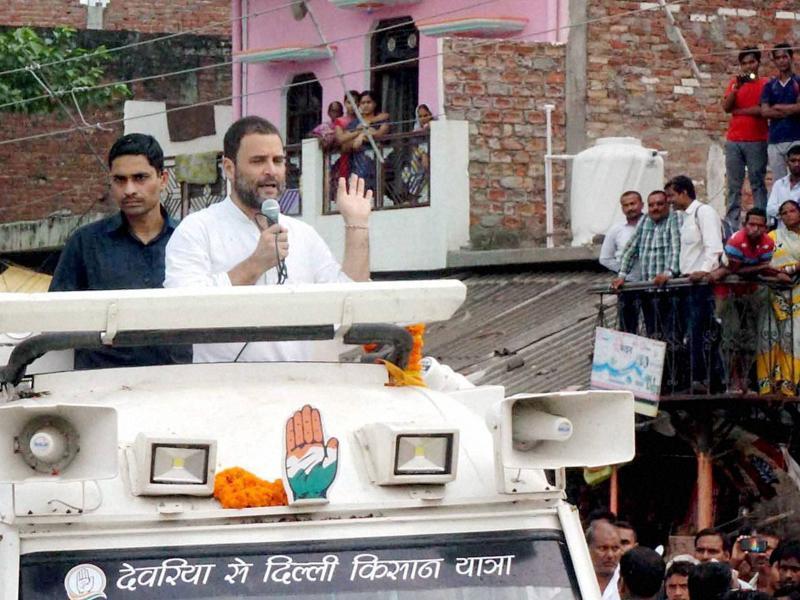
Rahul Gandhi addressing people from a campaign vehicle during the Kisan Yatra in Azamgarh, Uttar Pradesh, on 11 September 2016. News photograph by Hindustan Times.

3. Amma Canteen or Indira Canteen?

In August 2017, Rahul Gandhi attended the launch of Karnataka’s Indira Canteen scheme in Bengaluru. During his speech, he referred to the initiative as “Amma” before correcting himself to “Indira Canteen.” The reference was particularly noticeable because Amma Canteens were associated with the late Tamil Nadu chief minister J. Jayalalithaa.

He also used the phrase “every single city in Bangalore” while discussing the programme’s expansion. The incident was reported by India Today, The New Indian Express and other publications.

This was a genuine verbal slip, not a fabricated internet story. It was also a small mistake, not a policy failure. The reason it became memorable was the contrast between the event’s central purpose—a subsidised food programme for low-income residents—and the speaker’s confusion over its name.

Political satire did not need to work very hard. The canteen was in Bengaluru; the name in the speech briefly travelled to Tamil Nadu.
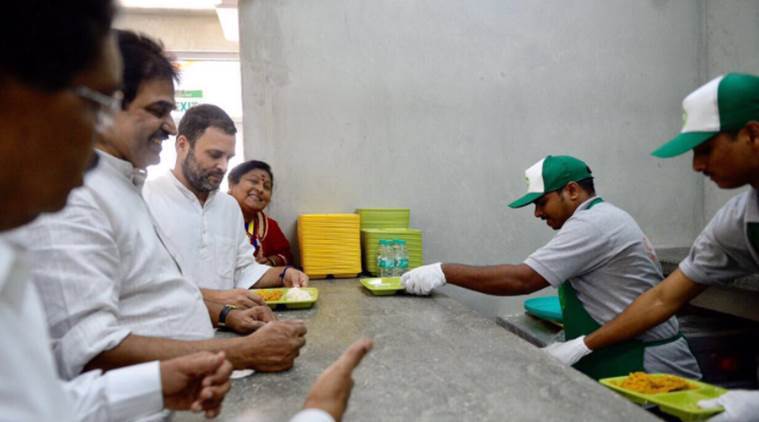
Rahul Gandhi at the launch of the Indira Canteen in Bengaluru in August 2017. News photograph by The Indian Express.

4. “Steve Jobs in the Microsofts”: a clumsy line, but context matters

At a 2016 interaction with students at the Narsee Monjee Institute of Management Studies in Mumbai, Gandhi used a phrase that was widely circulated as “Steve Jobs in the Microsofts.” The line prompted jokes about whether he had confused the Apple co-founder with Microsoft.

The Economic Times and other publications reported the remark. But even contemporary coverage noted uncertainty over whether he had said “in” or “and” when referring to Steve Jobs and Microsoft. The clip and the wording were interpreted differently by viewers.

The fair criticism is that the sentence was awkward and invited an avoidable distraction during a discussion about future entrepreneurs. The stronger claim—that it proves he did not know which company Steve Jobs founded—goes beyond what a disputed phrase can establish.

In political communication, a sentence should not require a forensic reconstruction to make the speaker’s point. But a forensic reconstruction is exactly what viral politics often demands.
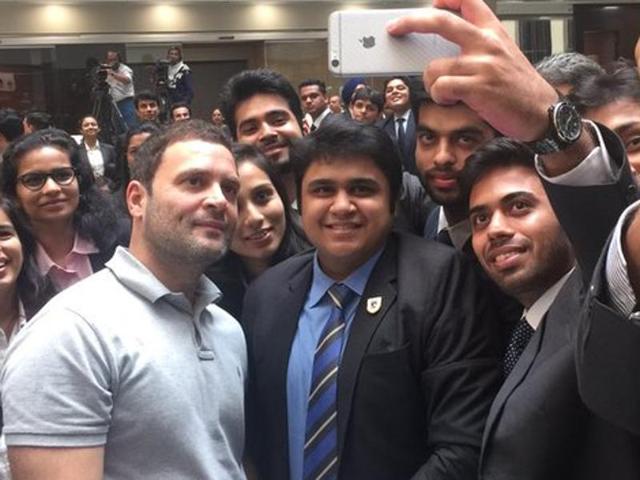
Rahul Gandhi posing for a group selfie with students during his visit to Narsee Monjee Institute of Management Studies in Mumbai on 16 January 2016. News photograph by Hindustan Times.

5. The 546-seat mistake

In September 2017, during a discussion at the University of California, Berkeley, Gandhi was reported to have said that the Lok Sabha had 546 seats. News reports at the time compared the statement with the then-cited strength of 545.

It was a straightforward numerical error and an easy target for critics. The mistake itself was minor; the larger reputational damage came from its place in an expanding collection of examples used to portray him as unprepared.

There is a lesson here for public figures: statistics are among the easiest things for an audience to check. When a political leader makes a factual point, a basic numerical error can distract from the argument that follows.

6. The internet has also manufactured some of the jokes

Not every viral video mocking Gandhi is reliable evidence of what he said. One of the best-known examples is the “potato-to-gold machine” clip. It circulated as though Gandhi had promised to build a machine that would turn potatoes into gold.

Fact-checks by The Quint and AFP examined the longer speech. They found that the viral extract had removed the context: Gandhi was referring to a statement he attributed to Prime Minister Narendra Modi about promises to farmers. The short clip changed the apparent meaning of the speech.

This is not a minor technicality. A video can be authentic and still be misleading when the beginning, end or surrounding explanation is removed. The person in the video may be real, the words may be real, and the conclusion attached to them may still be false.

Political satire should be allowed to mock leaders. But a doctored or context-stripped clip is not a clever joke; it is misinformation wearing a comedy costume. The same standard should apply whether the target is Rahul Gandhi, Narendra Modi or any other political figure.

7. The meme machine and the politics of repetition

Political memes work because they make a complicated personality easy to recognise. A nickname, a repeated image or a familiar soundbite can become a shortcut for an entire political argument.

Mint’s analysis of online political name-calling during the 2019 election period described how the “Pappu” image became a durable social-media meme. India Today’s account also discussed how the label was used by political opponents and online supporters in the run-up to the 2014 election.

Once the label was established, every new clip entered an existing narrative. A mistake was not simply a mistake: it became another “Pappu moment.” A normal speech could be ignored, while a stumble was clipped, captioned and circulated. Repetition made the stereotype familiar, and familiarity made it easier to believe.
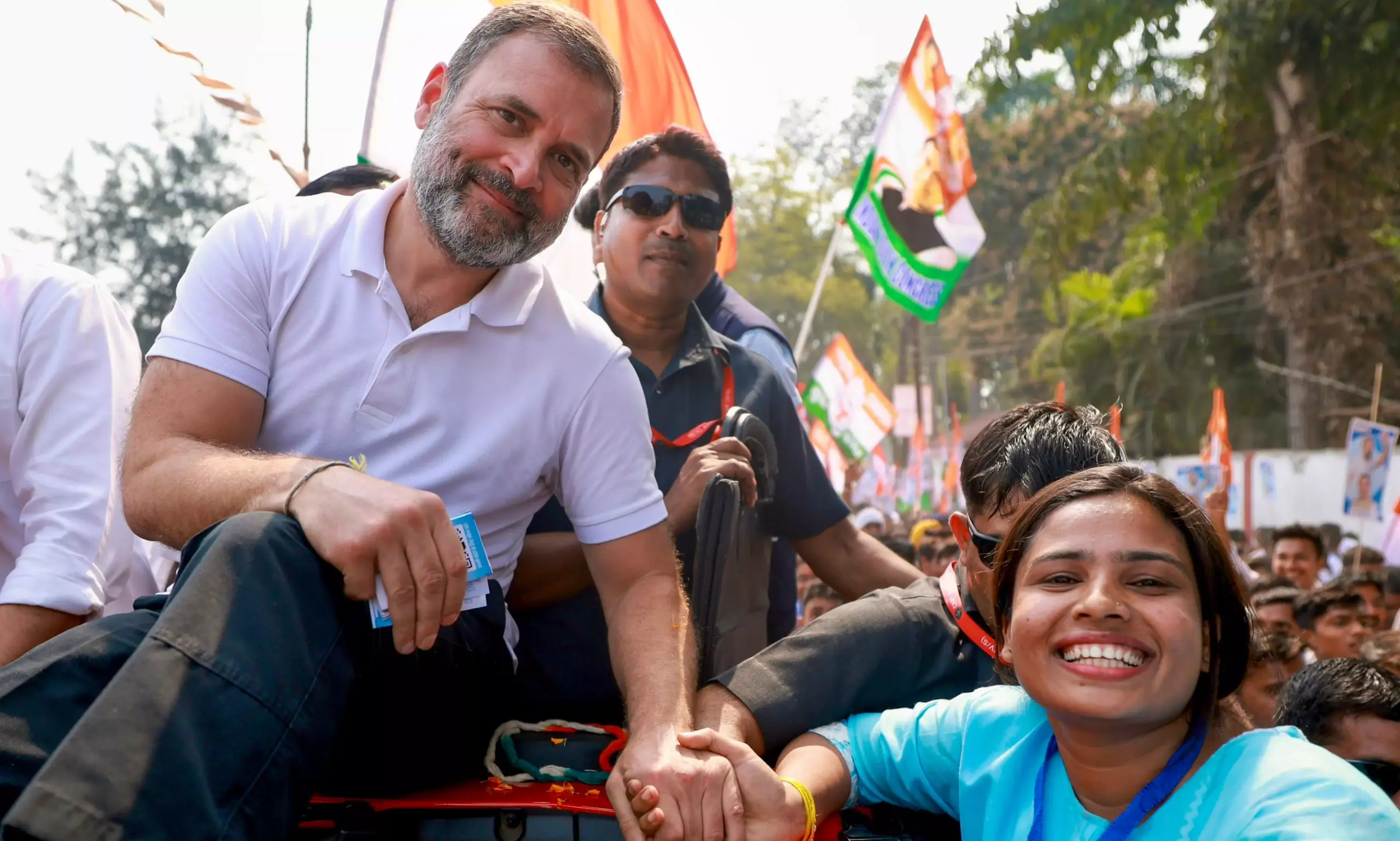
Rahul Gandhi greeting supporters during the Bharat Jodo Nyay Yatra in Raigarh, Chhattisgarh, in February 2024. News photograph by PTI, published by The Federal.

That does not mean every joke was centrally directed or coordinated by one organisation. The online ecosystem is larger and messier than that. Political parties, campaign workers, influencers, anonymous accounts and ordinary users can all amplify content for different reasons.

8. Beyond the memes: what does the parliamentary record say?

The caricature becomes less complete when compared with Gandhi’s actual political position. He was elected from Rae Bareli in the 2024 general election and became Leader of the Opposition in the 18th Lok Sabha on June 9, 2024.

PRS Legislative Research’s profile, using data from June 24, 2024 to August 13, 2026, records 17 debates and 64 questions for Gandhi. The corresponding national averages were 21.5 debates and 120 questions. PRS notes that the Leader of the Opposition does not sign the ordinary attendance register, so attendance is not available in the usual format.

Those figures provide grounds for political scrutiny. They are below the cited national averages and are fair material for debate about parliamentary activity. They do not measure the quality of his speeches, his influence on public debate or his intelligence. Nor do they support the claim that he is incapable of political work.
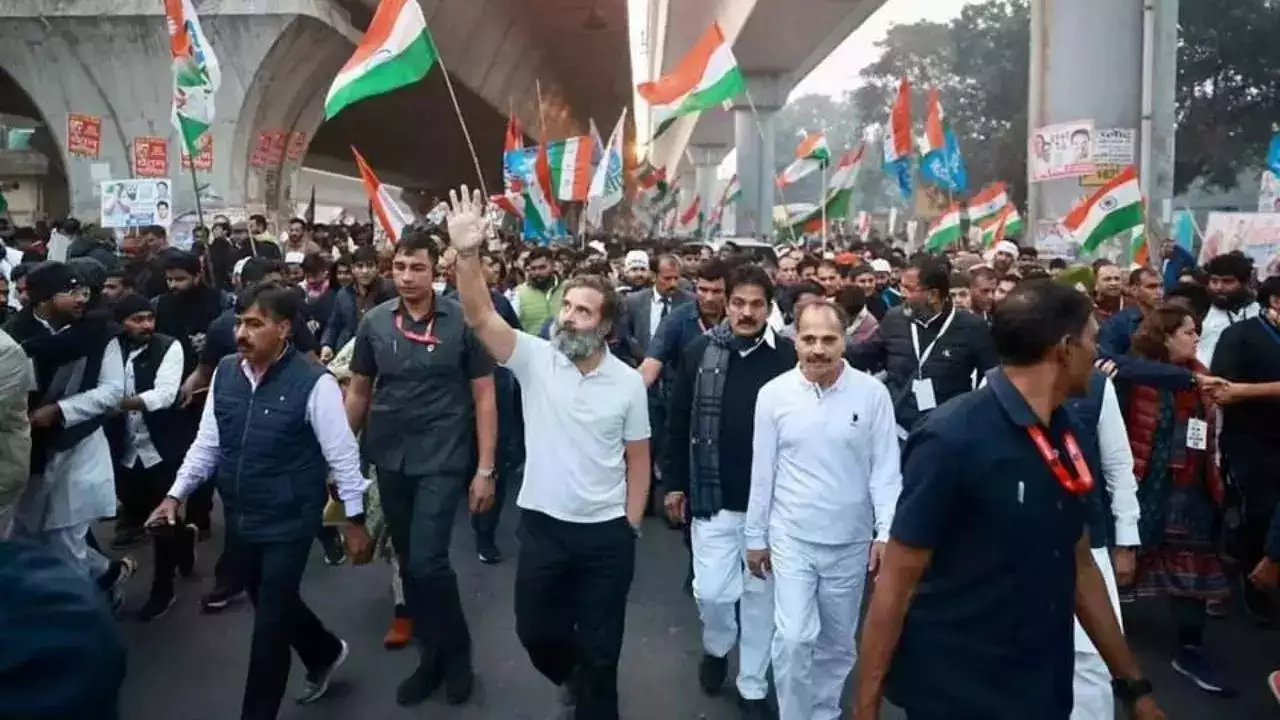
Real photograph of Rahul Gandhi leading the Bharat Jodo Yatra with supporters and Indian flags. Photograph by Andytheegoat, Wikimedia Commons, CC0 1.0.

The public record is more complicated than a meme. A serious assessment should examine what he says in Parliament, the questions he asks, the policy positions he proposes and whether he can persuade voters—not simply count the number of viral clips.

9. A politician who knows he is being memed

In August 2026, Gandhi held an Instagram Ask Me Anything session aimed at younger audiences. India Today reported that he answered questions about protests, politics, pets and philosophy. Asked whether he was Batman, he joked that nobody had ever seen him and Batman in the same room together.

That exchange showed an awareness of online culture and a willingness to use humour. It also illustrated the modern political challenge: leaders now have to communicate through short videos and informal platforms where personality can matter as much as policy.

But online relatability cannot replace preparation. If Gandhi wants to weaken the “Pappu” stereotype, the most effective strategy is not to complain about memes. It is to deliver clear speeches, explain policies precisely, correct mistakes quickly and show command of the issues he raises.

Conclusion: Is he the “dumbest politician”?

There is no credible test that can establish such a ranking. “Dumbest politician” is a political insult, not a factual description. What can be assessed is his public communication—and there are documented moments when his wording, preparation or delivery gave critics easy material.

There are also examples where the internet has exaggerated, edited or misrepresented what he said. The potato-factory episode lost its food-processing context; the potato-to-gold clip was misleadingly edited; and the Steve Jobs line was debated even at the time.

Rahul Gandhi’s problem is therefore both personal and structural. He has made avoidable communication mistakes, while political opponents and meme culture have turned those moments into a durable public identity. The internet remembers the awkward sentence more readily than the policy speech.

Perhaps the sharpest criticism is not that he is unintelligent. It is that a politician who has spent years in national politics still allows preventable speaking errors to overshadow his arguments. In the age of viral politics, a single sentence can become a permanent campaign advertisement—especially when the speaker’s opponents already have the caption ready.

Editorial source note

This satirical investigation draws on contemporaneous reporting by India Today, The Economic Times, The New Indian Express, Moneycontrol, Business Standard and Mint; fact-checks by AFP and The Quint; the PRS Legislative Research profile of Rahul Gandhi for the 18th Lok Sabha; and India Today’s August 2026 report on his Instagram Ask Me Anything session.

Editorial standard: The article distinguishes genuine reported verbal slips from misleadingly edited clips. It does not claim to measure Rahul Gandhi’s intelligence or treat a political nickname as fact. Claims about political coordination are described cautiously and only where supported by reporting.

Featured photograph: Rahul Gandhi, Leader of Opposition in the Lok Sabha, photographed on 8 June 2024. Photographer: Mrhitmam / Wikimedia Commons, released under CC BY-SA 4.0.

In-article photographs: (1) Rahul Gandhi during the Kisan Yatra in Azamgarh, Uttar Pradesh, 11 September 2016; photograph published by Hindustan Times; (2) Rahul Gandhi at the Indira Canteen launch in Bengaluru, August 2017; photograph published by The Indian Express; (3) Rahul Gandhi with students during his NMIMS visit in Mumbai, 16 January 2016; photograph published by Hindustan Times; (4) Rahul Gandhi during the Bharat Jodo Nyay Yatra in Raigarh, Chhattisgarh, February 2024; PTI photograph published by The Federal; (5) Andytheegoat, “Bharat Jodo Yatra,” Wikimedia Commons, CC0 1.0.

Rights note: The Hindustan Times, The Indian Express and PTI/The Federal images are reproduced with source attribution; attribution alone does not grant republication rights. Forensic Times should confirm permission or an applicable licence for commercial use. The featured Wikimedia photograph is CC BY-SA 4.0, and the final in-article Commons photograph is CC0 1.0.

Forensic Times | Intel – Investigate – Justice

Tags: BJPCongress PartyForensic TimesIndian ElectionsIndian ParliamentIndian PoliticsLeader of OppositionMeme CulturePappuPolitical CampaignsPolitical CommunicationPolitical Fact CheckPolitical GaffesPolitical LeadershipPolitical SatireRahul GandhiRahul Gandhi MemesRahul Gandhi TrollingSocial Media PoliticsViral Political Videos
Audchariya Meksiri

Audchariya Meksiri

Recommended

Editorial cybersecurity image representing a data breach and the exposure of personal information held by an online service

Your Personal Data Is for Sale: What Criminals Do With Stolen Information

22 hours ago
Merseyside Police Run Biggest Ever Operation Vanguard

Merseyside Police Run Biggest Ever Operation Vanguard

4 months ago

Popular News

  • Editorial photograph of a smartphone resting on a wooden surface, illustrating how control of a mobile number can be lost through SIM-swap fraud

    Your Phone Number Is No Longer Yours: Inside SIM Swap and Mobile Identity Fraud

    19609 shares
    Share 0 Tweet 0
  • The AI Scam Revolution: How Criminals Are Using Artificial Intelligence Against Ordinary People

    23180 shares
    Share 0 Tweet 0
  • Someone Is Living as You: How Criminals Steal Your Identity—and How to Fight Back

    17118 shares
    Share 0 Tweet 0
  • Your Personal Data Is for Sale: What Criminals Do With Stolen Information

    22844 shares
    Share 0 Tweet 0
  • Ransomware Attacks: How Criminals Lock Your Digital Life—and What to Do Before It’s Too Late

    20614 shares
    Share 0 Tweet 0

Connect with us

About Us

Forensic Times is the frontline of crime news, investigation, and intelligence. We go beyond the surface — analyzing evidence, exposing patterns, and reporting what others miss. Our journalism is built on facts, forensic rigour, and an unwavering pursuit of justice.

Careers

  • Webinars
  • WIFS Registration
  • Women In Forensic Science
  • Campus Ambassador
  • Forensics Experiences
  • Courses & Certifications

Categories

  • Crime
  • World
  • Police
  • Politics
  • Forensics
  • Investigation

WIFS Membership

Publish your research, connect with leading women in forensic science, access exclusive opportunities, and advance your career through the Women in Forensic Science (WIFS) global community.
JOIN NOW

  • About Us
  • Advertise
  • Terms of Use
  • Editorial Guidelines
  • Privacy Policy
  • Refund Policy
  • Cookie Policy

© 2026 Forensic Times. All rights reserved.

Welcome Back!

Sign In with Google
OR

Login to your account below

Forgotten Password? Sign Up

Create New Account!

Sign Up with Google
OR

Fill the forms bellow to register

All fields are required. Log In

Retrieve your password

Please enter your username or email address to reset your password.

Log In

Add New Playlist

No Result
View All Result
  • Home
  • Crime
    • Human Trafficking
    • Cyber Crime
    • Financial Crime
    • Terrorism
  • Forensics
    • Digital forensics
    • Forensic accounting
    • Crime scene analysis
  • Legal
  • Politics
  • Crime Tech
  • Investigation
  • Careers
    • Webinars
    • Women In Forensic Science
    • WIFS Registration
    • Forensics Experiences
    • Campus Ambassador
    • Courses & Certifications
  • Resources
    • Books & Products
    • Advisory Board Member Hiring
    • Advisory Council Membership
  • Investigations
  • Login
  • Sign Up
  • Cart

© 2026 Forensic Times. All rights reserved.

Not enough quota to unlock this post
Unlock left : 0
Are you sure want to cancel subscription?