






























Abstract
Can a small toy car help solve a murder and save a child’s life? In an episode of the television series The Mentalist, Patrick Jane transforms an apparently insignificant object into the starting point of a complex investigation. Drawing on my professional experience as a criminal forensic expert in Brazil, particularly in crime scene examination, violent death investigation, and the simulated reconstruction of criminal events, this article explores the scientific principles behind Jane’s reasoning. Through an entertaining example from popular culture, it examines the relationship between physical evidence, behavioral interpretation, hypothesis testing, and crime reconstruction, while emphasizing the essential distinction between investigative intuition and scientifically validated conclusions.
When a Television Series Meets Forensic Science
Throughout my career as a criminal forensic expert in Brazil, I have examined numerous crime scenes, investigated violent deaths, and participated in the reconstruction of complex criminal events. These experiences have taught me a fundamental lesson: sometimes, the most important evidence at a crime scene is not the most obvious.
A bloodstain, a firearm, or a body may immediately attract an investigator’s attention. However, an apparently ordinary object, positioned in an unusual location, may provide equally valuable information about what happened.
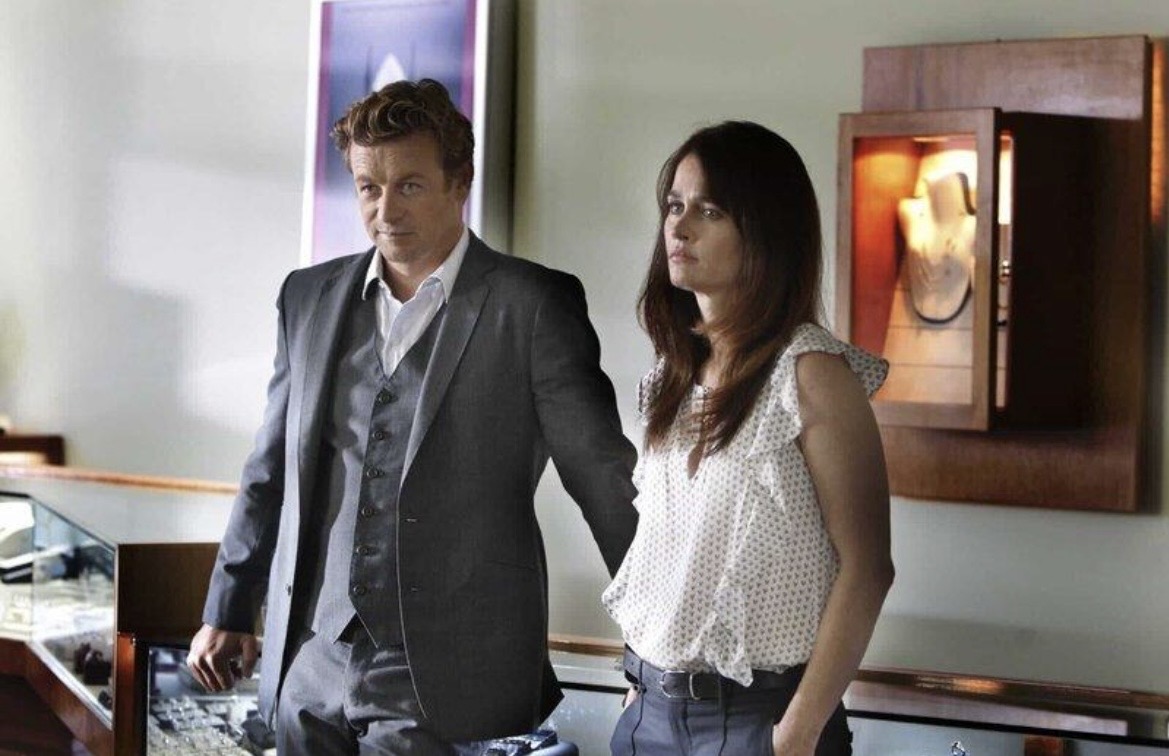
This principle reminded me of an episode of the American television series The Mentalist, starring Simon Baker as Patrick Jane and Robin Tunney as Teresa Lisbon.
The episode, entitled Little Red Corvette (Season 5, Episode 12), originally aired in January 2013.
Although The Mentalist is primarily an entertainment series, this particular episode offers an interesting opportunity to discuss fundamental concepts of forensic science and criminal reconstruction.
And surprisingly, it all begins with a toy car.
The Forgotten Toy: An Unexpected Clue
The episode follows an investigation into the murder of Horatio Jones, a geologist whose body is discovered inside an abandoned building.
Teresa Lisbon and her team investigate the crime while attempting to establish a connection between the victim’s death and a powerful businessman, Tommy Volker.
During the crime scene examination, Patrick Jane notices something unusual: a small, remote-controlled toy car.
For most observers, this object might seem unrelated to the homicide. It could simply be an abandoned toy, left behind by a child who had previously entered the building.
Jane, however, approaches the object from a different perspective.
He considers its condition, its location, and the circumstances under which a child might abandon a valued possession.
The toy appears relatively new. Why would a child leave such an object behind?
Jane develops an intriguing hypothesis: perhaps the child witnessed the murder and was forced to flee, abandoning the toy in the process.
This reasoning eventually leads investigators to Marvin Pettigrew, a missing boy who had witnessed the killing.
The investigation initially raises fears that the child may also have been murdered. Fortunately, the team ultimately discovers that he is alive, and he is reunited with his mother.
From a forensic perspective, the most fascinating aspect of this sequence is not simply the successful outcome.
It is the reasoning process that begins with a physical object and develops into a hypothesis about an event that nobody on the investigative team witnessed.
From Observation to Hypothesis: The Logic of Crime Reconstruction
In forensic science, observing a physical trace is only the beginning of the analytical process.
The central challenge is understanding what that trace may reveal about the sequence of events.
Patrick Jane’s reasoning illustrates a form of inference known as abductive reasoning, commonly described as inference to the best explanation.
Unlike deduction, which derives conclusions from established premises, or induction, which identifies patterns from repeated observations, abduction proposes a plausible explanation for a particular set of circumstances.
Consider the reasoning in this episode.
Observation: A relatively new toy car is found at a homicide scene.
Initial question: Why was this object abandoned?
Hypothesis: A child may have been present during the crime and left the toy behind while escaping a dangerous situation.
Investigative consequence: The team searches for children reported missing in the area around the time of the homicide.
Corroboration: The toy is eventually associated with Marvin Pettigrew, whose disappearance is consistent with the investigative hypothesis.
This progression illustrates an important principle: physical evidence becomes particularly valuable when investigators examine its possible relationship to the dynamics of an event.
Nevertheless, an essential distinction must be emphasized.
Jane’s initial interpretation is not scientific proof that a child witnessed the murder.
It is a hypothesis.
Alternative explanations remain possible. The toy might have been abandoned before the homicide, introduced afterward, or left behind for reasons unrelated to the crime.
A scientifically responsible investigation must therefore seek independent evidence capable of supporting or challenging the proposed explanation.
In my professional experience, this distinction between generating hypotheses and validating them is one of the most important aspects of criminal reconstruction.
Reconstructing Events That Nobody Saw
One of the central objectives of crime reconstruction is to establish, as reliably as possible, the sequence of actions and circumstances associated with a criminal event.
This requires more than identifying isolated physical traces.
It involves examining relationships between objects, individuals, locations, movements, and temporal sequences.
In my book, Simulated Reproduction of Facts: Fundamentals of Criminal Reconstruction, I discuss the importance of integrating scientific methodology, physical evidence, investigative hypotheses, and technical procedures when reconstructing criminal events.
The underlying principle is that a reconstruction must not merely reproduce an investigator’s preferred narrative.
It must critically evaluate whether a proposed sequence of events is compatible with the available evidence.
In The Mentalist, Jane mentally reconstructs a possible scenario.
A child was playing near the building.
A homicide occurred.
The child witnessed the event.
The perpetrators became aware of his presence.
The child abandoned his toy.
He disappeared shortly afterward.
This sequence initially exists only as an explanatory model.
Its value depends on whether the investigation can establish independent support for its individual components.
In real forensic practice, investigators might examine the toy’s location, condition, trace evidence, possible ownership, accessibility of the building, potential witness positions, and the chronology of relevant events.
Depending on the circumstances, a formal crime reconstruction or simulated reproduction could help evaluate whether the proposed sequence is physically possible.
Could a child positioned at a particular location have observed the killing?
Would the child’s movements have been consistent with the available physical evidence?
Could the perpetrators have detected the witness?
Were the proposed escape routes compatible with the physical characteristics of the scene?
These are examples of questions that forensic reconstruction may help answer.
The objective would not be to demonstrate that Jane’s theory is correct.
It would be to determine which aspects of the theory are supported, contradicted, or left unresolved by the evidence.
The Danger of Falling in Love With a Hypothesis
There is another important lesson hidden within this episode.
Patrick Jane is portrayed as an exceptionally perceptive individual, capable of identifying behavioral patterns that others overlook.
This makes him an entertaining television character.
However, forensic science cannot depend on the exceptional intuition of a single investigator.
In real criminal investigations, intuitive judgments may introduce cognitive biases, including confirmation bias and contextual bias.
Once an investigator develops a compelling explanation, there is a risk of interpreting subsequent evidence primarily in ways that support that explanation.
For example, after concluding that the toy belonged to a child who witnessed the murder, an investigator might begin treating every new discovery as confirmation of that assumption.
The scientific method requires a different approach.
Investigators should actively consider competing explanations, identify evidence capable of distinguishing between them, and remain prepared to revise or reject their initial hypotheses.
A plausible reconstruction is not necessarily a demonstrated reconstruction.
This principle is particularly relevant in investigations involving violent deaths, where premature assumptions about the nature or circumstances of an event may influence the interpretation of the entire scene.
During years of examining homicide scenes, suicides, fatal accidents, and other violent deaths, I have learned that forensic conclusions must remain grounded in the evidence, even when the emerging narrative appears persuasive.
Sometimes the evidence confirms our initial expectations.
Sometimes it forces us to abandon them.
Both outcomes represent legitimate scientific progress.
What About the Chain of Custody?
Another interesting aspect of Jane’s discovery concerns the treatment of physical evidence.
Television investigations frequently simplify procedures for dramatic purposes.
In real forensic practice, an object discovered at a homicide scene must be handled according to appropriate protocols for recognition, documentation, collection, preservation, examination, and traceability.
The toy car would not be merely an interesting object.
It could represent a potentially relevant evidentiary item.
Its original position, condition, relationship to surrounding traces, and subsequent handling might become important to the investigation.
Improper collection or inadequate documentation could compromise later examinations or weaken the reliability of conclusions derived from the object.
This is why the chain of custody is not simply an administrative requirement.
It is part of the scientific and legal foundation of forensic evidence.
A reconstruction based on poorly documented evidence may appear convincing while remaining methodologically vulnerable.
In my work on simulated crime reconstruction, I emphasize that technical reliability depends not only on the interpretation of evidence but also on the procedures through which that evidence is recognized, preserved, and evaluated.
The Human Dimension of Forensic Investigation
Perhaps the most compelling element of Little Red Corvette is its emotional conclusion.
What initially appears to be an investigation into a homicide gradually becomes an effort to locate and protect a missing child.
The discovery of the toy car ultimately contributes to a sequence of investigative decisions that helps save Marvin’s life.
Forensic science is often associated with death, violence, and the examination of human remains.
Yet its purpose extends beyond determining how someone died.
Forensic investigation also serves the living.
It can help identify victims, clarify disputed circumstances, prevent wrongful accusations, protect vulnerable individuals, and support the administration of justice.
In this episode, the toy car represents more than a physical object.
It becomes a connection between a crime scene, a missing child, and a family awaiting answers.
This human dimension is particularly meaningful to professionals who regularly encounter the consequences of violence.
Behind every scene, every physical trace, and every technical report, there are people whose lives may be profoundly affected by the quality of an investigation.
Patrick Jane Is Not a Forensic Scientist — And That Is Precisely Why This Episode Is Interesting
It would be a mistake to describe Patrick Jane’s methods as a complete representation of scientific forensic investigation.
He frequently relies on intuition, psychological manipulation, behavioral assumptions, and unconventional investigative strategies.
Some of his methods would raise serious methodological, ethical, or legal concerns if transferred directly into professional forensic practice.
His assumptions about the likely background of the missing child, for example, demonstrate how behavioral generalizations can influence investigative reasoning without necessarily providing reliable evidence.
However, dismissing the episode because of its fictional exaggerations would overlook its educational value.
The scene provides an accessible illustration of how an apparently minor observation can generate a productive investigative hypothesis.
Jane notices something unusual.
He asks a question.
He develops an explanation.
He seeks additional information.
The investigation eventually establishes connections that were not initially apparent.
The lesson is not that intuition should replace scientific methodology.
It is that careful observation and creative hypothesis generation can complement rigorous forensic procedures when subjected to independent verification.
Final Thoughts: Sometimes the Smallest Evidence Tells the Most Important Story
After years working with crime scenes and simulated reconstructions of criminal events, I remain convinced that one of the most valuable qualities of a forensic investigator is the ability to question what appears ordinary.
A displaced object, an unexpected stain, an unusual spatial relationship, or an apparent inconsistency may open an entirely new investigative direction.
But recognizing a possible explanation is only the beginning.
The real scientific challenge lies in testing that explanation against the available evidence, considering alternatives, and communicating conclusions with appropriate caution.
The Mentalist transforms this process into an engaging television narrative.
In Little Red Corvette, Patrick Jane sees a toy car where others see an abandoned object.
From that observation, he imagines a sequence of events that ultimately leads investigators to a missing child.
Real forensic science demands considerably more documentation, methodological control, and evidentiary validation than television usually portrays.
Nevertheless, the episode reminds us of a fundamental truth:
The importance of physical evidence is not determined by its size, appearance, or immediate visibility, but by the information it may contribute to understanding what happened.
Sometimes, a small toy car can become the beginning of a much larger story.
And sometimes, asking the right question about an apparently insignificant object can make all the difference.
About the Author
Andrei Röehrs Portinho is a Brazilian Criminal Forensic Expert with extensive professional experience in crime scene investigation, violent death examination, and simulated crime reconstruction. He holds a Master’s degree in Criminal Sciences from the Pontifical Catholic University of Rio Grande do Sul (PUCRS), alongside academic qualifications in Law, History, Forensic Archaeology, and Medical and Health Law.
He is a university lecturer, a member of the Advisory Board of Forensic Times, and the author of Simulated Reproduction of Facts: Fundamentals of Criminal Reconstruction, a work examining the scientific, methodological, legal, and ethical foundations of criminal reconstruction.
References and Further Reading
- The Mentalist. Season 5, Episode 12, “Little Red Corvette.” Written by Ken Woodruff, directed by Randy Zisk. CBS, January 13, 2013.
- Portinho, Andrei Röehrs. Simulated Reproduction of Facts: Fundamentals of Criminal Reconstruction. 2026.
- National Research Council. Strengthening Forensic Science in the United States: A Path Forward. National Academies Press, 2009.
- National Institute of Standards and Technology (NIST). Forensic Science — scientific research, standards, and quality in forensic practice.
- Brazilian Code of Criminal Procedure, Article 7 — simulated reproduction of criminal events.