


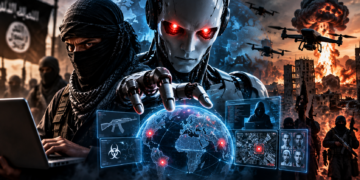























A pager became an unexpected symbol at the United Nations this week when Israeli Prime Minister Benjamin Netanyahu held one up during his General Assembly speech and invoked the 2024 explosions that devastated Hezbollah’s communications network. Behind the theatrical gesture lies a much larger intelligence story: how ordinary commercial technology can be transformed into a covert weapon, how such an operation is investigated, and why the pager attack remains one of the most consequential examples of modern supply-chain warfare.
Table of Contents
- The Pager at the UN
- What Happened in September 2024
- When a Communication Device Becomes a Weapon
- The Supply-Chain Intelligence Problem
- What Investigators Have Had to Reconstruct
- The Human Cost and the Evidence Trail
- Israel’s Public Position Changed
- A New Model of Covert Warfare
- The International Legal and Security Questions
- Why the Pager Still Matters
The Pager at the UN
Benjamin Netanyahu’s appearance at the United Nations on September 24 contained a visual object that immediately drew attention away from the conventional language of a high-level diplomatic address: a pager held in the Israeli prime minister’s hand. Netanyahu used the device to recall Israel’s 2024 operation against Hezbollah’s communications network in Lebanon, telling delegates that the militant group remembered what happened to its pagers.
The gesture was part of a wider speech in which Netanyahu defended Israel’s military actions against Hamas, Hezbollah and Iran, argued that Israel had prevented threats against its population, and attacked critics of Israeli policy. The speech was delivered before a visibly reduced chamber after numerous delegations left during his address. NDTV reported that Netanyahu displayed the pager while discussing the September 2024 operation, which involved explosions of thousands of pagers and later hundreds of walkie-talkies. citeturn0news0turn0search14
Forensic Times is interested in the device for a different reason. The pager was not merely a political prop. It represented an operation in which the distinction between communications equipment and weapon became almost impossible to separate. The 2024 attacks demonstrated how intelligence agencies can exploit the manufacturing, procurement and distribution stages of an apparently ordinary technology supply chain.
That distinction is increasingly important in modern conflict. The weapon may not begin its life as a weapon. It can begin as a commercial product, pass through legitimate-looking orders and logistics, and become dangerous only after hidden modifications or manipulation. Investigators then face a problem that resembles a complex industrial accident—but with deliberate human design behind it.
What Happened in September 2024
On September 17, 2024, pagers used by Hezbollah members exploded in multiple locations across Lebanon. A second wave involving handheld radios and walkie-talkies followed on September 18. The attacks caused deaths and thousands of injuries, including among civilians, and disrupted Hezbollah’s communications system.
Lebanese authorities and Hezbollah attributed the operation to Israel, while Israel did not initially publicly acknowledge responsibility. Reporting later described an intelligence operation in which explosive material had been concealed within devices intended for Hezbollah’s communications network. In November 2024, Netanyahu publicly confirmed that he had authorized the pager operation, according to subsequent reporting. citeturn0news5turn0search14
The exact casualty figures have varied among reports and over time, partly because different authorities have counted Hezbollah members and civilians differently. NDTV’s later explainer reported that the two days of explosions killed dozens and injured more than 3,000 people, while other contemporary reporting documented different totals as investigations and medical records developed. citeturn0news5turn0news6
The operational effect was broader than the number of people physically injured. Hezbollah had relied on pagers partly because it believed they offered greater protection against Israeli electronic surveillance than conventional smartphones. By compromising that communications system, the operation attacked a logistical assumption as well as individual devices.
That is what made the incident so significant for intelligence professionals. A communications network can be treated as part of an organization’s operational infrastructure. If an adversary can penetrate that infrastructure before the devices reach their intended users, the attack can begin long before the battlefield encounter.
When a Communication Device Becomes a Weapon
The forensic challenge begins with the question of when the pager became a weapon. A conventional explosive device is usually designed and manufactured for a destructive purpose. The Hezbollah pager operation appears to have involved the opposite sequence: a communications product was selected, modified and introduced into a procurement chain before being distributed to its intended users.
That creates a radically different investigative trail. Investigators must examine the device’s original manufacturer, component sourcing, distribution records, procurement intermediaries, shipping documents and points where the product could have been altered. They must also determine which components were genuine, which were substituted and when any modification occurred.
Device examination can reveal the physical evidence needed to reconstruct such a chain. Circuit boards, batteries, casings, serial numbers, manufacturing marks and residue can become important. Even fragments of a destroyed device can potentially help investigators establish whether multiple devices originated from a common production or modification process.
The problem becomes more difficult when hundreds or thousands of devices are involved. Investigators are no longer examining one crime scene. They are comparing a population of devices for common characteristics. A repeated component, identical modification or unusual manufacturing feature can become a signature linking apparently separate explosions.
This is where forensic science and intelligence analysis overlap. The laboratory can identify what happened to an individual device; intelligence analysis attempts to determine how that device entered a network and who could have controlled the process.
The Supply-Chain Intelligence Problem
The pager attack highlighted a vulnerability that extends far beyond Hezbollah: trust in a supply chain can become an intelligence target. Organizations routinely purchase communication devices, computers, networking equipment and other electronics through suppliers and intermediaries. Security teams often focus on software vulnerabilities, malware and interception after a device is deployed. The 2024 operation demonstrated the potential strategic value of compromising the hardware before deployment.
Supply-chain attacks can be difficult to detect because the product may appear legitimate. Documentation can look normal. Packaging can appear authentic. The device can function correctly for weeks or months. A hidden modification may not be discovered until the moment the attacker activates it.
For investigators, procurement records therefore become evidence. Who ordered the devices? Who paid? Who supplied them? Which intermediary handled the shipment? Where did the products enter the country? Were serial numbers consistent? Did multiple devices contain the same unusual components? Were there unexplained changes in weight or battery capacity?
These questions are particularly difficult when criminal or intelligence operations use multiple jurisdictions. A procurement company can be registered in one country, manufacture components in another, ship products through a third and deliver them to an organization in a fourth. The evidence chain then crosses legal systems as well as physical borders.
The Hezbollah case has consequently become a reference point for the broader debate over trusted electronics. Governments, militaries and high-risk organizations have increased incentives to understand not only what their devices do, but where every critical component came from and who controlled the supply chain before deployment.
What Investigators Have Had to Reconstruct
A full reconstruction of an operation like this requires more than identifying the explosive mechanism. Investigators need to establish the sequence from procurement to activation. That means reconstructing a timeline: when the devices were ordered, when they were manufactured or modified, when they entered the supply chain, when Hezbollah received them, how they were distributed and when the triggering event occurred.
Digital and documentary evidence can support that reconstruction. Shipping manifests, invoices, company registrations, customs records, telephone communications, surveillance footage and financial transactions may reveal relationships between entities that initially appear unrelated.
Device forensics can then connect the physical evidence to the documentary record. Serial numbers can be compared against procurement documents. Components can be traced to manufacturers. Residue can be chemically examined. Damage patterns can help establish the location and sequence of explosions.
The investigative challenge is also one of attribution. Establishing that a device was deliberately modified is one question. Establishing who performed the modification, who ordered it and who controlled the operation is another. In intelligence cases, the evidence available to the public may be far less complete than the information held by governments.
This is why public accounts of covert operations must be separated from independently established forensic findings. Claims about intelligence agencies, supply chains and clandestine manufacturing can involve information that remains classified. A responsible investigation distinguishes what has been acknowledged, what has been independently documented and what remains based on intelligence reporting.
The Human Cost and the Evidence Trail
The technical sophistication of an operation should not obscure its human consequences. The pager explosions caused widespread injuries, including severe injuries to eyes, hands, faces and other parts of the body. Medical records, hospital reports and photographic evidence became part of the broader documentation of the incident.
The victims also complicate any simplistic description of the operation. The devices were reportedly intended for Hezbollah members, but the explosions occurred in public and residential environments, and civilians were among those affected. The presence of bystanders meant that the operation’s physical effects extended beyond the intended target population.
Forensic medicine can help reconstruct the nature of an explosion through injury patterns. The location and severity of wounds, the distribution of fragments and the characteristics of burns can provide information about the position of the device and the type of explosive event involved.
Those medical findings can then be compared with physical evidence from recovered devices. If fragments, injury patterns and blast effects are consistent across multiple scenes, investigators can strengthen the conclusion that the incidents arose from a common mechanism.
The evidence also has historical value. Large-scale attacks involving modified commercial electronics create an unusually extensive record: thousands of devices, hundreds of locations, hospital admissions, photographs, telecommunications records and procurement histories. That record can remain relevant long after the immediate military operation has ended.
Israel’s Public Position Changed
For months after the 2024 explosions, Israel did not publicly claim responsibility. The operation was widely attributed to Israel, but official confirmation was absent. Netanyahu’s later acknowledgment changed that position and gave the attack a direct place in Israel’s public account of its campaign against Hezbollah.
That evolution is significant because covert operations often depend on ambiguity. A government can benefit from an adversary knowing who was responsible without making a formal public admission. Once responsibility is acknowledged, however, the operation becomes part of the state’s publicly defendable military record.
Netanyahu’s decision to display a pager at the UN in 2026 takes that process another step. The device was no longer an object connected only to intelligence reporting. It had become a symbol deliberately presented to an international audience.
The political message was clear in its basic form: Israel wanted the pager operation remembered as an example of what it described as its ability to penetrate Hezbollah’s capabilities. But the forensic and security implications are wider than the political message. The incident remains a case study in how technology procurement can become part of the battlespace.
A New Model of Covert Warfare
Modern intelligence operations increasingly exploit systems rather than simply people. Communications networks, payment systems, cloud infrastructure, software updates, logistics platforms and hardware supply chains can all become targets. The pager operation belongs to this wider evolution.
What makes hardware manipulation particularly significant is the difficulty of remediation. A software vulnerability can sometimes be patched. A compromised device distributed throughout a network may have to be physically located and removed. If the organization does not know which devices are compromised, it may have to assume the entire shipment is unsafe.
The psychological effect can be just as important. Once users believe their communications equipment may be compromised, trust inside the organization deteriorates. Personnel may stop using the affected devices, switch to alternative communication methods or change operational procedures. An adversary can therefore create disruption without continuously attacking the network.
This is a form of intelligence warfare in which uncertainty becomes an operational weapon. The target does not need to know exactly which device is compromised. The possibility that any device might be compromised can itself alter behaviour.
For governments and critical infrastructure operators, the lesson is that cybersecurity and physical security can no longer be treated as separate disciplines. A device can carry both digital and physical risks. Procurement security, hardware assurance, software security and intelligence analysis increasingly overlap.
The International Legal and Security Questions
The pager attack also raises difficult questions about the laws governing armed conflict, covert action and the use of modified civilian technology. Those questions depend heavily on facts that remain classified or disputed, including the precise construction of the devices, the intended target set and the circumstances of individual explosions.
International humanitarian law distinguishes between combatants and civilians and imposes requirements concerning distinction, proportionality and precautions in attack. Whether a particular operation complied with those principles depends on evidence about how it was planned and executed. The fact that a device was associated with a militant organization does not by itself resolve the legal status of every person who could be affected by its detonation.
There is also a broader security concern. If covert modification of commercial devices becomes normalized, civilian supply chains could become increasingly vulnerable to state and non-state exploitation. Governments may respond with stronger hardware verification and procurement controls, while organizations may move toward trusted manufacturing environments for sensitive communications equipment.
That could have significant consequences for global electronics manufacturing. The more security-sensitive a device becomes, the more organizations may demand verifiable provenance for components and firmware. Supply-chain assurance could become a standard intelligence requirement rather than a specialist concern.
Why the Pager Still Matters
Two years after the explosions, Netanyahu’s decision to bring a pager to the UN shows that the operation has retained symbolic power. For Hezbollah, the devices remain associated with one of the most damaging compromises of its communications system. For Israel, the episode has become an example of intelligence penetration and operational reach.
For the wider security community, the deeper lesson is different. The pager was ordinary enough to be trusted and specialized enough to be useful. That combination created an opportunity for an intelligence operation that depended not on defeating a digital encryption system in real time, but on manipulating the physical technology entering the target’s hands.
The case also demonstrates why modern forensic investigations increasingly begin before an incident. Procurement records, component histories and logistics data can be as important as the fragments recovered after an explosion. Understanding the origin of a device may ultimately be as important as understanding how it detonated.
Netanyahu’s UN demonstration turned a small piece of obsolete-looking communications technology into a symbol of a much larger transformation in warfare. The lesson is not that pagers themselves are uniquely dangerous. It is that trusted technology can become part of the attack surface when an adversary can penetrate the supply chain.
As governments and intelligence agencies prepare for future conflicts, that vulnerability will extend beyond pagers to smartphones, routers, satellite terminals, sensors, industrial controllers and other connected systems. The forensic question after the next major incident may therefore be very different from the traditional question of who launched the attack.
Investigators may first have to ask: Who controlled the device before the victim ever received it?
ForensicTimes · forensictimes.com · Global Investigative Journalism on Crime, Justice, and Forensic Science · This report reflects verified open-source and wire reporting current as of publication. © 2026 ForensicTimes. All Rights Reserved.