




















A classified U.S. assessment says Riyadh has kept the nuclear-weapons option open as Washington advances a civilian nuclear agreement that could permit domestic uranium enrichment.
Table of Contents
- The Intelligence Warning Changes the Question
- A Civilian Nuclear Deal With Strategic Consequences
- What Washington Has Agreed to Supply
- The IAEA Safeguards Question
- Why Iran Is Central to Saudi Arabia’s Calculation
- Congress Raises the Nonproliferation Alarm
- Israel, Iran and the Prospect of a Regional Nuclear Competition
- The Technical Threshold: From Enrichment to a Weapon
- What the Intelligence Assessment Does—and Does Not—Show
- The Unresolved Questions
The Intelligence Warning Changes the Question
A classified U.S. intelligence assessment delivered to Congress has put a sharper edge on a question that has hovered over Saudi Arabia’s nuclear ambitions for years: whether Riyadh’s civilian nuclear programme could eventually provide the technical foundation for a weapons option. The assessment, reported by The Washington Post and subsequently carried by other outlets, does not say that Saudi Arabia has decided to build a nuclear weapon. Its significance is narrower and more consequential: U.S. intelligence officials assessed that the kingdom has not ruled out developing a nuclear weapons programme.
That distinction matters. A state can pursue nuclear power and enrichment for civilian purposes without deciding to manufacture a weapon, but parts of the nuclear fuel cycle can also provide capabilities relevant to weapons production.
The immediate issue is therefore not evidence that Saudi Arabia possesses a bomb. No such evidence is contained in the public reporting. The issue is whether the capabilities being assembled could reduce the barriers to a future change in strategic direction.
A Civilian Nuclear Deal With Strategic Consequences
In July 2026, the United States and Saudi Arabia signed a long-negotiated agreement for peaceful nuclear cooperation. The U.S. Department of Energy described it as a decades-long, multi-billion-dollar partnership intended to expand nuclear energy in Saudi Arabia while maintaining nuclear safety, security and nonproliferation standards. The agreement is part of Riyadh’s broader effort to diversify its energy system and build domestic nuclear expertise.
The strategic sensitivity comes from the fuel cycle. Reporting on the agreement indicates that Saudi Arabia would initially be restricted to uranium enrichment below five percent, with a conditional mechanism allowing enrichment to rise as high as 20 percent following further review and a written agreement. The Washington Post reported that the arrangement does not require Saudi Arabia to adopt the IAEA Additional Protocol, although negotiations are under way over enhanced monitoring provisions.
The difference between civilian and military intent cannot be reduced to an enrichment percentage. Low-enriched uranium used for nuclear power is far below weapons-grade material, but enrichment is a technology with dual-use implications. Material enriched to 20 percent is still not weapons-grade, yet it is considerably closer to that threshold than ordinary reactor fuel. If a country possesses enrichment infrastructure, uranium feedstock, technical expertise and the ability to operate the process domestically, it has accumulated capabilities that can matter in a future proliferation crisis.
The assessment therefore raises the question of how much strategic latitude Washington should permit while relying on safeguards, inspections and Saudi commitments to peaceful use.
What Washington Has Agreed to Supply
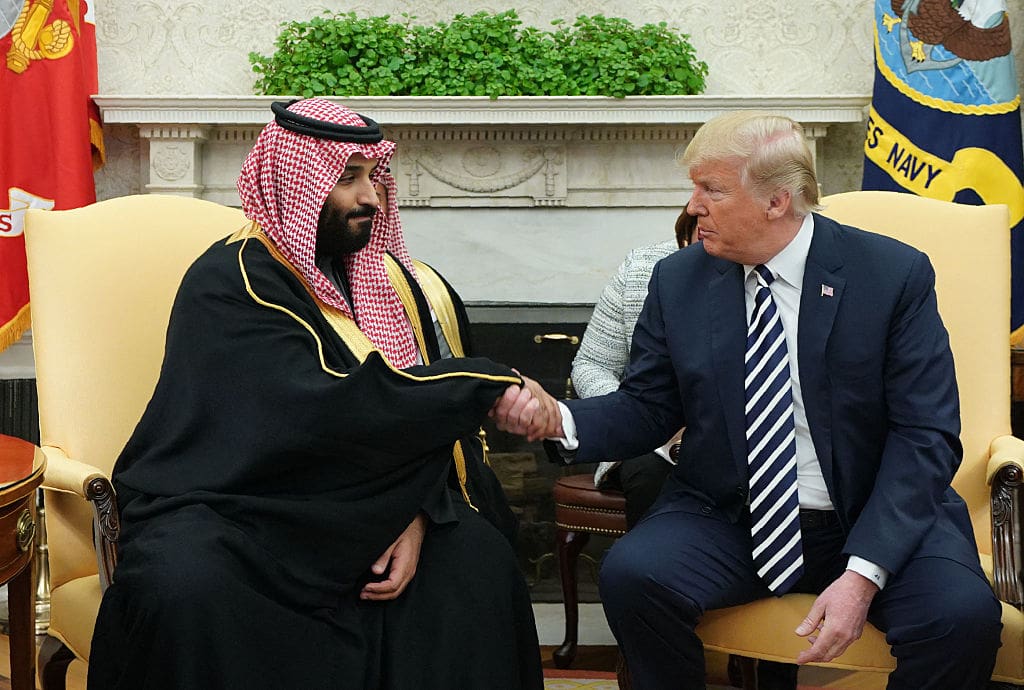
The U.S. government has presented the nuclear agreement as a controlled civilian partnership rather than a transfer of weapons capability. The Department of Energy says the pact creates a legal framework for American companies to participate in Saudi nuclear projects and links the cooperation to nonproliferation and security objectives.
The agreement is also part of a wider strategic relationship. Saudi Arabia wants nuclear power as part of its long-term energy planning, while the United States wants American companies to secure a major role in an emerging nuclear market. Those interests can coexist with nonproliferation requirements, but they create a difficult regulatory balance when the prospective customer also wants greater control over the nuclear fuel cycle.
For Saudi Arabia, domestic enrichment has a practical attraction. Importing reactor fuel from foreign suppliers can make a nuclear programme dependent on outside political and commercial decisions. Producing or processing fuel domestically offers greater autonomy. The same autonomy, however, is precisely what makes enrichment politically sensitive.
The U.S. position is that it will not support a Saudi nuclear weapons programme. The State Department has defended the agreement as a realistic way to expand nuclear energy cooperation while maintaining the strongest nonproliferation standards that can be achieved diplomatically. Saudi Energy Minister Prince Abdulaziz bin Salman has likewise described the programme as peaceful and pledged responsibility and transparency.
The unresolved question is whether the verification architecture will remain strong enough if Saudi Arabia develops sophisticated domestic fuel-cycle capabilities.
The IAEA Safeguards Question
The International Atomic Energy Agency sits at the centre of that verification problem. Saudi Arabia is a party to the Nuclear Non-Proliferation Treaty and is legally committed as a non-nuclear-weapon state not to manufacture or acquire nuclear weapons. Its nuclear activities are subject to IAEA safeguards.
But safeguards can vary significantly in reach. The Additional Protocol gives the IAEA broader access to information and locations and is widely regarded by nonproliferation specialists as an important instrument for detecting undeclared nuclear activity. The U.S.-Saudi agreement does not require Riyadh to adopt that protocol.
IAEA Director General Rafael Grossi said in September that Saudi Arabia was preparing arrangements that would provide the agency with enhanced inspection and monitoring powers over sensitive activities, including uranium conversion, enrichment and reprocessing. Grossi indicated that some of these measures could be similar in effect to elements of an Additional Protocol even though Saudi Arabia is not formally adopting the protocol itself.
That distinction will matter in practice. Nuclear verification is not simply a question of whether inspectors can visit a declared reactor. It involves establishing whether the declared inventory matches reality, whether nuclear material is accounted for and whether undeclared activities can be detected. The more extensive the domestic fuel cycle becomes, the more important those questions become.
The intelligence assessment therefore lands at a sensitive moment. The United States is relying on a combination of legal commitments, bilateral safeguards and Saudi assurances, while outside experts are asking whether those mechanisms will provide enough visibility into a programme with domestic enrichment capability.
Why Iran Is Central to Saudi Arabia’s Calculation
Saudi Arabia’s nuclear debate cannot be separated from Iran. Riyadh has long viewed Tehran’s nuclear programme and regional military capabilities through the lens of national security. The strategic problem becomes more acute whenever Iran is perceived to be moving closer to a weapons capability or when confidence in international restrictions declines.
Saudi Crown Prince Mohammed bin Salman made the kingdom’s position explicit in a widely cited 2018 interview. He said Saudi Arabia did not want to acquire a nuclear bomb but would follow suit if Iran developed one. The statement did not announce a Saudi weapons programme. It established a conditional deterrence position: Riyadh would not accept being permanently disadvantaged if its principal regional rival acquired nuclear weapons.
That statement has acquired renewed importance as the United States, Iran, Israel and the Gulf states navigate a much more volatile regional security environment. Any perception that Iran could retain a nuclear option, rebuild sensitive capabilities or operate under weaker constraints could strengthen arguments inside Saudi Arabia for maintaining technological options of its own.
This creates a classic proliferation dilemma. One state’s nuclear capability can become another state’s justification for retaining or developing a similar capability. The resulting competition does not require either government to announce a weapons programme. It can begin through civilian infrastructure, scientific training, fuel-cycle development and strategic ambiguity.
For Washington, preventing such a chain reaction is a central reason the safeguards question matters. For Riyadh, maintaining strategic autonomy while obtaining civilian nuclear technology is a legitimate national objective in the kingdom’s public framing. The challenge is ensuring that those objectives do not gradually converge on a capability that other regional states interpret as a latent weapons programme.
Congress Raises the Nonproliferation Alarm
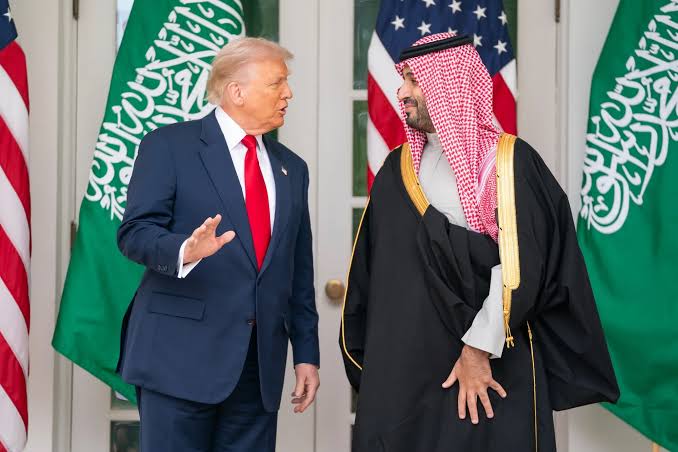
The classified assessment has intensified an already active debate in the U.S. Congress. Democratic senators Ed Markey and Jeff Merkley have questioned whether the agreement gives Saudi Arabia capabilities that Washington has historically sought to restrict in sensitive nuclear arrangements.
Their criticism focuses particularly on domestic enrichment and the absence of a formal Additional Protocol requirement. The senators argue that the combination could make it harder for international authorities to determine whether Saudi nuclear activity remains exclusively peaceful.
A separate group of nuclear nonproliferation specialists, including former IAEA Director General Hans Blix, has also warned Congress about the proliferation implications of the agreement. Their concern is not based on a public finding that Saudi Arabia has begun building a weapon. Rather, they argue that a state with a stated desire for domestic fuel-cycle capabilities and a history of conditional statements about matching an Iranian bomb should face particularly rigorous verification.
The political disagreement is broader than the Democratic criticism. The administration has argued that a negotiated civilian agreement is preferable to leaving Saudi Arabia to develop its nuclear programme without American participation and that safeguards can be strengthened through diplomacy.
That argument creates a genuine policy trade-off. A U.S.-Saudi agreement gives Washington leverage over technology, fuel, standards and oversight. At the same time, granting domestic enrichment capability creates a technical pathway that critics say should be more tightly constrained.
The classified assessment makes that disagreement harder to dismiss as hypothetical. It provides an intelligence-based reason for Congress to examine not only what Saudi Arabia says it intends to do, but also what capabilities the agreement could permit it to possess over time.
Israel, Iran and the Prospect of a Regional Nuclear Competition
Saudi Arabia’s nuclear trajectory is also being watched closely in Israel. Israel is widely regarded as possessing nuclear weapons, although it maintains a policy of nuclear ambiguity and has not officially acknowledged an arsenal. That reality complicates the regional nonproliferation environment: Arab governments can point to a long-standing Israeli capability while Israeli security planners focus on the possibility of Iran or other regional states acquiring comparable deterrent power.
Iran remains the central variable. Tehran’s enrichment programme has demonstrated that a country can develop substantial civilian nuclear infrastructure while creating international controversy over the possibility of military diversion. Saudi officials have repeatedly framed their nuclear ambitions around energy, technology and national development, but Iran’s activities give the programme an unavoidable security dimension.
If Saudi Arabia develops enrichment infrastructure, other governments will have to judge the programme not only by its declared purpose but by the amount of time and technical capability it could provide for a future change in direction. That is the essence of the concern behind the latest U.S. intelligence warning.
A regional arms race would not necessarily begin with public announcements. It could emerge through increasingly sophisticated civilian programmes, missile development, stockpiling decisions and security guarantees. The distinction between peaceful capability and military potential would become increasingly important as trust deteriorates.
For now, there is no public evidence that Saudi Arabia has decided to pursue nuclear weapons. The intelligence assessment says the option has not been ruled out. That is a warning about strategic intent and future possibility, not a declaration that a weapons programme is underway.
The Technical Threshold: From Enrichment to a Weapon
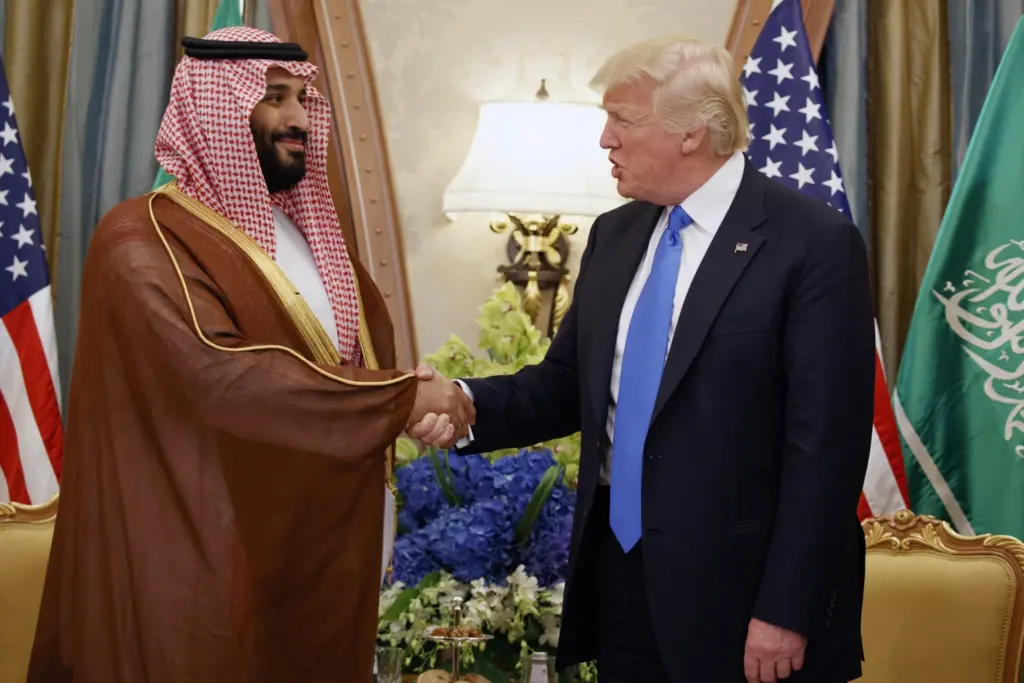
The nuclear debate often becomes distorted when enrichment levels are treated as if they automatically equal a bomb. They do not. A weapons programme requires far more than access to enriched uranium.
A state seeking a nuclear weapon would need to acquire or produce suitable fissile material, develop weapon-related engineering expertise, create a workable design, establish reliable triggering and safety systems, and potentially solve difficult delivery and command-and-control problems. International monitoring and export controls can complicate every stage.
At the same time, enrichment is an important part of the equation because it can shorten the technical distance to weapons-grade material. A civilian programme that remains under strict safeguards is not equivalent to a weapons programme. But a state with a mature enrichment industry has more options available to it if its political leadership later decides to change course.
This is why the most important issue in the Saudi case may not be the headline figure of 20 percent enrichment. It is whether the entire system surrounding enrichment can provide credible, continuous assurance that nuclear material and facilities remain dedicated to peaceful use.
That includes accounting for uranium, monitoring sensitive equipment, investigating anomalies, maintaining access for inspectors and ensuring that any future expansion is transparent. The safeguards system will determine how much confidence outside governments can place in Saudi Arabia’s declared intentions.
The public debate should therefore avoid two opposite errors: treating the existence of enrichment as proof of a weapons programme, and assuming that a civilian label automatically eliminates proliferation risk. The evidence supports neither conclusion.
What the Intelligence Assessment Does—and Does Not—Show
The classified assessment is important because its public description is limited. The reported conclusion is that Saudi Arabia has not ruled out developing a nuclear weapons programme. It does not publicly establish that Saudi Arabia has ordered weapon design work, produced weapons-grade material, constructed a secret enrichment plant or taken a decision to withdraw from the Nuclear Non-Proliferation Treaty.
That limitation should remain central to coverage of the issue. Intelligence assessments can describe intentions, capabilities and risks that are not themselves public evidence of a completed programme. A judgment that a government has retained an option is fundamentally different from a finding that it is exercising that option.
There is also a difference between Saudi political statements and intelligence judgments. Riyadh has publicly described its nuclear plans as peaceful and has emphasized responsibility and transparency. Washington says it will not support a Saudi nuclear weapons programme. The intelligence assessment introduces a separate layer: U.S. agencies apparently believe the possibility of a future weapons programme cannot be excluded.
The gap between those positions is where the real story lies. Nuclear diplomacy depends not only on what governments promise, but on whether independent verification can test those promises.
The next stages of the U.S.-Saudi arrangement will therefore matter more than the headlines. Congress must review the agreement, the detailed safeguards arrangements must be developed, and the IAEA will have a role in evaluating the verification framework. The credibility of that system will determine whether Saudi Arabia’s nuclear expansion is seen as a conventional energy project or as a new source of regional proliferation risk.
The Unresolved Questions
Several questions remain open. First, how extensive will Saudi Arabia’s domestic enrichment infrastructure become, and what technical limits will ultimately govern it? Second, what precise inspection rights will the IAEA receive over declared and potentially undeclared nuclear activity? Third, how will Washington respond if Saudi Arabia seeks additional fuel-cycle capabilities beyond those currently described?
A fourth question concerns Iran. If Tehran retains or rebuilds a significant enrichment capability, will Riyadh interpret that as grounds to accelerate its own programme? Saudi officials have previously linked their nuclear posture to Iran, making the regional strategic environment an important variable in any future assessment.
There is also a broader question for U.S. policy. Does greater American involvement in Saudi Arabia’s nuclear sector reduce proliferation risk by giving Washington greater oversight, or does granting domestic enrichment capability create a new risk that safeguards may not fully eliminate? The answer will depend on the final technical arrangements, not simply the political statements surrounding the agreement.
Finally, the classified assessment itself raises a question about transparency. Congress has seen intelligence that the public has not. The details that remain classified may contain the evidence supporting the assessment of Saudi intentions, but until those details become available, outside observers cannot independently evaluate the underlying intelligence.
What can be established publicly is narrower but still significant. Saudi Arabia is pursuing a substantial civilian nuclear programme. The United States has agreed to cooperate in developing it. The arrangement creates a conditional route to domestic enrichment. Saudi Arabia says its programme is peaceful. The IAEA is working on enhanced monitoring arrangements. And U.S. intelligence has assessed that Riyadh has not ruled out a future nuclear weapons option.
That combination does not amount to proof of a Saudi bomb programme. It does, however, place the kingdom’s nuclear policy at the centre of one of the Middle East’s most consequential nonproliferation questions.
ForensicTimes · forensictimes.com · Global Investigative Journalism on Crime, Justice, and Forensic Science · This report reflects verified open-source and wire reporting current as of publication. © 2026 ForensicTimes. All Rights Reserved.