Open-source intelligence has moved from the edges of investigative journalism into the centre of international criminal justice since Russia’s full-scale invasion in February 2022. Satellite images, videos from social media, intercepted calls, leaked records are now sitting beside physical forensic evidence, especially in cases headed for the International Criminal Court. This article focuses on how female analysts turn raw public material into something a court can use and the professional standards such as the Berkeley Protocol. It focuses on the women leading this work in and around Ukraine.
Ukraine is now one of the most heavily documented wars in history. There is far more potential evidence than any team can process: videos from social media, satellite passes, intercepted calls, leaked databases. Women work at almost every stage of turning this material into something useful and meaningful: from the first collection through to the files handed to prosecutors.
A video on Telegram: a column of armour on a village road, a plume of smoke, half of a street sign in the corner of the frame. It proves nothing on its own. An analyst has to make it mean something. She matches the buildings and the road against satellite imagery to fix the location. She uses the shadows and local weather records to pin down the time. She checks the unit markings against other videos filmed nearby. Saves the file with a cryptographic hash so she can show it later in court and prove that it has not been altered. It is slow and careful work and in Ukraine a great deal of it is done by women.
How Open Source Became Evidence
Work that used to be a hobby or investigative process for journalists is now a profession that feeds war-crimes cases. After the killings and other war-crimes in Bucha the investigators had to use facial-recognition tools to try to put names to alleged perpetrators. In 2023 Europol set up a dedicated task force to cope with the sheer amount of open-source material coming out of Ukraine (Europol, 2023). Volunteer groups such as OSINT for Ukraine went even further: they built map-based databases which meant to work as a single point of access to the evidence (OSINT for Ukraine).
Maryna Slobodianiuk heads the investigations department at Truth Hounds, a Ukrainian group that has documented war crimes since 2014. She goes into the field to interview survivors and refugees. It is human intelligence in the older sense of the term. She sets their accounts against open-source material about the weapons used and the Russian units involved (Balkan Insight, 2022). All of it goes into a monitoring database that stores material from YouTube, Telegram and satellite imagery for later checking. The separate records for suspected perpetrators and for victims are kept. When analysts line up incidents shared by same perpetrators as well as places, timing or methods, they can see a pattern which looks like something organised. Those findings go to Ukrainian prosecutors and to the International Criminal Court. As Maryna Slobodianiuk from Truth Hounds pointed out, investigators are forced to deal with the unprecedented scale of war crimes in Ukraine. It makes the integration of open-source data and survivor testimonies more crucial than ever (LSE Human Rights, 2023; Truth Hounds).
Kateryna Onipenko is a forensic investigator at Ukraine’s National Police in the Donetsk region. She works some of the most dangerous scenes in the country. Highlighting the extreme conditions of her field work, Onipenko explains that usually we don’t have much time to work – maybe two hours or even less before shelling forces her team to pull back. In areas taken back from Russian forces her unit had to come across mass and individual graves, exhume and identify about 300 bodies. Nothing in her training had prepared her for that. Her colleague Oksana Zaporozhchenko has documented those crimes in liberated areas from a mobile forensic laboratory (United Nations Development Programme 2023a).
The International Committee of the Red Cross reported that as of May 2025 the fate or whereabouts of approximately 126,000 people from both sides of the war was still unknown (International Committee of the Red Cross, 2025).
They point to Bosnia and Herzegovina as the dead of the 1990s are still being identified today. They warn that Ukraine may face years, probably decades, of the same work (ICRC, 2025). Open-source work can help establish who, where and when committed the crime so the victims can get their names back.
Oleksandra Matviichuk is a human-rights lawyer who runs the Center for Civil Liberties. In 2022 it became the first Ukrainian organisation to win the Nobel Peace Prize. After the full-scale invasion she helped launch the Tribunal for Putin initiative. It coordinates hundreds of volunteers and staff who have logged tens of thousands of alleged international crimes. She is deliberate about how she frames the work. Emphasizing the strict legal goal of their documentation, Oleksandra Matviichuk stated that we are not historians and don’t do it for national archives (TIME – 2022). Her organisation is made up not of historians but of lawyers to build court-ready cases against perpetrators (Nobel Women’s Initiative, Al Jazeera, 2024).
The Discipline of Verification
In 2020 the UN Human Rights Office and the Human Rights Center at UC Berkeley published the Berkeley Protocol on Digital Open Source Investigations which was later updated in 2022. It was the first global set of rules for using publicly available online information as evidence in international criminal and human-rights cases (Office of the United Nations High Commissioner for Human Rights & Human Rights Center, UC Berkeley School of Law, 2022). Its main principles: work within the law, collect only what the case needs, keep no more personal data than necessary, do not harm the people who supply the material, follow the evidence instead of forcing a conclusion, keep the method transparent.
What Ukraine Is Proving
Ukraine has turned into a test case for something the whole field is still figuring out: how open-source and digital evidence can be used in formal justice on this scale. One thing stands out. Women are leading at almost every point along the chain. They are running an NGO’s investigations unit, heading a national DNA department, directing a Nobel-winning documentation group, building the legal methods for the worst cases. That is not a coincidence. It fits the long-standing argument of the Women, Peace and Security agenda that women belong in justice and security work as a matter of course, not as decoration.
References
1. Al Jazeera. (2024, July 15). A ‘tribunal for Putin’ from a Nobel Prize-winning Ukrainian rights defender. https://www.aljazeera.com/features/2024/7/15/a-tribunal-for-putin-from-a-nobel-prize-winning-ukrainian-rights-defender
2. Balkan Insight. (2022, December 30). As war grinds on in Ukraine, investigators doggedly track crimes. https://balkaninsight.com/2022/12/30/as-war-grinds-on-in-ukraine-investigators-doggedly-track-crimes/
3. Europol. (2023). Europol sets OSINT taskforce to support investigations of war crimes committed in Ukraine. https://www.europol.europa.eu/media-press/newsroom/news/europol-sets-osint-taskforce-to-support-investigations-war-crimes-committed-in-ukraine
4. International Committee of the Red Cross. (2025, July 8). Ukraine: DNA and dignity for the deceased. https://www.icrc.org/en/article/ukraine-dna-and-dignity-deceased
5. LSE Human Rights. (2023, February 2). The role of technology in the exposition of war crimes in Ukraine. London School of Economics. https://blogs.lse.ac.uk/humanrights/2023/02/02/the-role-of-technology-in-the-exposition-of-war-crimes-in-ukraine-how-the-use-of-cutting-edge-technologies-and-open-sources-investigations-can-expose-human-rights-violations/
6. Nobel Women’s Initiative. (n.d.). Oleksandra Matviichuk. Retrieved October 2026, from https://www.nobelwomensinitiative.org/oleksandramatviichuk
7. Office of the United Nations High Commissioner for Human Rights & Human Rights Center, UC Berkeley School of Law. (2022). Berkeley Protocol on digital open source investigations (2nd ed.). United Nations. https://www.ohchr.org/en/publications/policy-and-methodological-publications/berkeley-protocol-digital-open-source
8. OSINT for Ukraine. (n.d.). Documentation and investigation of crimes committed by Russia in Ukraine. Retrieved October 2026, from https://www.osintforukraine.com/documentation-and-investigation-of-crimes-committed-by-russia-in-ukraine-1
9. TIME. (2022, October). Oleksandra Matviichuk on winning the Nobel Peace Prize. https://time.com/6220634/oleksandra-matviichuk-nobel-peace-prize-interview/
10. Truth Hounds. (n.d.). About us. Retrieved October 2026, from https://truth-hounds.org/en/about/
11. United Nations Development Programme. (2023). A forensic expert seeking truth amid the ruins. https://www.undp.org/ukraine/they-rescue-they-care-they-protect/a-forensic-expert-seeking-truth-amid-the-ruins
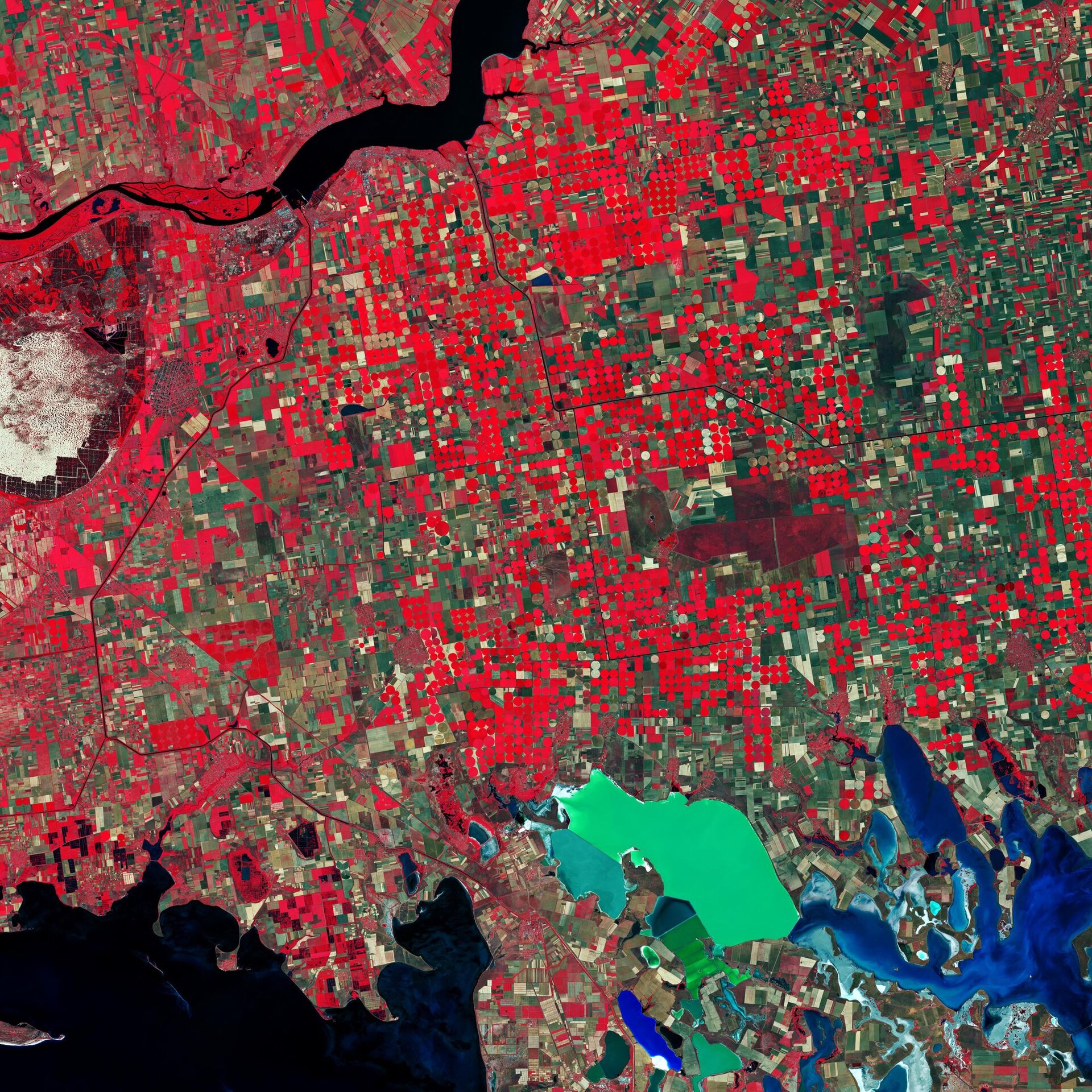
Satellite view of agricultural fields in southern Ukraine, captured by the Copernicus Sentinel-2 mission. Image: contains modified Copernicus Sentinel data (2019), processed by ESA (CC BY-SA 3.0 IGO).