









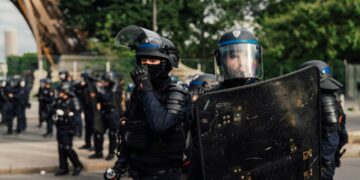





French authorities ordered targeted overnight curfews in parts of Paris and several other cities after demonstrations over the cost of living escalated into looting, arson and clashes with police. Prime Minister Sébastien Lecornu instructed regional authorities to impose local restrictions rather than a blanket curfew across the capital.
The measures differed by location and age group. Parts of Paris faced a nighttime curfew and a ban on demonstrations, while several northern cities introduced overnight restrictions for minors. Nice announced a separate curfew for minors in its city centre, and Marseille prohibited gatherings and demonstrations.
Local curfews vary by city
In Paris, police announced a ban on demonstrations in certain areas from 8 p.m. on Monday and a curfew around Place de la République and Les Halles from 11 p.m. until 6 a.m. on Tuesday. The orders were limited to designated areas rather than the whole city.
In the northern cities of Lille, Douai, Wattignies and Denain, restrictions for minors were set from 8 p.m. to 6 a.m. for Monday and Tuesday nights. Nice introduced a separate overnight curfew for minors in central streets from 9 p.m. Marseille, meanwhile, banned public gatherings and demonstrations. Local orders could differ as authorities assessed risks in individual areas.
Protests escalate into looting and arrests
The violence followed weeks of demonstrations that began with student complaints about school conditions and widened into a broader expression of frustration over rising living costs and public services. The French news agency AFP reported that roughly half a million people took part in demonstrations nationwide on Saturday. While many joined protests over social and economic issues, some groups attacked police, damaged public buildings, set fires and looted shops.
Authorities reported around 2,400 arrests over the weekend. Justice Minister Gérald Darmanin subsequently said more than 2,513 people had been taken into custody since the unrest began, reflecting updated figures. Nearly 1,000 members of the security forces were reported injured, and retail representatives said close to 3,000 shops had been affected. The government said 60,000 police and gendarmes were deployed on Saturday, although officials acknowledged that the response had not contained all the violence.
Macron demands answers over security failures
President Emmanuel Macron rejected Interior Minister Laurent Nuñez’s offer to resign and instead tasked him with examining failures in planning and intelligence that preceded the violence. Macron also called for changes to policing tactics. The decision keeps the minister in office during the immediate response while placing greater pressure on the security authorities to explain how crowds and looting overwhelmed some areas.
Lecornu blamed far-left groups for contributing to the unrest. Jean-Luc Mélenchon, leader of the left-wing party La France Insoumise, challenged the accusation and demanded evidence. The competing claims have turned the response into a wider political dispute over accountability, the handling of demonstrations and the line between peaceful protest and criminal violence.
Economic damage raises political pressure
The damage has left shop owners and workers facing the cost of broken storefronts, looted stock and interrupted trading. The government said furlough measures for affected businesses would begin on Tuesday. Digital Minister Anne Le Hénanff also asked online resale platforms to remove listings for goods suspected of being stolen during the looting.
The unrest has put additional pressure on Macron’s government roughly six months before France’s next presidential election. Local mayors have questioned whether enough protection was available during the weekend, while unions have called for further strikes and rallies on 5 November. The demonstrations are unfolding alongside broader public anger about living costs, strained services and the country’s economic outlook.
What happens next
The government has not ruled out declaring a state of emergency, but its immediate approach has focused on targeted restrictions, enforcement in identified hotspots and additional security deployments. Organisers have called for another round of protests on the coming Saturday, leaving authorities preparing for further gatherings while trying to prevent fresh looting and damage.
The next test will be whether localized measures can protect residents and businesses without unnecessarily restricting peaceful demonstrations. The authorities’ review of intelligence and operational planning is also likely to shape the political response as France approaches the 2027 election campaign.
ForensicTimes · forensictimes.com · Global Investigative Journalism on Crime, Justice, and Forensic Science · This report reflects verified open-source reporting current as of publication. © 2026 ForensicTimes. All Rights Reserved.