Brussels handed Google its largest single penalty yet under Europe’s flagship tech law, timed just days before the anniversary of a tariff truce with Washington, and both sides are already signaling this won’t be the last round.
Table of Contents
- The Two Fines
- What Google Actually Did, According to Brussels
- Google’s Response: Product Degradation
- The Trade Backdrop
- How This Fine Compares
- The Compliance Path Still Open
- A Preview of the AI Fight to Come
- Washington’s Pressure Campaign
- Law and Legal Implications
- Does This Trigger US Retaliation
The Two Fines
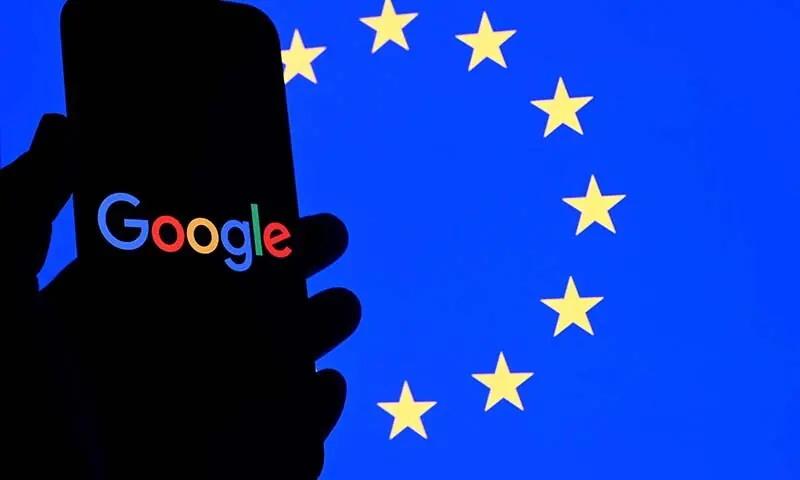
The European Union fined Alphabet’s Google a combined 890 million euros, roughly $1 billion, on Thursday, July 23, 2026, in a move that risks escalating tensions with the United States. The European Commission imposed a 460 million euro fine for illegally favoring Google’s own services, such as Google Flights and Google Hotels, over competitors in search results, and a separate 430 million euro fine because Google barred app developers from showing consumers offers outside the Google Play store free of charge.
What Google Actually Did, According to Brussels
EU tech chief Henna Virkkunen said the decision was meant to ensure more competition and let other companies innovate. A senior EU official said Google continues to favor its own services, though the second fine covers only the period from March 2024 to December 2025. EU antitrust chief Teresa Ribera framed the underlying principle plainly, stating that the best products should succeed because they are better, not because they are owned by the company running the search engine.
Google’s Response: Product Degradation
Google criticized the EU’s findings and said it might take the Commission to court, while also accusing Brussels of dismantling safety protections on Google Play through its enforcement approach. Kent Walker, Google’s president of global affairs, said the company was being forced to strip away real-time search features Europeans value, including instant pricing and direct availability for hotels, flights, and restaurants, characterizing the outcome as product degradation driven by a small group of self-serving complainants rather than genuine competition policy.
The Trade Backdrop
The fines landed just days before the first anniversary of a tariff deal between Washington and Brussels that had eased broader trade tensions between the two economies. US Trade Representative Jamieson Greer said the fines and related EU actions undermined hopes for smoother transatlantic trade ties, warning they posed a real risk to continued trade stability, and pointed to a recent large EU loan to Airbus as further evidence that Brussels continues to target the most competitive American companies. Greer did not specify any planned US retaliation in his statement.
How This Fine Compares
Thursday’s penalty is the largest yet levied against a single company under the EU’s Digital Markets Act, the bloc’s signature tech competition law that took effect in 2024. In 2025, the EU had fined Meta 200 million euros and Apple 500 million euros under the same framework. An EU official noted Thursday’s Google penalties amount to just 0.22% of the company’s global turnover, well short of the up to 10% ceiling the DMA allows for violations, though the Commission warned the fines could grow further through periodic penalty payments if Google fails to comply within 60 days.
The Compliance Path Still Open
Despite the penalties, the Commission pointed to what it called a constructive dialogue with Google and significant progress toward compliance, noting Google has proposed and begun testing changes to how it presents its own services in search results for shopping, hotels, and flights, as well as changes to how it presents shopping ads and sports-related content. Google’s proposed changes to its Google Play steering terms also received a tentative positive assessment from the Commission, described as good progress that would be evaluated alongside today’s cease and desist order.
A Preview of the AI Fight to Come
The EU signaled that the principles behind Thursday’s decision could extend to Google’s AI-generated features, specifically AI Overviews and AI Mode, with the Commission indicating that talks on this front would continue. The statement suggests Brussels views its Google enforcement as an evolving framework rather than a closed matter, with generative AI search features likely to become the next front in the same underlying competition dispute.
Washington’s Pressure Campaign
Political pressure on the Trump administration to respond has been building domestically: roughly 25 Republican lawmakers urged Trump earlier in the week to use tools such as trade investigations against what they called the EU’s discriminatory digital rules, a step that could trigger higher tariffs on European goods. Virkkunen said the EU remained fully committed to its rules regardless. Google is not a first-time target for Brussels: between 2017 and 2019 the company faced EU penalties totaling 8.2 billion euros, and a separate 2.95 billion euro fine under different antitrust rules in September of the prior year had already prompted a Trump retaliation threat at the time.
Law and Legal Implications
The Digital Markets Act allows the European Commission to fine companies up to 10% of their global annual turnover for violations, meaning Thursday’s 0.22%-of-turnover penalty represents a fraction of the EU’s maximum available enforcement power, leaving significant room for escalation if Google is found in continued noncompliance. Google’s stated intention to potentially challenge the ruling in court would proceed through the EU’s own judicial system, specifically the General Court and potentially the Court of Justice of the European Union on appeal, a process that historically takes years and has not fully overturned prior major EU antitrust rulings against the company. Ribera’s public statement that the US pursues very similar antitrust approaches in comparable cases of its own is a notable rebuttal to Washington’s discrimination framing, since it implicitly argues US and EU competition enforcement share a common legal logic even as the two governments dispute this specific application of it.
Does This Trigger US Retaliation
It remains unclear whether the Trump administration will act on Republican lawmakers’ call for trade investigations or new tariffs targeting the EU’s digital rules, given that Greer’s statement stopped short of announcing specific retaliatory steps. Whether Google will actually pursue a court challenge to Thursday’s ruling, and how long such a challenge might take to resolve, has not been confirmed. The scope and timing of any future EU action against Google’s AI Overviews and AI Mode features, flagged as an area of ongoing talks, is not yet determined. Forensic Times continues to monitor European Commission enforcement actions and US Trade Representative statements on transatlantic tech policy.
ForensicTimes · forensictimes.com · Global Investigative Journalism on Crime, Justice, and Forensic Science · This report reflects verified open-source and wire reporting current as of publication. © 2026 ForensicTimes. All Rights Reserved.