Ramkhamhaeng · Bangkok · Thailand · May 2026 | ForensicTimes.com | Drug Trafficking · Forensic Analysis · Immigration Law
Table of Contents
- The Sting: 100,000 Baht for 40 Grammes
- The Fence, the Flight, and the Ditch
- Who Is Louis Junior
- Forensic Analysis: What an Undercover Buy Operation Actually Requires
- The Missing Drugs: Why No Recovery Doesn’t Mean No Case
- Criminal Psychology: The Calculus of Flight Versus Compliance
- Law and Legal Implications: What Louis Junior Is Actually Charged With
- Global Context: Nigerian Trafficking Networks in Thailand’s Tourist Economy
- Investigation: What Remains Unresolved
- The Ditch and the Network Above It
The Sting: 100,000 Baht for 40 Grammes
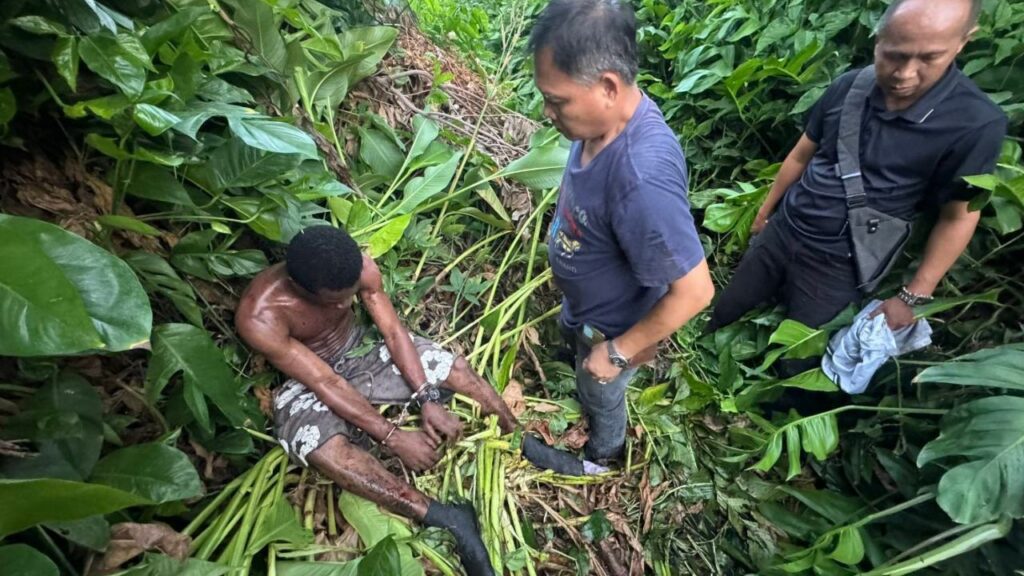
Immigration police in Bangkok said the operation that led to the arrest of a 21-year-old Nigerian national began with an investigation into foreign nationals suspected of involvement in drug activity in the city. On May 1, 2026, officers received a tip-off that a foreign man was selling drugs in the Ramkhamhaeng area of Bangkok. They arranged an undercover purchase.
An informant working with police contacted the suspect to buy 40 grammes of cocaine at 2,500 baht per gramme, totalling 100,000 baht. The meeting was set for 6 p.m. in Soi Ramkhamhaeng 44 — a residential side street typical of the kind of low-visibility location that street-level narcotics transactions in Bangkok are routinely arranged to use. The price point — 2,500 baht per gramme, roughly $70 USD at current exchange rates — sits within the documented range for cocaine sold at street level to the foreign tourist and expatriate market in Bangkok, a price structure that reflects both import risk premiums and the relatively insulated demand from price-sensitive domestic buyers.
At the arranged time, the suspect met the informant in Soi Ramkhamhaeng 44 for the handover. During the exchange, he became aware that he was dealing with an undercover operation and fled, reportedly jumping over a metal fence approximately two metres high into a nearby vacant area.
The Fence, the Flight, and the Ditch
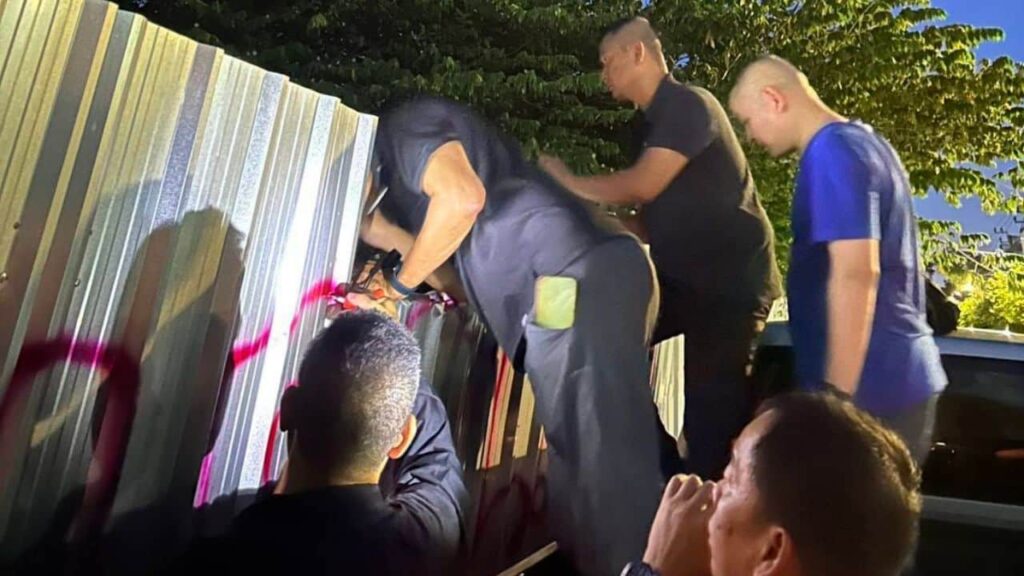
The suspect’s decision to abandon the transaction and flee — rather than attempt to talk his way out of the encounter or simply walk away — is itself an evidentiary signal that investigators and prosecutors will treat as consistent with guilty knowledge of the criminal nature of the exchange. Thai outlet Amarin TV reported that officers pursued the suspect and searched the area for more than two hours before locating him.
At about 12:30 a.m. the following morning — meaning the search extended well past midnight, roughly six and a half hours after the initial 6 p.m. meeting — officers found the 21-year-old Nigerian national, identified as Louis Junior, hiding in a drainage ditch. He was arrested at that location without further incident reported. Police did not recover any drugs during the arrest or the subsequent search, stating that Louis had allegedly thrown the cocaine away while fleeing the scene.
The two-hour pursuit and the eventual location of the suspect in a drainage ditch reflects standard urban fugitive-search methodology: officers establishing a containment perimeter around the area where the suspect was last seen, then systematically clearing likely concealment locations — drainage infrastructure, vacant lots, and similar low-visibility urban terrain — until the perimeter search produces a result. The six-and-a-half-hour gap between the initial flight and the eventual arrest indicates the suspect was able to remain concealed and evade initial search efforts for a substantial period before officers located the specific ditch where he was hiding.
Who Is Louis Junior
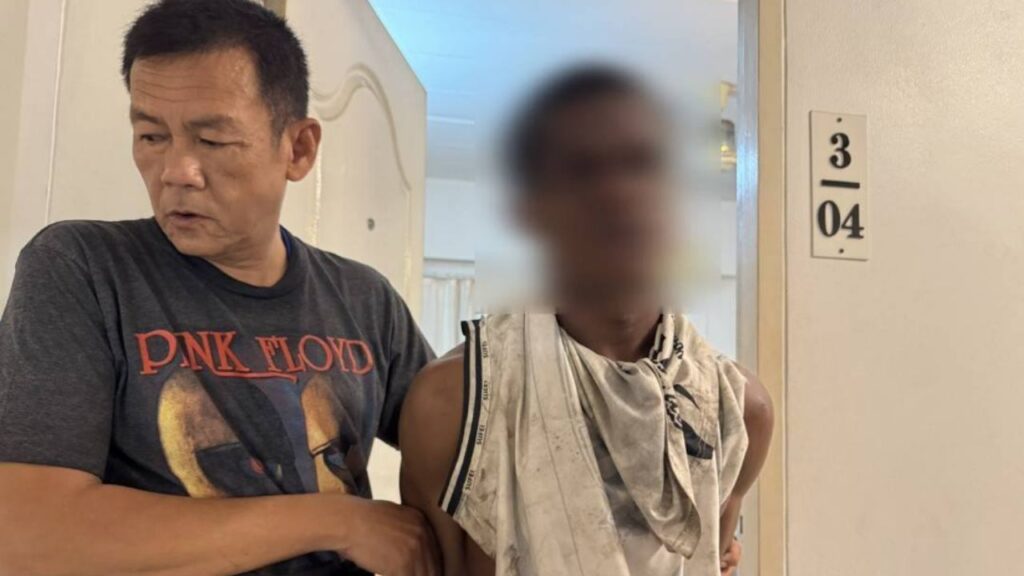
Immigration records reviewed by police showed that Louis entered Thailand through Suvarnabhumi Airport on April 12 of the previous year and later received a study extension permitting him to remain in the country until October 8. By the time of his arrest, he had overstayed that authorised period by 206 days — close to seven months beyond the date his legal permission to remain in Thailand had expired.
The combination of a study-visa entry pathway, a subsequent extension, and an extended overstay period is a documented pattern in cases involving foreign nationals who enter Thailand on legitimate visa categories and subsequently transition into unauthorised residency while engaging in unlawful income-generating activity, including drug sales, to sustain themselves during the period of unauthorised stay. The specific mechanism by which Louis transitioned from a student visa holder to an alleged narcotics seller — whether through direct recruitment into an existing trafficking network, independent initiative, or some combination — has not been detailed in available reporting.
Forensic Analysis: What an Undercover Buy Operation Actually Requires
The investigative methodology documented in this case — a tip-off, an undercover informant, a negotiated purchase quantity and price, and a planned interdiction at the point of handover — is the standard operational architecture for narcotics buy-bust operations used by law enforcement agencies internationally, and its forensic and evidentiary requirements are well established.
The informant’s role in this structure is forensically central. An undercover purchase requires the informant to establish sufficient credibility with the target to negotiate a specific transaction — in this case, a defined quantity (40 grammes), a defined price (2,500 baht per gramme), and a defined time and location (6 p.m., Soi Ramkhamhaeng 44) — while simultaneously relaying that information to a police surveillance and interdiction team positioned to act once the transaction is underway. The specificity of the negotiated terms reported in this case (the exact gram price and total) indicates that the informant’s communications with the suspect were being monitored or recorded by police in advance of the meeting, which is standard practice for establishing the evidentiary foundation of an undercover buy before any arrest is attempted.
The operational failure point in this specific case was the suspect’s detection of the police presence during the handover itself — the moment at which surveillance or interdiction officers moved to make contact or arrest, triggering his flight before the actual exchange of money for drugs was completed and before officers could seize the product in his physical possession. This is a documented and common failure mode in buy-bust operations: the interdiction moment is inherently the point of highest operational risk, because it requires officers to close physical distance with the suspect at exactly the moment the suspect is most alert to the possibility of exactly that outcome.
The Missing Drugs: Why No Recovery Doesn’t Mean No Case
Police did not recover any drugs from Louis at the time of his arrest, accepting his account that he discarded the cocaine while fleeing across the fence and through the vacant area before reaching the drainage ditch. The absence of recovered narcotics is a significant forensic gap in what would otherwise be a straightforward buy-bust prosecution, and it shapes the legal posture of the case against him substantially.
Without physical recovery of the cocaine, the prosecution’s case for the narcotics offence itself — as opposed to the immigration overstay, which is independently and separately documented through Louis’s own travel and visa records — will depend on the informant’s testimony regarding the negotiated transaction, any recorded or monitored communications establishing the terms of the deal, and circumstantial evidence including the suspect’s flight itself, which Thai courts, like many common law and civil law systems, treat as probative of guilty knowledge even though flight alone cannot establish guilt to the criminal standard.
Officers have indicated they are expanding the investigation into the alleged drug network beyond Louis individually — language suggesting that investigators believe Louis was operating within or supplying from a larger network rather than as an entirely independent actor, and that the broader investigation may eventually produce either drug recovery from other locations connected to that network or additional evidence strengthening the case against Louis specifically.
Criminal Psychology: The Calculus of Flight Versus Compliance
The decision to flee a drug transaction upon sensing police involvement, rather than attempt to brazen through the encounter, reflects a calculated risk assessment that is well documented in research on the behavioural patterns of narcotics sellers operating in foreign jurisdictions where the legal consequences of conviction — particularly in Thailand, whose drug laws carry severe penalties including the death penalty for trafficking offences involving sufficient quantities — create strong incentives to avoid apprehension at any cost short of violence.
Louis’s specific profile — a foreign national already in unauthorised immigration status, engaged in an activity (drug sales) carrying severe Thai legal consequences, operating in a country where he has no established legal protections comparable to citizenship — represents a documented risk category in which the perceived cost of capture is extremely high relative to the perceived cost of flight, even where flight itself (as in this case, fleeing through a vacant lot and hiding in a drainage ditch for over two hours) carries its own significant discomfort, exposure, and risk of injury. The decision to discard the drugs while fleeing, rather than attempt to retain them, reflects a further risk calculation: that being caught without drugs in hand, even if eventually located and arrested, presents a meaningfully better legal position than being caught in physical possession of 40 grammes of cocaine.
Law and Legal Implications: What Louis Junior Is Actually Charged With
Despite the extensive narcotics-focused investigation that led to his arrest, the charge officers have confirmed against Louis at this stage is for overstaying his visa — the immigration violation independently documented by his Suvarnabhumi entry record, his subsequent study extension, and the 206-day overstay period calculated from the October 8 extension expiry to the date of his arrest. This is, on its face, a substantially less severe charge than the narcotics trafficking offence the undercover operation was specifically designed to produce.
The gap between the operational objective of the sting (a narcotics arrest with drugs recovered in the suspect’s possession) and the charge actually filed (a visa overstay) reflects the evidentiary reality created by the suspect’s successful disposal of the drugs during flight. Thai narcotics law under the Narcotics Code (which consolidated and replaced the earlier Narcotic Act framework) provides for severe penalties for trafficking in controlled substances including cocaine, with sentencing scaled to the quantity involved — 40 grammes would, if Louis were convicted on the basis of the negotiated transaction alone, likely fall within a sentencing range carrying significant custodial exposure, though the absence of recovered product complicates the prosecution’s ability to secure a conviction on the trafficking charge specifically.
The immigration overstay charge, while comparatively minor in isolation, gives Thai authorities an immediate and legally uncomplicated basis to detain Louis, process him through the immigration enforcement system, and — depending on how the broader narcotics investigation into the network develops — either pursue additional narcotics charges as further evidence is developed, or proceed toward deportation on the immigration violation alone if the trafficking case cannot be sufficiently substantiated without the missing physical evidence.
Global Context: Nigerian Trafficking Networks in Thailand’s Tourist Economy
The Louis Junior case occurs within a documented and extensively reported pattern of Nigerian nationals’ involvement in narcotics distribution and associated criminal enterprise within Thailand’s tourist and expatriate economy — a pattern that Thai media outlets, including Thaiger’s own ongoing crime coverage, have tracked through a substantial volume of individual arrest cases across multiple Thai provinces and cities in recent months and years.
The broader documented pattern includes cocaine distribution networks operating in Phuket, Pattaya, and Bangkok specifically targeting the foreign tourist and expatriate cocaine market — a market segment willing to pay the substantial price premium that imported cocaine commands in a country where the drug is not domestically produced and must be smuggled through international trafficking channels. Parallel and sometimes overlapping with the narcotics distribution pattern, Thai authorities have documented an extensive network of Nigerian nationals involved in romance scam operations targeting both Thai and international victims, frequently operating in coordination with Thai nationals who provide banking infrastructure, identity documentation, or logistical support — a documented criminal ecosystem in which narcotics distribution and financial fraud frequently intersect through shared networks, shared safe houses, and shared logistical and financial infrastructure.
This pattern is not unique to Thailand. Nigerian organised crime networks specialising in narcotics trafficking and financial fraud have been documented operating across multiple Southeast Asian, European, and North American jurisdictions, reflecting a broader transnational criminal architecture that Interpol and national law enforcement agencies across multiple continents have identified as a persistent and adaptive enforcement challenge, characterised by networks that recruit members through diaspora community connections, operate with significant compartmentalisation between distribution-level operatives like Louis and the higher-level supply and financial coordination structure above them, and demonstrate consistent capacity to reconstitute operations following individual arrests.
Investigation: What Remains Unresolved
Whether Louis will face formal narcotics trafficking charges in addition to the confirmed visa overstay charge has not been reported, and depends on whether investigators can develop sufficient evidence — through the informant’s testimony, any recorded communications establishing the negotiated transaction, or evidence recovered from the broader network investigation — to support a trafficking prosecution despite the absence of recovered drugs from Louis’s own arrest.
The scope and structure of the “alleged drug network” that officers have stated they are expanding their investigation into has not been detailed in available reporting. Whether that network includes a supply source providing Louis with cocaine, other distribution-level sellers operating in coordination with him, or any financial or logistical infrastructure connecting his activity to a larger organised operation is not established in the current record.
The specific location and ultimate fate of the 40 grammes of cocaine Louis allegedly discarded while fleeing has not been reported. Whether Thai forensic teams attempted to recover the discarded narcotics from the vacant area or drainage system in the hours following his arrest, and whether any recovery effort succeeded, is not addressed in current public reporting.
Whether Louis’s student visa status — entry on April 12 of the prior year, followed by a study extension to October 8 — connects to a specific educational institution, and whether that institution has any documented connection to the broader pattern of foreign nationals overstaying student visas while engaging in unlawful income-generating activity in Thailand, has not been examined in current reporting.
The Ditch and the Network Above It
Louis Junior spent more than two hours in a Bangkok drainage ditch on the night of May 1 into May 2, having jumped a two-metre fence to escape an undercover operation that had already identified him, already negotiated a specific quantity and price with him, and was already in position to arrest him the moment the cocaine changed hands. He did not escape. He delayed his arrest by roughly six and a half hours and ensured that, whatever else Thai prosecutors can establish against him, they would not have 40 grammes of cocaine to put in an evidence locker.
That delay, and that disposal, are the difference between the case Thai police wanted to build and the case they currently have: a confirmed, documented, comparatively minor visa overstay charge, sitting on top of an unresolved narcotics investigation that officers say is expanding into a broader network. Louis was caught. The network above him, whatever its size and structure, has not been.
ForensicTimes · forensictimes.com · Investigative Journalism on Crime, Justice & Forensic Science · © 2026 ForensicTimes. All rights reserved.