Two days after revealing Iran tried to kill his own son, Netanyahu told a room of West Bank settlers a deal with Tehran is impossible, then took personal credit for the sanctions campaign Washington is betting on instead of another round of bombs.
Table of Contents
- The “Savages” Comment
- Why Netanyahu Is Being Careful With Trump
- Netanyahu’s Claimed “Third Option”
- What Economic D-Day Actually Turned Out to Be
- The UAE Break and the China Question
- Netanyahu’s Retaliation Warning
- The Alleged Plot Against His Son
- Who Actually Leads Iran Now
- Law and Legal Implications
- Does Sanctions Pressure Succeed Where Bombing Didn’t
The “Savages” Comment
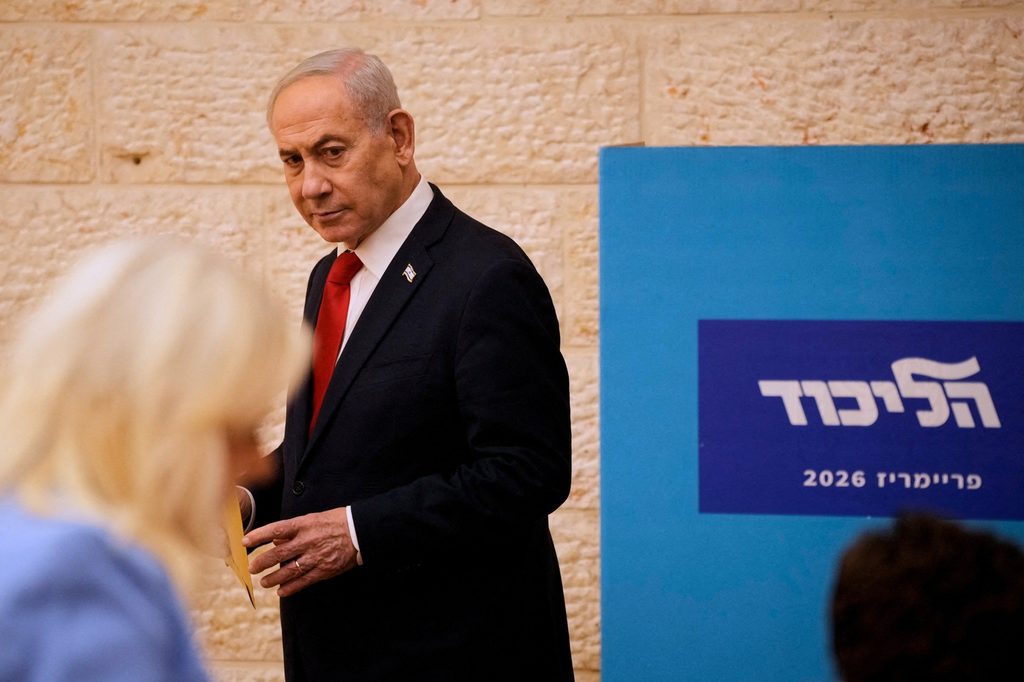
Israeli Prime Minister Benjamin Netanyahu labeled Iran’s leadership savages late Tuesday, August 25, 2026, at an event in Jerusalem for Israeli settlers in the occupied West Bank, telling the crowd he doubted an agreement could be reached with that group. Recounting a recent meeting with President Trump, Netanyahu said the two had discussed the possibility of diplomacy with Iran, adding flatly, an agreement cannot be reached.
Why Netanyahu Is Being Careful With Trump
Netanyahu has long opposed diplomacy with Iran, having openly campaigned against the 2015 nuclear deal brokered by then-President Barack Obama, but he has been publicly careful not to criticize Trump, who has also pursued a negotiated settlement of his own. Trump joined Netanyahu in a joint US-Israeli attack on Iran in late February but agreed to a ceasefire in April amid widespread US public opposition to the war and spiraling oil prices, a ceasefire that has since collapsed and reignited multiple times.
Netanyahu’s Claimed “Third Option”
Netanyahu voiced support for Trump’s economic pressure campaign against Iran and claimed a degree of personal credit, saying he had told Trump of this third option, an alternative to both a negotiated settlement and further military strikes. He praised Trump for pursuing the economic path in a very, very, very strong way, saying Trump had chosen to target not just Iran itself but to tighten the siege on those who assist what Netanyahu called this terrible dictatorship.
What Economic D-Day Actually Turned Out to Be
Trump had promised an economic D-Day and what he called the most crushing economic operation ever taken against any country, but when Treasury Secretary Scott Bessent unveiled the package Monday, August 24, under the name Operation Economic Outcast, it amounted to blacklisting more than 60 Iran-linked targets and widening secondary sanctions, rather than the singular shock the buildup had suggested. Bessent said every country has a defined timeline to shut down the activities the US has identified, and that Trump has been personally calling world leaders with specific requests to cut ties with Tehran, though Bessent declined to name which countries were being targeted or to say whether Chinese banks specifically would be sanctioned.
The UAE Break and the China Question
The sanctions escalation came a day after the UAE, one of Iran’s most important commercial partners and, before the war, the source of more than 30% of Iran’s total imports, suspended all trade and financial dealings with Tehran, following what it said were two Iranian ballistic missiles fired at the Gulf state. Iran denied launching the missiles, calling the claim a false flag. Washington’s ultimate leverage, analysts told CNBC, runs through China, which has by far the deepest financial, logistical, and trade linkages to Iran and remains its main oil buyer despite an ongoing US blockade limiting Iranian exports. Iran’s top negotiator, Mohammad Bagher Ghalibaf, dismissed the pressure campaign, saying the US is not in an economic position to restrict its relations with other countries and that no one believes their bluster.
Netanyahu’s Retaliation Warning
Netanyahu said he and Trump also discussed renewing military action against Iran during their July 28 White House meeting, telling the Jerusalem crowd, we are there, we will defend ourselves, and we will not allow Iran to attack us. He warned that if Iran attacks Israel, it will suffer a blow they never dreamed of, much stronger than anything they have suffered so far.
The Alleged Plot Against His Son
The war has become personal for Netanyahu, who revealed Monday, August 24, that Iran had tried to kill one of his sons, without providing further details. US news channel Newsmax, citing an anonymous US law enforcement source, reported the target was Yair Netanyahu, his 35-year-old son who has long lived in the Miami area and is known for his outspoken support of hawkish Israeli policies, and said the younger Netanyahu abruptly returned to Israel, leaving his belongings behind.
Who Actually Leads Iran Now
Israel’s opening strike on February 28 killed Iran’s then-Supreme Leader Ayatollah Ali Khamenei along with much of his family. His son Mojtaba, one of Khamenei’s six children, was named the new supreme leader a week later and has not been seen in public since. In a message read on his behalf on Iranian state television, Mojtaba Khamenei said he had lost his father, his wife, his sister, her child, and his brother-in-law in the strike, a personal toll that frames the current standoff between two leaderships each shaped directly by loss inside the conflict.
Law and Legal Implications
Operation Economic Outcast’s threat of secondary sanctions against third countries and financial institutions doing business with Iran, potentially including Chinese banks, would represent an extraterritorial application of US financial law, a legal approach the US has used before but one that risks direct friction with Beijing at a moment when Chinese President Xi Jinping is scheduled to visit the White House on September 24, according to Axios’s reporting, creating a diplomatic complication Washington will need to navigate alongside the sanctions rollout itself. Iran’s denial that it fired missiles at the UAE, if true, would mean the UAE’s trade suspension rests on a disputed factual premise, an unresolved attribution question consistent with the pattern of contested strike claims that has recurred throughout this war.
Does Sanctions Pressure Succeed Where Bombing Didn’t
It remains unclear whether Operation Economic Outcast will achieve the decisive pressure Trump’s economic D-Day framing promised, given Axios’s own assessment that the actual rollout amounted to an extended ultimatum rather than an immediate shock, and given that the campaign’s credibility depends on Washington’s willingness to eventually sanction major economies like China that have so far been treated cautiously. Whether the alleged plot against Yair Netanyahu will be officially confirmed by Israeli authorities, beyond the anonymous law enforcement sourcing reported by Newsmax, has not been established. The practical effect of the UAE’s trade suspension on Iran’s economy, layered on top of existing US oil export restrictions, has not yet been independently assessed. Forensic Times continues to monitor US Treasury sanctions actions, Iranian government responses, and diplomatic developments ahead of Israel’s October 27 elections.
ForensicTimes · forensictimes.com · Global Investigative Journalism on Crime, Justice, and Forensic Science · This report reflects verified open-source and wire reporting current as of publication. © 2026 ForensicTimes. All Rights Reserved.