































Canadian Prime Minister Mark Carney says Canada is willing to wait for a future US administration if he cannot secure a suitable trade agreement with President Donald Trump. His position, reported by POLITICO on October 30, signals that Ottawa will not accept a deal simply to meet Washington’s political timetable ahead of the November 3 US midterm elections.
The decision carries economic risks. The United States remains Canada’s dominant trading partner, and prolonged tariff uncertainty can affect manufacturers, exporters and investment. But Carney’s position is that a rushed agreement could lock Canada into terms that fail to protect its economic interests.
Table of Contents
- Carney’s negotiating signal
- Why the trade dispute remains unresolved
- USMCA adds another layer of uncertainty
- Canada builds alternatives in Europe
- What would show that negotiations are moving
Carney’s negotiating signal
Carney’s message is not that Canada has abandoned negotiations. Ottawa remains open to an agreement, but says the terms must serve Canadian interests. The government has drawn a distinction between a deal that is politically convenient for Washington and one that delivers reliable market access and workable conditions for Canadian businesses.
The timing gives the position added political weight. Tariffs have become an issue in US election campaigns, while the White House has publicly suggested that an agreement could be close. The Canadian government has been more cautious, describing progress as limited and saying the two sides are not yet in a position to conclude a deal.
There is also a question of credibility. Carney has expressed uncertainty about whether a future US commitment would be honoured. For negotiators and companies, the value of an agreement depends not only on the concessions written into it but also on whether the rules remain predictable after the political moment passes.
Why the trade dispute remains unresolved
Negotiations broke down in August after Canada rejected proposed US terms it considered unacceptable. The dispute has since involved tariffs, industrial competitiveness and access to each country’s market. Reporting has described additional US duties of 50% on a subset of Canadian goods worth roughly $20 billion, alongside Canadian retaliatory measures. These rates do not apply uniformly to all Canadian exports, and the treatment of individual products depends on the measures in force.

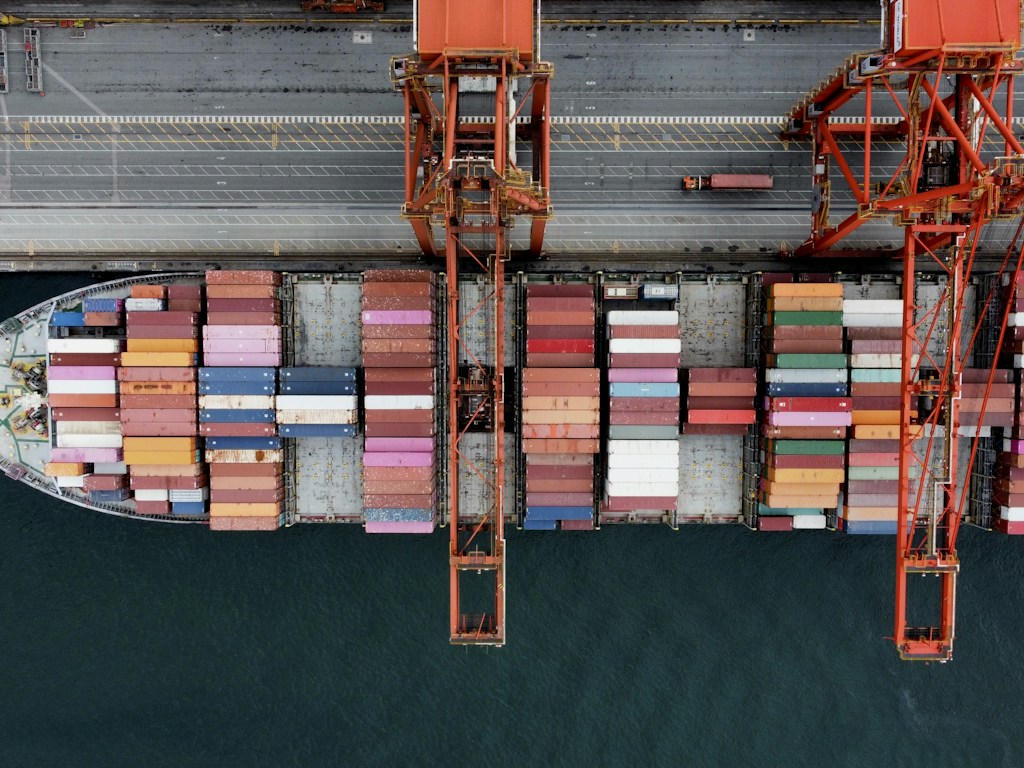
The exposure is especially visible in manufacturing. Vehicle production and other industrial sectors depend on components moving across the border, sometimes more than once before a finished product reaches a customer. Tariffs can change costs at each step, complicate supplier choices and delay decisions about where to invest.
That is why a political announcement of progress would not be enough on its own. Companies need details about product coverage, exemptions, implementation dates and how future disputes will be resolved. Without those details, they must continue planning around uncertainty.
USMCA adds another layer of uncertainty
The dispute is unfolding alongside the first joint review of the United States-Mexico-Canada Agreement, known as USMCA in the United States and CUSMA in Canada. The review took place on July 1, 2026. The US government did not agree to renew the agreement in its current form, but the agreement remains in force while the parties continue addressing their concerns, unless it is terminated under the agreement’s procedures.
This distinction matters. The review did not automatically end the existing trade framework. Instead, it opened a further period of negotiation over its operation and future. The separate tariff measures being used by Washington create immediate commercial consequences while the governments debate the broader framework.
For exporters, the risk is that overlapping negotiations and tariff changes make it harder to forecast costs. For policymakers, the challenge is to reach durable terms without confusing a near-term tariff concession with a settled long-term trade relationship.
Canada builds alternatives in Europe
Carney is seeking to reduce Canada’s dependence on the US market over time, not to replace it overnight. On October 30, Canada and the European Union launched the Alliance for the Future, a framework intended to expand cooperation on trade, technology, energy, critical minerals, finance and security.

The leaders also announced the conclusion of negotiations on a Canada-EU Digital Trade Agreement and an updated competition cooperation agreement. They agreed to work toward a deeper association, short of full EU membership, with the substance and scope of the proposed arrangement still to be determined.
The EU is already Canada’s second-largest trading partner for goods and services, with bilateral trade valued at approximately $178 billion in 2025, according to the Canadian government. Ottawa has also set a goal of doubling exports to markets outside the United States over the next decade.
Those moves could offer Canadian businesses additional customers and strengthen supply-chain resilience. But creating new markets, securing regulatory access and building infrastructure take time. Europe can widen Canada’s options; it cannot quickly reproduce the scale and proximity of the US market.
What would show that negotiations are moving
The next meaningful signal would be a concrete change in the proposed terms, followed by clear information about which goods are covered, how the agreement would be implemented and what protections would keep businesses from facing abrupt new costs. Political optimism alone does not establish that a deal is ready.
Carney’s wait-and-negotiate position carries a cost: uncertainty may continue to weigh on exporters and investment. But accepting terms Canada considers unsuitable could create longer-term vulnerabilities. The government’s parallel effort to expand trade with Europe is an attempt to reduce that imbalance while negotiations with Washington continue.
For now, Canada has not announced a comprehensive new trade agreement with the Trump administration. The next test is whether the two sides can agree on enforceable terms that provide stability beyond the immediate pressures of the US election calendar.
ForensicTimes · forensictimes.com · Investigative Journalism on Crime, Justice & Forensic Science · © 2026 ForensicTimes. All rights reserved.