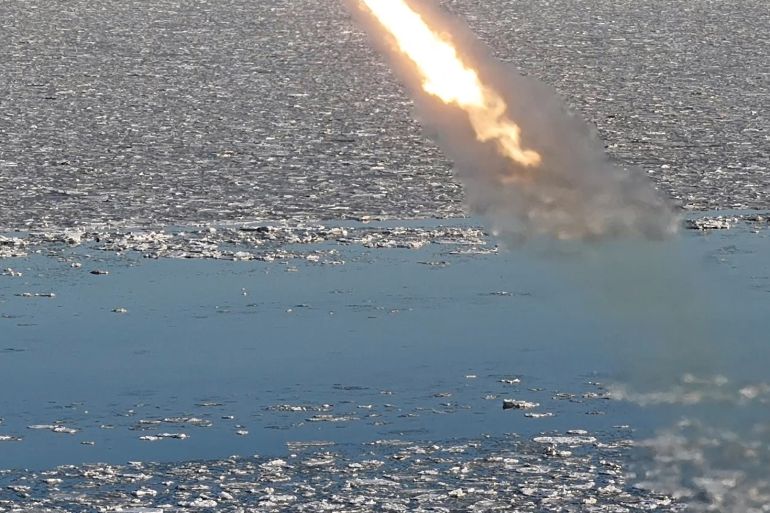
North Korea fired multiple ballistic missiles towards waters off its east coast on Monday, escalating tensions on the Korean Peninsula days after South Korea publicly demonstrated a domestically developed hypersonic weapon. Seoul said at least one North Korean missile travelled more than 900 kilometres, while Japanese officials reported detecting two projectiles.
The launches were detected at about 9:20 a.m. local time from the Pyongyang area, according to South Korea’s Joint Chiefs of Staff (JCS). The military did not immediately release a final count or full technical assessment of the weapons. Japan said the projectiles appeared to have fallen into waters outside its exclusive economic zone, with no immediate reports of damage.
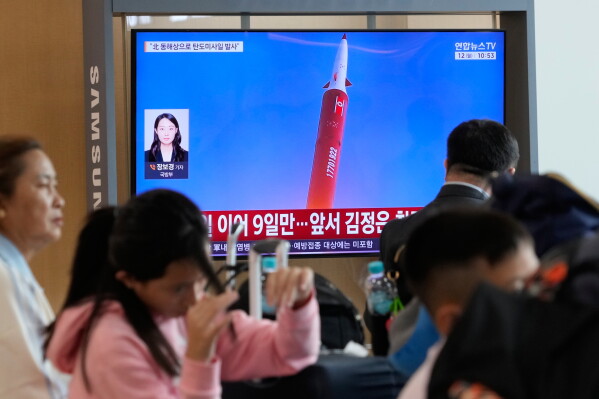
South Korea’s presidential National Security Office convened an emergency meeting and called on Pyongyang to stop launches that Seoul says violate United Nations Security Council resolutions. Japan also protested through diplomatic channels in Beijing. The immediate significance of Monday’s test lies not only in the distance travelled, but in the increasingly direct cycle of weapons demonstrations between the two Koreas.
What is known about the launches
South Korea’s military said multiple ballistic missiles were launched from the area around North Korea’s capital. One travelled more than 900 kilometres before landing in the sea. Japan’s Deputy Defence Minister Takashi Koyari said at least two missiles were launched about 17 minutes apart. He put the first flight at roughly 220 kilometres and the second at more than 910 kilometres, describing the latter’s trajectory as irregular.
The differing details reflect separate national detection and assessment systems. Seoul has not publicly confirmed the exact number and type of every missile, and Japanese officials have not established that the second projectile was a hypersonic weapon. An unusual trajectory can prompt that assessment, but independent technical analysis is required before a weapon can be conclusively identified.
The reported flight distance matters because it indicates that the launch was not simply a short-range demonstration near North Korea’s coastline. A missile travelling more than 900 kilometres can test tracking, early-warning coordination and the assumptions used by regional missile-defence planners. Distance alone, however, does not reveal the missile’s accuracy, payload, operational readiness or ability to defeat an interception system.
A tit-for-tat missile cycle
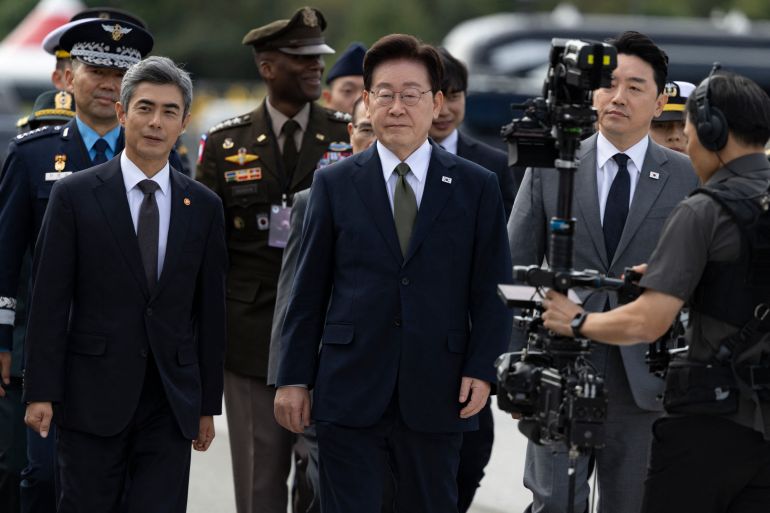
South Korean military spokesperson Jang Do-young said the latest launch appeared to be a show of force following the South’s recent hypersonic missile test. President Lee Jae Myung oversaw the South Korean test on Thursday, an unusually public role for a sitting president during a weapons demonstration. Seoul said the system, once fully developed, could improve the military’s ability to strike key targets by surprise.
The sequence highlights an increasingly visible contest: each side presents new capabilities as defensive, while the other treats them as evidence of a growing threat. North Korea has long portrayed US–South Korean military cooperation and advanced weapons development in the South as hostile preparations. Seoul argues that strengthening its conventional deterrent is necessary because Pyongyang continues to develop nuclear-capable missiles.
North Korea also tested what its state media described as a hypersonic intermediate-range missile on October 3. The report said the system was intended to improve its ability to evade missile defences in South Korea and Japan. Monday’s launch is the fourth North Korean missile event in roughly a month, according to Reuters reporting, and the country has carried out more than ten missile-related tests this year.
Kim Jong Un’s weapons programme remains central
Leader Kim Jong Un has continued to prioritise strategic weapons development while rejecting US and South Korean proposals to revive stalled nuclear diplomacy. In recent months, North Korean state media has shown Kim visiting military production facilities and overseeing demonstrations intended to signal progress in the country’s arsenal.
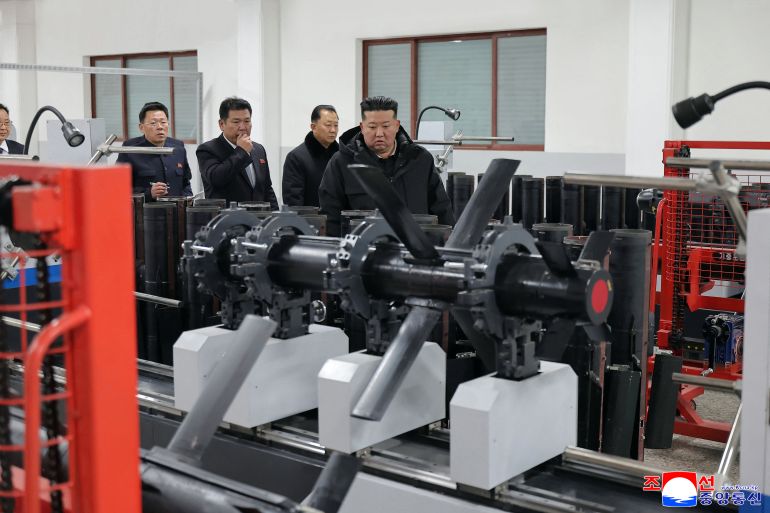
For Pyongyang, missile tests serve more than one purpose. They can help engineers assess performance, give missile units practice operating systems, send political signals to adversaries and reinforce the leadership’s claim that nuclear deterrence is essential to national security. State media announcements do not by themselves establish that every claimed capability has been independently verified.
For regional militaries, the challenge is distinguishing political signalling from preparations that could change operational risk. Each additional test offers data about flight paths and system performance, but it also increases pressure on South Korea, Japan and the United States to coordinate radar tracking, intelligence sharing and crisis communications. The broader question of whether more weapons spending can close every gap in missile defence is also explored in ForensicTimes’ analysis of Saudi Arabia’s defence capabilities and persistent missile threats.
Border tensions and diplomacy remain unresolved
The latest launches come amid renewed friction after landmine explosions in the Demilitarized Zone injured three South Korean soldiers in September. A joint South Korean–United Nations Command investigation concluded that mines had been planted by North Korean forces, according to Seoul. Pyongyang rejected the accusation and described South Korea’s claims as provocation.
That dispute has added to an already difficult diplomatic climate. South Korean President Lee has spoken about reopening dialogue with the North, while Kim’s government continues to demand that Washington abandon what it calls a hostile policy and drop denuclearisation demands as a precondition for negotiations. Talks between Kim and US President Donald Trump broke down in 2019, and no durable process has since replaced them.
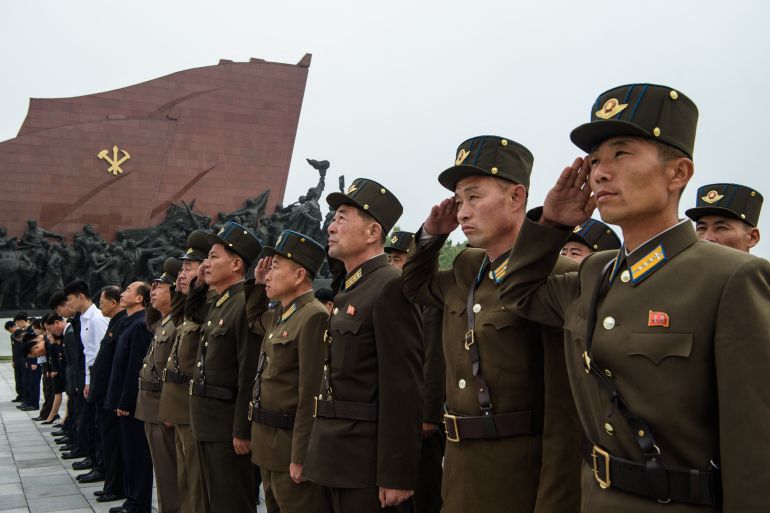
The missile activity does not, on its own, prove that a new conflict is imminent. It does show how quickly a weapons test by one side can be answered by another, narrowing the space for confidence-building measures and making routine military monitoring more consequential. With technical details still under review, officials will be watching for additional launches, further public statements from Pyongyang and any change in readiness posture across the region.
For now, the key facts are limited but consequential: North Korea launched multiple ballistic missiles from near Pyongyang; at least one travelled more than 900 kilometres; Japan detected two projectiles; and South Korea views the activity as a response to its hypersonic test as well as a violation of international restrictions. Whether the launch signals a specific diplomatic message or primarily advances weapons development remains uncertain.
ForensicTimes · forensictimes.com · Global Investigative Journalism on Crime, Justice, and Forensic Science · This report reflects verified open-source and wire reporting current as of publication. © 2026 ForensicTimes. All Rights Reserved.