Hamas agreed to hand its weapons to a new committee rather than to Israel, a military analyst says the document’s actual wording carefully avoids the word disarmament, and a second armed faction in Gaza is already calling the whole thing inaccurate.
Table of Contents
- The Agreement
- What the Document Actually Says
- Hamad’s Conditions
- Trump’s Framing
- The Ceasefire This Sits Inside
- Islamic Jihad Says Not So Fast
- The Coordination Force Nobody’s Agreed On
- Forensic Analysis and Intelligence
- Law and Legal Implications
- Does Israel Actually Sign On
The Agreement
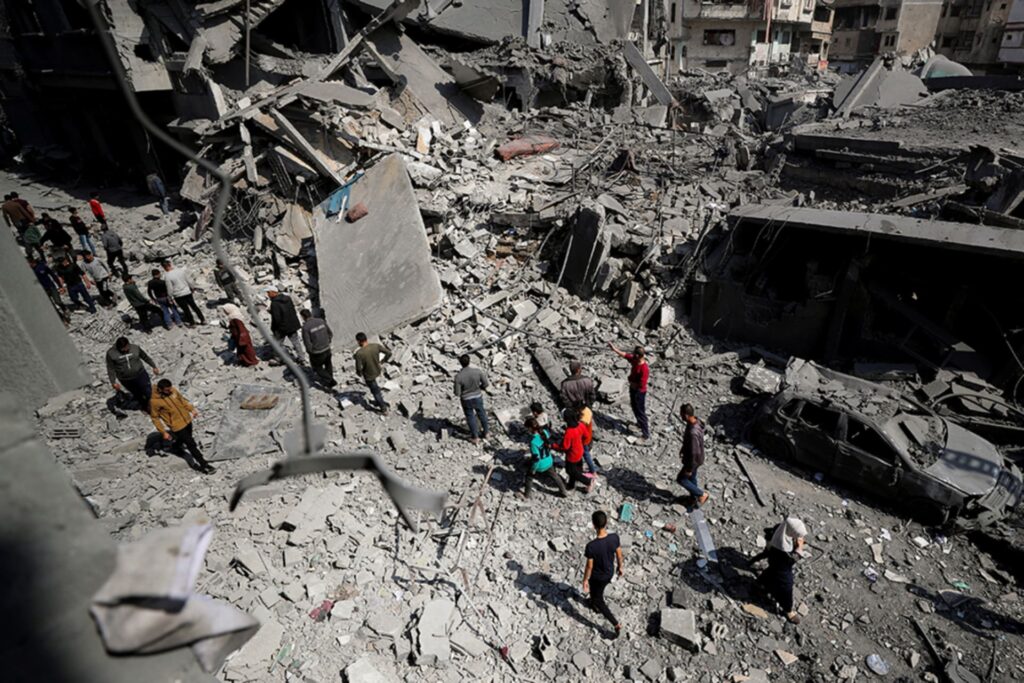
Hamas and other Palestinian factions agreed Thursday, July 30, 2026, to a document setting out a plan for their disarmament in Gaza, which US President Donald Trump called a monumental step toward peace and security. Al Jazeera obtained a copy of the agreement, which stipulates that a precise disarmament roadmap must be prepared within 14 days, with possible extensions subject to approval by an international verification body and agreement from all parties. Israel had not issued any public comment on the agreement as of Thursday.
What the Document Actually Says
The agreement obtained by Al Jazeera states that the disarmament process will begin with the entry of a National Committee and an International Stabilisation Force into Gaza. The National Committee will then oversee what the document calls the inventory and storage process, with the international verification committee observing and Palestinian factions participating. The document specifies that no weapons should be handed over to Israel or any non-Palestinian body, with the National Committee designated as the sole force holding weapons in Gaza. A Board of Peace official confirmed police-held weapons would be transferred first, followed by decommissioning of heavy weapons, with all military activity in Gaza required to stop, though the official cautioned the process would take time to implement.
Hamad’s Conditions
Ghazi Hamad, a member of Hamas’s negotiating delegation, told Al Jazeera the negotiations were difficult and hard, and that the two sides tried to reach the best achievable formula. Hamad said Hamas would not implement any part of the agreement if Israeli forces failed to fulfill their own obligations, stating that disarmament depended specifically on Israel’s withdrawal from Gaza and on progress in the territory’s reconstruction, making Hamas’s compliance explicitly conditional rather than unilateral.
Trump’s Framing
Trump wrote on Truth Social that the agreement was a critical step toward Gaza finally being governed by a new Palestinian government working closely with the Board of Peace, adding that Israel would simultaneously gain the security it deserves, with Gaza no longer used as a base for terror attacks. Trump said Israel would withdraw from Gaza and be replaced by the International Stabilization Force working alongside a new Palestinian police force once disarmament is complete, describing the eventual outcome as Gaza finally being in the hands of a new Palestinian government that serves its people.
The Ceasefire This Sits Inside
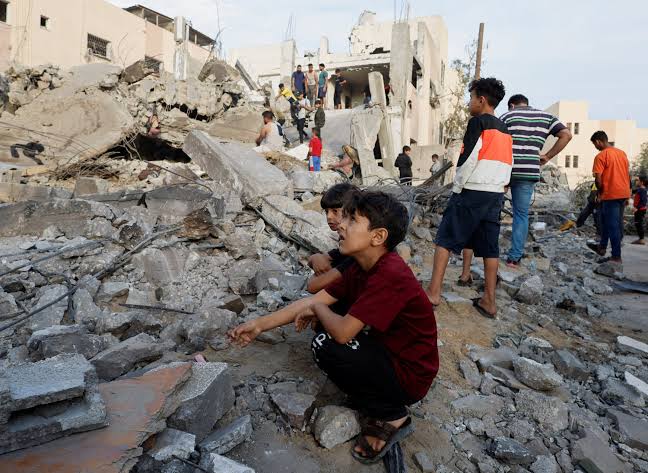
Trump framed the phased disarmament as part of the ceasefire deal he brokered in October 2025 to end the war in Gaza. Israel has repeatedly violated that ceasefire since it took effect, killing more than 1,200 Palestinians, seizing additional territory, and continuing to restrict the movement of people and goods into and out of Gaza, according to Al Jazeera’s reporting. Six more Palestinians, including two children, were killed in Israeli attacks on Gaza the same Thursday the disarmament agreement was announced.
Islamic Jihad Says Not So Fast
Palestinian Islamic Jihad, a separate armed group operating in Gaza, said reports of an agreement between the factions and Israel were inaccurate, adding that it had reservations about the specific wording being circulated, a public dissent that complicates the picture of unified Palestinian faction buy-in that Hamas’s own statements had suggested. Egypt’s Al-Qahera News, citing an informed Egyptian source, reported that Hamas and other Palestinian factions had officially approved the proposal, a claim that sits directly at odds with Islamic Jihad’s public statement.
The Coordination Force Nobody’s Agreed On
Al Jazeera’s Alan Fisher, reporting from Washington, said the plan envisions Hamas and other groups disarming sector by sector, followed by recruitment of additional Palestinian police officers working alongside an international coordination force whose composition remains unresolved, with unconfirmed reports suggesting possible Indonesian or Turkish involvement, an outcome Fisher said Israel might not welcome. Fisher said there was clear international pressure on Hamas to accept the deal, including the prospect of things becoming significantly more difficult financially for the group if it declined.
Forensic Analysis and Intelligence
Military analyst Nidal Abu Zaid told Al Jazeera the agreement’s specific use of the phrase inventory and storage, rather than disarmament, is a deliberate and meaningful distinction. Inventory and storage can be carried out by a third party that is not necessarily an adversarial force, Abu Zaid said, whereas disarmament implies an enemy force physically removing weapons, something he said the Palestinian factions would never agree to. This terminological distinction functions as an intelligence-relevant signal: it indicates the National Committee’s custody of weapons is designed as Palestinian-administered storage under international observation rather than confiscation by a hostile party, a structure that preserves a theoretical reversibility Hamas would be unlikely to accept if the weapons were surrendered to Israel or a non-Palestinian force directly, exactly as the document’s own text specifies.
The staged sequencing described by the Board of Peace official, police weapons first, then heavy weapons decommissioning, provides a verifiable timeline structure that international monitors could use to assess compliance incrementally rather than relying on a single point-in-time certification, similar in structural logic to the phased verification approach seen in other post-conflict disarmament frameworks.
Law and Legal Implications
The agreement’s explicit provision that weapons cannot be handed to Israel or any non-Palestinian body creates a specific legal and political guardrail against a transfer of authority that Hamas’s negotiators clearly anticipated could otherwise be demanded, embedding Palestinian custodial control into the document’s binding text rather than leaving it to later negotiation. Hamad’s explicit conditioning of Hamas compliance on Israeli withdrawal and reconstruction progress structures the agreement as a reciprocal rather than unilateral obligation, meaning any future dispute over implementation will likely center on which side is found to have breached its own conditional obligations first, a familiar pattern given the ceasefire’s own documented violations since October 2025.
Palestinian Islamic Jihad’s public rejection of the reported terms, despite not being a signatory party in the same capacity as Hamas, raises an unresolved question of whether the agreement can function as a genuine ceasefire mechanism if armed groups outside Hamas’s direct control decline to be bound by its terms.
Does Israel Actually Sign On
It remains unclear whether Israel will formally respond to or accept the terms of the agreement, given its silence as of Thursday and its documented pattern of continued strikes and territorial actions in Gaza even after the October 2025 ceasefire took effect. Whether Palestinian Islamic Jihad’s objections will be resolved or will instead undermine the agreement’s practical implementation is not yet known. The composition of the international coordination force, including whether Turkish or Indonesian participation will proceed despite reported Israeli reluctance, remains unsettled. Forensic Times continues to monitor the 14-day disarmament roadmap deadline and statements from Cairo mediators, Hamas, and the Israeli government.
ForensicTimes · forensictimes.com · Global Investigative Journalism on Crime, Justice, and Forensic Science · This report reflects verified open-source and wire reporting current as of publication. © 2026 ForensicTimes. All Rights Reserved.