A wave that built for ten days broke overnight into a Spanish enclave of 85,000 people, leaving 18 dead on a beach, thousands sleeping in parks, and Rome already threatening to suspend the treaty that lets Spaniards cross into Italy without a passport.
Table of Contents
- What Happened Overnight
- How the 18 Died
- The Scale on the Ground
- Spain’s Military Response
- The Disputed Trigger: A Supreme Court Ruling
- Morocco’s Silence
- Meloni’s Schengen Threat
- Forensic Analysis and Intelligence
- Law and Legal Implications
- Does This Follow the 2021 Pattern
What Happened Overnight
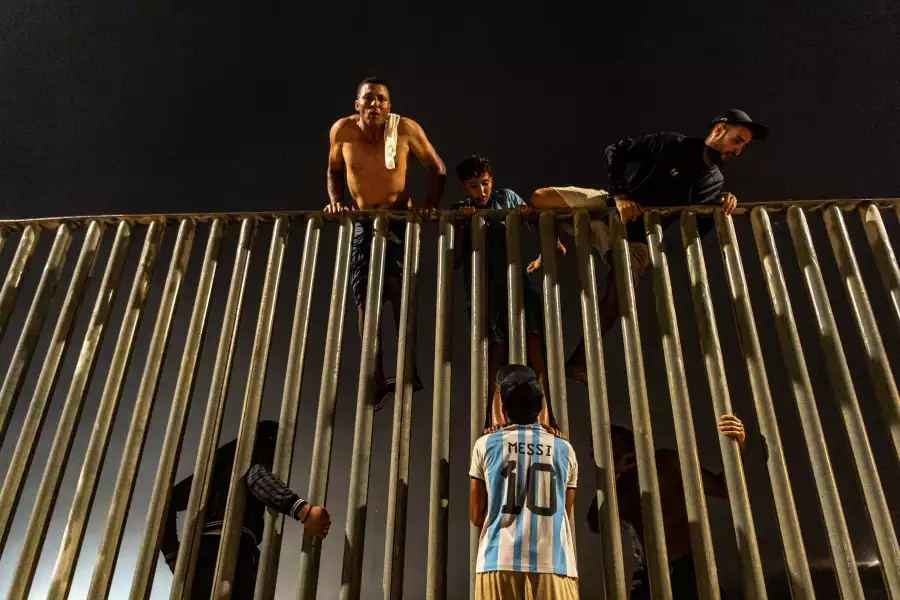
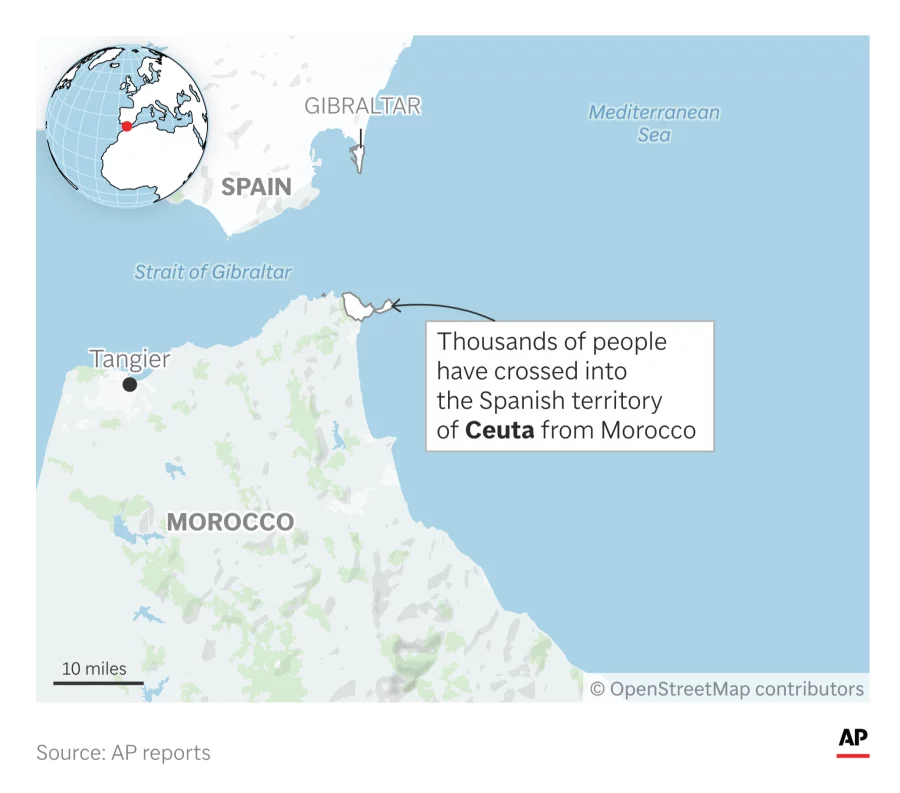
At least 18 migrants died trying to reach the Spanish exclave of Ceuta after thousands of people breached the frontier with Morocco and poured into the tiny Spanish territory, with the crisis boiling over Thursday, July 30, 2026, and continuing overnight into Friday. Spain’s state broadcaster RTVE aired footage of burned cars on the Moroccan side of the border following reported clashes. Ceuta’s government said between 1,500 and 2,000 people had entered over the preceding 10 days, with hundreds more crossing overnight Thursday into Friday according to sources cited by news agencies.
How the 18 Died
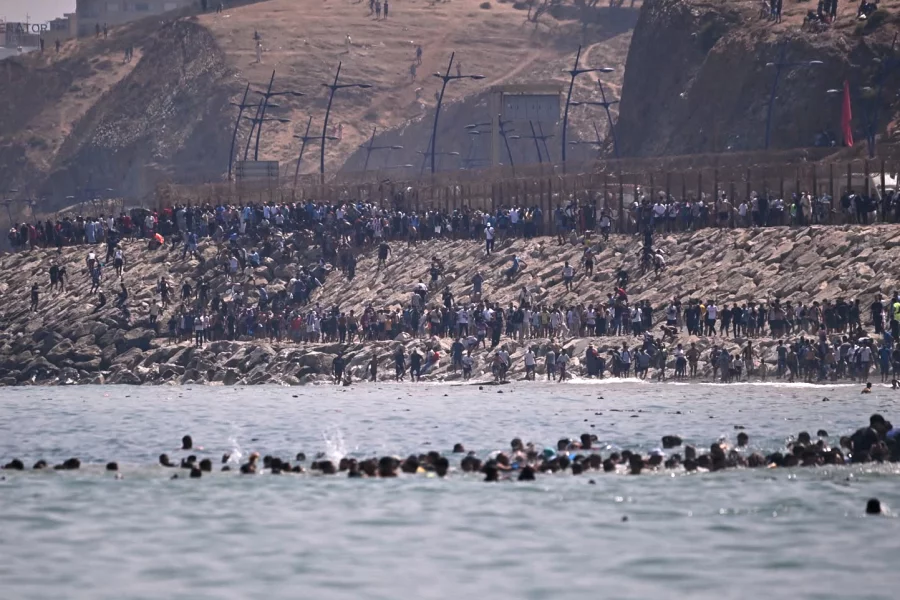
Rachid Sbihi, who leads a local workers association representing Civil Guard officers who police the border, told the Associated Press that many of the 18 who died drowned, while others were killed in a stampede to cross the breakwater fence at Tarajal beach. Footage from Thursday showed migrants shouting Viva España as they entered the territory, many having traveled from the Moroccan side on inflatable devices, while Spain’s state news agency EFE reported others crossed by scaling border fences on land.
The Scale on the Ground
Sbihi described the situation as a serious humanitarian crisis, saying thousands of migrants, including unaccompanied children, were left sleeping in parks and on sidewalks, with others roaming the streets aimlessly. Reinforcements that had arrived, he said, were only able to help the injured and carry out other humanitarian efforts rather than fully manage the crisis. Juan Jesús Vivas, head of Ceuta’s regional government, had warned as early as Wednesday that migrant reception centers were already overwhelmed, with hundreds sleeping on the street even before the situation escalated further overnight.
Spain’s Military Response
Spain’s Interior Ministry announced Thursday it would send the armed forces, an initial deployment of 60 troops, to reinforce the Civil Guard at the border and help maintain security in Ceuta. Vivas had specifically called for the national government to declare an emergency on grounds of national security, requesting more police and army deployment to guarantee what he called the inviolability of the frontier and citizen safety. Spanish Prime Minister Pedro Sánchez was expected to join Interior Minister Fernando Grande-Marlaska on a visit to Ceuta Friday morning.
The Disputed Trigger: A Supreme Court Ruling
Ceuta authorities had previously linked the surge to a Spanish Supreme Court ruling earlier in the month that barred authorities from immediately returning migrants who arrive by sea without following due process. The ruling does not apply to migrants entering Spain by land, including those who climb the border fence. Some activists in Morocco expressed doubt that the ruling actually drove the surge, arguing most migrants attempting the crossing would have had no knowledge of the legal decision, leaving the ruling’s actual causal role in the crisis disputed rather than confirmed.
Morocco’s Silence
Moroccan authorities had not publicly commented on the crossings as of Friday, and Morocco’s Interior Ministry did not respond to requests for comment from news organizations covering the crisis. That silence leaves unaddressed prior patterns in which Morocco has been accused of periodically easing border enforcement during moments of diplomatic tension with Madrid, most notably during a comparable 2021 surge tied to a dispute over Western Sahara.
Meloni’s Schengen Threat
The crisis produced ripple effects beyond Spain. Italian Premier Giorgia Meloni threatened to suspend Italy’s participation in the open-border Schengen arrangement with Spain specifically, saying the move would defend Italy’s borders and ensure the safety of its citizens, despite the fact that Italy does not share a physical border with Spain, underscoring that her threat was directed at the EU’s broader freedom-of-movement framework rather than any specific frontier control.
Forensic Analysis and Intelligence
The 18 confirmed deaths, attributed by Sbihi to a mix of drowning and stampede-related trauma at Tarajal beach, reflect the same dual-causation pattern documented in Spain’s prior major border crossing incidents, including a 2022 Melilla crossing where Moroccan authorities similarly attributed a comparable death toll to a stampede against a border fence, with the count there also finalized only after injured survivors later died in hospital. That precedent suggests Friday’s reported figure of 18 may itself be provisional, since fatality counts in mass border-crossing incidents involving both drowning and crush injuries typically continue rising in the days immediately following as hospitalized survivors’ conditions are confirmed.
The disputed causal link between the Supreme Court ruling and the surge itself is an intelligence problem worth flagging on its own terms: Ceuta authorities’ initial attribution and Moroccan activists’ skepticism represent two different theories of what actually triggered a coordinated mass-crossing attempt, and distinguishing between a legally-informed decision by organized facilitators versus a spontaneous, opportunistic surge has direct bearing on how Spanish and Moroccan authorities would need to respond to prevent recurrence.
Law and Legal Implications
The Spanish Supreme Court ruling cited by Ceuta authorities, which bars immediate return of migrants arriving by sea without due process, reflects broader EU and international obligations around non-refoulement and individualized assessment of asylum claims, obligations that apply differently to land-based fence crossings than to maritime arrivals, a legal distinction that itself may be difficult for migrants and smuggling networks on the ground to accurately track or exploit, as Moroccan activists suggested. Under the Schengen Borders Code, any Italian suspension of open-border arrangements with Spain specifically, rather than a broader EU-wide measure, would raise questions about whether such a unilateral, country-specific suspension is legally permissible under the framework’s own emergency provisions, which generally contemplate temporary internal border controls rather than bilateral suspensions targeting one member state.
Does This Follow the 2021 Pattern
It remains unclear whether Morocco’s apparent loosening of border enforcement, if that is in fact what occurred, reflects a deliberate diplomatic signal similar to the 2021 Ceuta crisis, which was widely linked to Spain’s decision to allow a Polisario Front leader medical treatment on Spanish soil, or a less coordinated breakdown in control. Whether the confirmed death toll of 18 will rise as previously injured migrants’ conditions are further assessed, consistent with the pattern seen in the 2022 Melilla incident, has not yet been determined. Whether Meloni’s Schengen threat will translate into an actual policy action, and whether such a bilateral suspension would withstand legal scrutiny under EU frameworks, remains unresolved. Forensic Times continues to monitor Spanish government statements, Moroccan Interior Ministry responses, and the death toll as it is updated.
ForensicTimes · forensictimes.com · Global Investigative Journalism on Crime, Justice, and Forensic Science · This report reflects verified open-source and wire reporting current as of publication. © 2026 ForensicTimes. All Rights Reserved.