Three oil tankers turned back in the Red Sea rather than risk the Yemeni coast, and Secretary of State Marco Rubio used a podium in Manila to say Washington is still willing to talk, provided Iran actually means it this time.
Table of Contents
- Rubio’s Message From Manila
- The Diplomatic Track Still Running
- Rubio’s Hormuz Warning to Asia
- Night Eleven: Strikes Near Bushehr
- Iran’s Retaliation Across Three Countries
- The American Death Toll
- Tankers Turn Back in the Red Sea
- Trump’s Natanz Threat
- Law and Legal Implications
- Is Tehran Actually Negotiating or Stalling
Rubio’s Message From Manila
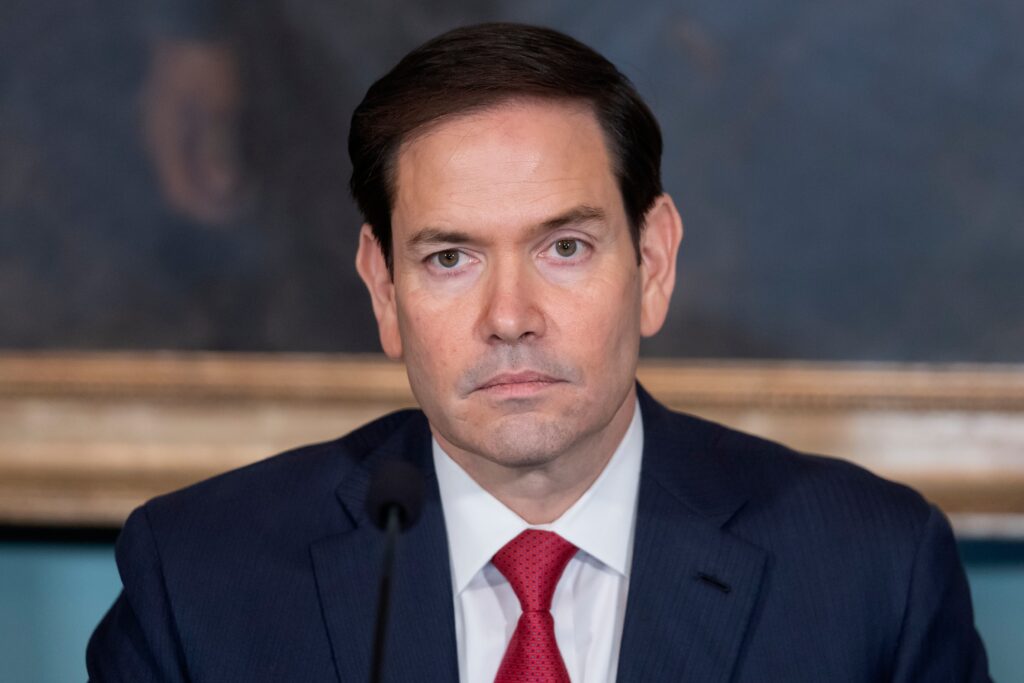
US Secretary of State Marco Rubio said Wednesday that the United States remains open to ending the Iran crisis through negotiations, but accused Tehran of stalling even as the conflict threatens global energy shipping routes. Speaking at a meeting of Southeast Asian foreign ministers, Rubio said Washington was always committed to diplomacy but questioned whether Iran was equally committed, stating that if Tehran was serious about talks the US would be serious too, and that otherwise Washington would do what was necessary to protect its interests and those of its allies.
The Diplomatic Track Still Running
Despite the rhetoric, several diplomatic threads remain active. A senior Iranian official said Monday that Tehran had received a proposal from mediators for a 10-day ceasefire aimed at salvaging the interim ceasefire agreement the US and Iran signed in June, which itself had replaced an earlier April ceasefire. Iran’s Interior Minister Eskandar Momeni separately visited mediator Pakistan and asked Islamabad to continue its efforts, signaling that Tehran has not abandoned mediated diplomacy even as fighting continues.
Rubio’s Hormuz Warning to Asia
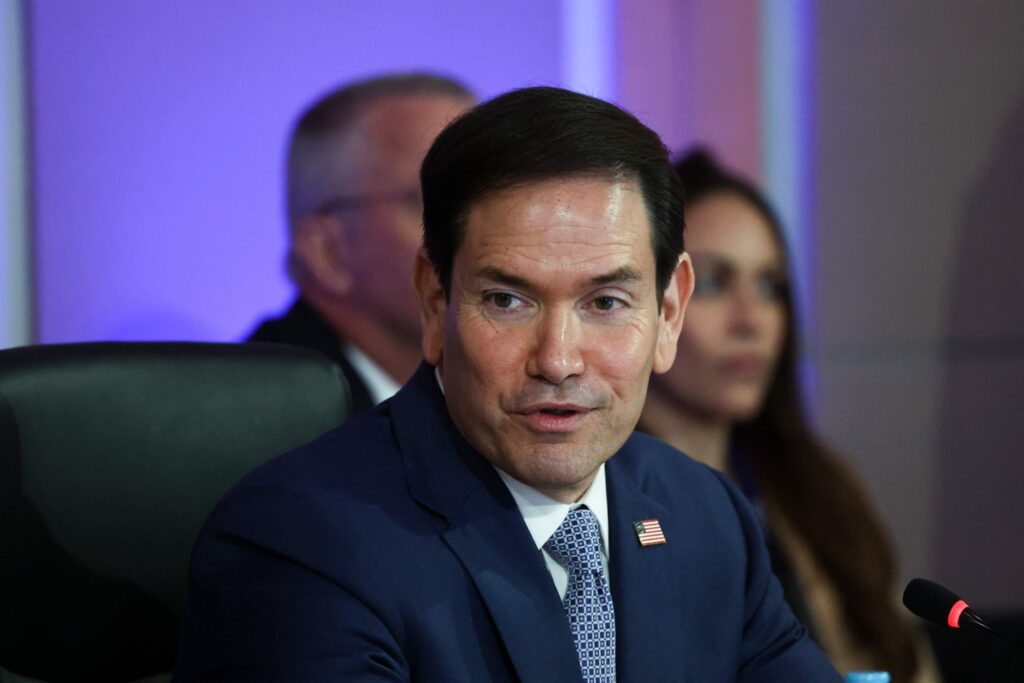
Rubio stressed that Iran could not be allowed to control the Strait of Hormuz, telling the ASEAN gathering that allowing a nation state to control an international waterway, charge a toll, and attack ships that refuse to pay would set a dangerous precedent capable of repeating itself elsewhere, including in Southeast Asia, where several countries have their own territorial disputes in the South China Sea with China. The framing was a deliberate appeal to his regional audience’s own maritime security concerns rather than a purely Middle East-focused argument.
Night Eleven: Strikes Near Bushehr
With no diplomatic breakthrough yet achieved, the US military bombed targets across Iran for an 11th consecutive night. Tehran residents reported hearing explosions in the early hours of Wednesday as Iran activated air defenses over the capital, according to the semi-official Fars news agency. Three locations in Iran’s Bushehr Province, home to the country’s only operating nuclear power plant, were struck early Wednesday, including an electricity post near the plant itself, an Iranian official told state news agency IRNA.
Iran’s Retaliation Across Three Countries
Iran’s army said it targeted US military facilities in Kuwait, Jordan, and Bahrain with drones early Wednesday, striking accommodation buildings and equipment storage at Al Azraq air base in Jordan before hitting equipment warehouses and aircraft maintenance hangars at Sheikh Isa Air Base in Bahrain using Arash suicide drones.
The American Death Toll
President Trump confirmed that 18 US service members have been killed in the war so far, including four in Iranian attacks on US military bases in Jordan and Iraq over the preceding days. Iran’s Health Ministry reported at least 50 civilians killed and 500 wounded in the recent round of US strikes.
Tankers Turn Back in the Red Sea
Three oil tankers carrying Saudi crude bound for China and India made U-turns in the Red Sea on Tuesday, redirecting toward the Suez Canal rather than risk passing the Yemeni coastline, a day after the Houthis announced a naval blockade against Saudi Arabia. The Houthis, who control territory along the mouth of the Red Sea, sent a letter to shippers threatening to attack any vessel loading or discharging Saudi oil. Saudi Arabia had partly avoided earlier shipping disruption by piping oil to its Red Sea port of Yanbu instead of using the Strait of Hormuz, but a full Houthi closure of that route could trap the majority of Saudi oil exports with no remaining alternative channel. Brent crude rose more than 2% Tuesday and continued climbing in Wednesday’s Asian trade, hovering above $91 a barrel, while US gasoline prices moved back above $4 a gallon.
Trump’s Natanz Threat
Trump renewed threats to strike Iran’s Natanz nuclear facility again pretty soon, referencing the US military’s June 2025 strike on the mountain-buried site, which he had at the time described as totally obliterated. Iran has promised to retaliate if the facility is struck again. Trump also addressed the Houthi threat directly, noting the group had not yet closed the Bab el-Mandeb strait, the so-called Gate of Tears leading into the Red Sea, but warning the US would act if that changed.
Law and Legal Implications
Rubio’s explicit framing of Iran’s Hormuz toll demand as a dangerous precedent under international maritime law directly echoes the legal argument the US and Gulf states have made against Iran’s proposed Persian Gulf Straits Authority, positioning freedom of navigation through international straits as a principle with implications well beyond the immediate conflict, including for unrelated disputes such as the South China Sea. The continued targeting of infrastructure near Bushehr, even an electricity post rather than the reactor itself, keeps the strike campaign within the zone the IAEA has previously flagged as carrying the highest safety stakes of the entire conflict, raising the same nuclear-safety and humanitarian law concerns previously triggered by strikes near Darkhovin and the earlier hit on Bushehr’s complex.
Is Tehran Actually Negotiating or Stalling
It remains unclear whether Iran’s parallel pursuit of a 10-day ceasefire proposal through mediators and continued outreach to Pakistan reflects genuine willingness to de-escalate or a stalling tactic, as Rubio alleged, while strikes continue on both sides. Whether Trump will follow through on his renewed Natanz threat, and how Iran’s promised retaliation would materialize if he does, is not yet known. The practical effect of a full Houthi closure of the Bab el-Mandeb, should it occur, on global oil supply has not been independently modeled beyond the immediate market reaction already visible in Brent crude prices. Forensic Times continues to monitor Rubio’s statements, Iranian mediation efforts through Pakistan, and Houthi shipping threats in the Red Sea.
ForensicTimes · forensictimes.com · Global Investigative Journalism on Crime, Justice, and Forensic Science · This report reflects verified open-source and wire reporting current as of publication. © 2026 ForensicTimes. All Rights Reserved.