





























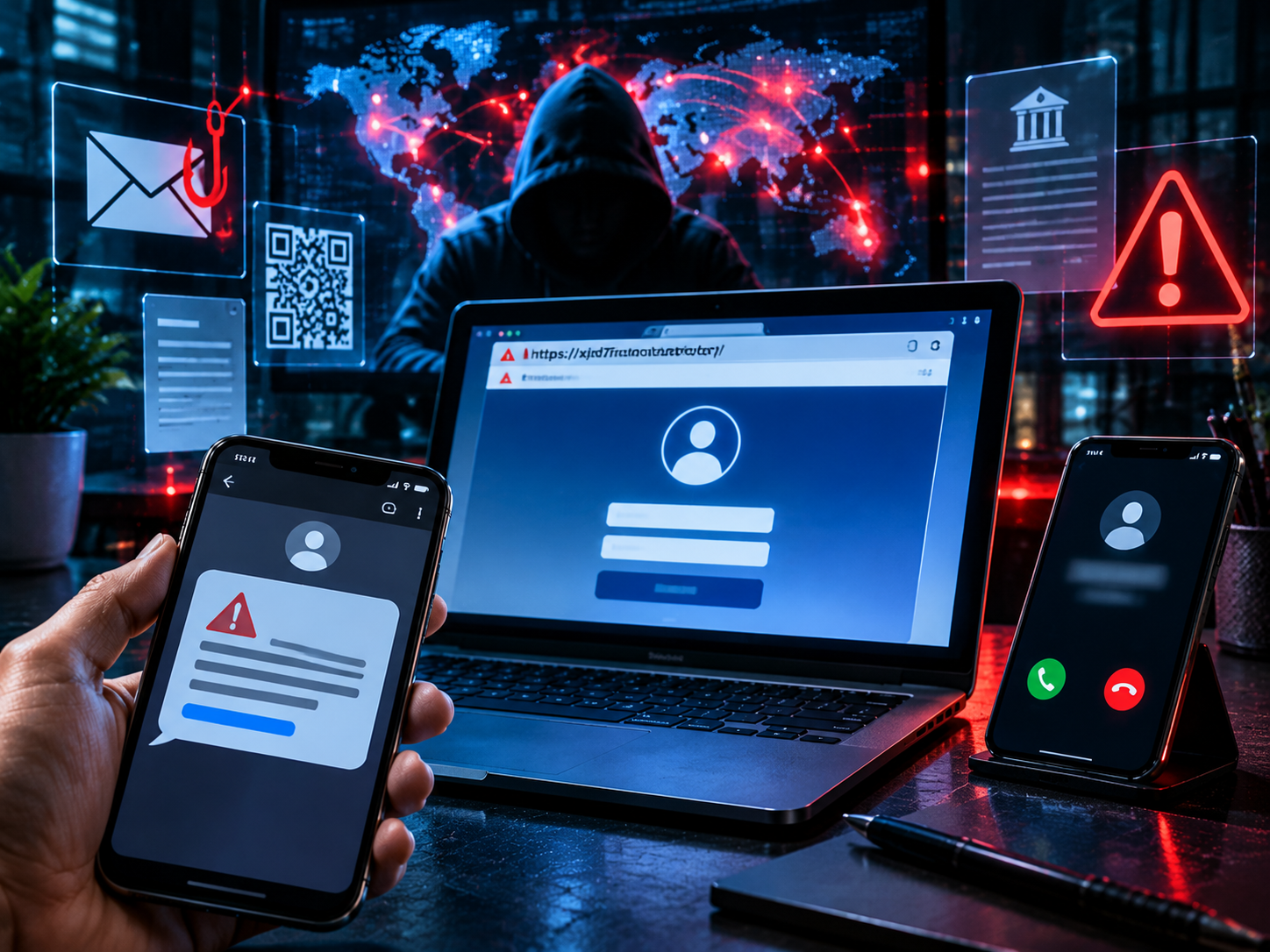
A message arrives saying your bank account will be suspended. A caller claims to be a police officer investigating suspicious transfers. A website offers a discounted ticket, a government refund or a parcel delivery update. Each appears ordinary enough to deserve a quick response. That is precisely the opportunity criminals are looking for: they want you to act before checking who is really contacting you.
In 2026, the warning signs are becoming harder to recognise because fraudsters can copy real branding, spoof phone numbers, buy search advertisements, redirect visitors through hidden web infrastructure and use artificial intelligence to imitate officials or customer-service staff. The FBI reported nearly 61,000 complaints involving government or law-enforcement impersonation between January 2025 and July 2026, with losses exceeding US$1.6 billion. Fake websites, text messages and phone calls are no longer separate problems; they are often coordinated parts of the same fraud.
Stay Updated. Stay Alert. Stay Protected.
Read Forensic Times to stay informed about scams, fraud and emerging criminal threats. Explore scam and fraud warnings, crime-alert coverage, investigations into how criminals operate, and practical guidance to help protect your money, identity, family and business.