


















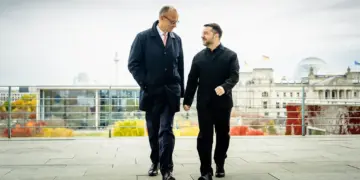








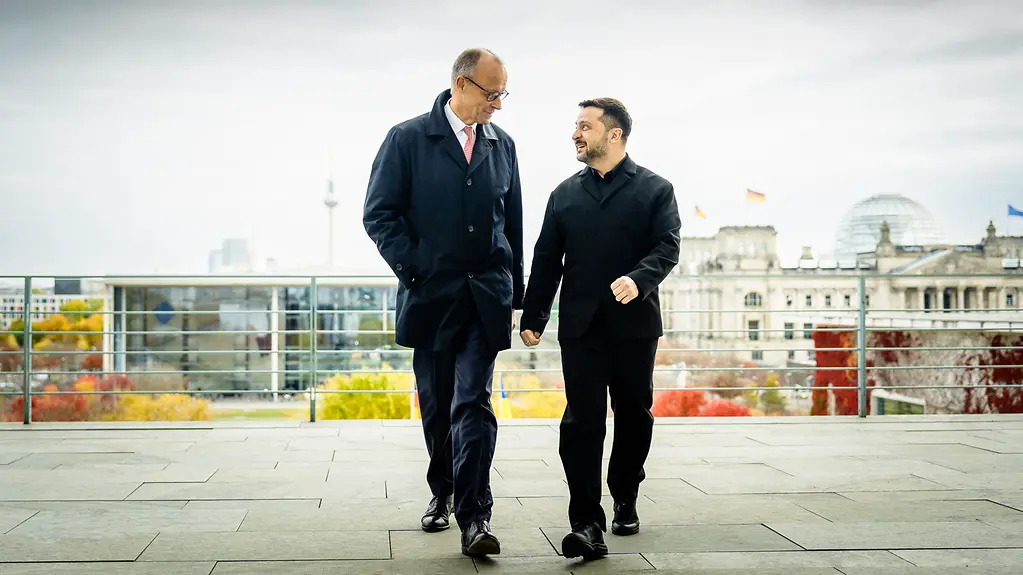
German Chancellor Friedrich Merz has warned that Europe must be directly involved in any effort to end Russia’s war against Ukraine, arguing that decisions on sanctions and the continent’s future security cannot be made without European participation. His remarks followed a meeting with Ukrainian President Volodymyr Zelenskyy in Berlin on November 3, as US-brokered negotiations between Kyiv and Moscow were due to resume.
Merz demands a role for Europe
Merz used the Berlin meeting to make clear that Europe does not intend to remain on the sidelines of a settlement negotiated primarily by Washington and Moscow. He said Europe “must and wants to play a role” in the process, pointing to sanctions and the future security architecture as issues that cannot be resolved without European governments.
The German chancellor also reaffirmed Berlin’s support for Kyiv, including military assistance and help for Ukraine’s energy sector ahead of winter. He described the outcome of the war as a matter that will shape European security for years, not simply a bilateral dispute between Russia and Ukraine.
Zelenskyy used the meeting to stress that EU integration remains central to Ukraine’s future. He said Kyiv hopes to open six negotiating clusters for EU accession this year, and that discussions with the United States, European partners and NATO would cover reconstruction and security guarantees. He also argued that any durable settlement must include concrete guarantees, not simply a halt in fighting.
Trump, Putin and the G20 question
Merz also addressed the prospect of Russian President Vladimir Putin attending the Group of 20 leaders’ summit scheduled for Miami in December. He said that if US President Donald Trump decided to invite Putin, Ukraine should be the first subject discussed and Zelenskyy should be present whenever Ukraine’s future was on the agenda.
Merz called it “completely unacceptable” for third countries to discuss Ukraine’s future without involving Ukraine itself. The statement reflects a wider European concern that a deal shaped by Washington and Moscow could leave Kyiv facing decisions about territory, sovereignty or security without having a decisive voice.
The distinction is important: Merz’s remarks set out the conditions he believes should apply if Putin attends; they do not establish that a final G20 invitation or a Ukraine-related agenda has been agreed.
Abu Dhabi talks face a test
The Berlin meeting came ahead of a new round of US-brokered talks involving Ukrainian and Russian negotiators, scheduled for November 10 and 11 in Abu Dhabi. Reuters reported that the discussions are expected to address post-war security arrangements and de-escalation. Zelenskyy said the agenda could include an energy ceasefire, arrangements to protect Black Sea food exports and steps involving the return of prisoners.
Merz described renewed negotiations as a necessary step but said Moscow had yet to demonstrate that it was ready for serious ceasefire discussions. Zelenskyy, meanwhile, said Ukraine was prepared for diplomacy but continued to face major air-defence challenges as Russian attacks on energy infrastructure persisted.
The talks will test whether the parties can move beyond broad diplomatic signals towards practical, verifiable steps. An agreement on a temporary ceasefire, for example, would still leave difficult questions about monitoring, enforcement and the security guarantees required to prevent renewed fighting.
Berlin signals longer-term support
Merz said NATO members had agreed on €70 billion in military support for Ukraine in 2026 and urged partners to honour their commitments. Germany would continue military assistance and help Ukraine strengthen its energy resilience before winter. He also announced a November 19 meeting of the Coalition of the Willing in Berlin, bringing together Germany, France and the United Kingdom. The gathering is intended to coordinate further aid, reaffirm readiness to provide security guarantees after a ceasefire and align diplomatic efforts.
Merz said the November meeting would also help partners make arrangements for support in 2027. That points to a European strategy extending beyond the immediate negotiations: maintaining Ukraine’s ability to defend itself, coordinating future aid and preparing security arrangements that could underpin a settlement.
Why European participation matters
Europe’s demand for a place in the process is not only diplomatic. European governments would be central to enforcing any sanctions framework, financing reconstruction and helping provide security guarantees. They would also face the consequences of a settlement that left Ukraine vulnerable to another Russian attack.
Ukraine’s participation is even more fundamental. Any terms involving its territory, sovereignty or political future require the consent of the country concerned. A meeting between major powers may create momentum, but it cannot by itself deliver a legitimate or durable peace.
The next test will come in Abu Dhabi, followed by the planned Berlin gathering of Ukraine’s European partners. Whether those meetings produce progress will depend on Russia’s willingness to negotiate, the substance of the proposals and whether Ukraine and Europe are included in decisions that affect them.
Forensic Times
Editorial note: This report reflects official statements and reporting available on November 3, 2026. Diplomatic plans and negotiations may change.
Photo: Bundesregierung/Jesco Denzel