





















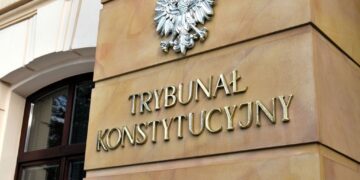






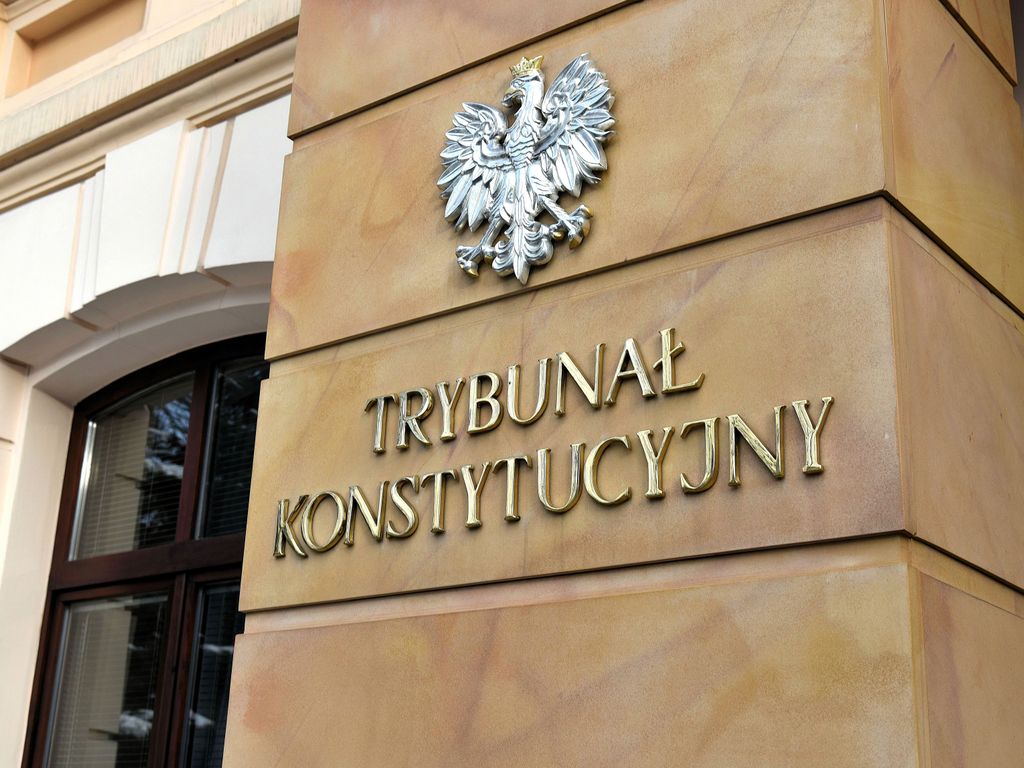
Poland’s constitutional crisis intensified on October 30 after Anna Korwin-Piotrowska, one of the judges elected by the current parliamentary majority whose status has been contested, announced that she had suspended Constitutional Tribunal president Bogdan Święczkowski. The move prompted President Karol Nawrocki to cut short his trip to Senegal and return to Warsaw, turning a long-running dispute over judicial appointments into an immediate confrontation over who controls the court.
The suspension is disputed, and the competing sides do not agree on Korwin-Piotrowska’s authority, the legal basis for the decision or who may act for the Tribunal. The Constitutional Tribunal is Poland’s constitutional review court, not the separate Supreme Court. That distinction matters because the current dispute concerns the leadership and composition of this specific institution.
Table of Contents
- What triggered the suspension
- Nawrocki returns as tensions rise
- A dispute rooted in 2015
- What EU law does and does not settle
- What happens next
What triggered the suspension
The move followed months of conflict over judges elected by the parliamentary majority supporting Tusk’s government. Święczkowski, appointed during the previous Law and Justice (PiS) government, has refused to recognise or seat some of those nominees. Korwin-Piotrowska and allies of the government accuse him of obstructing the court’s work and of irregularities in assigning cases. Those allegations form part of the stated rationale for the attempted change in leadership, but they are not a final judicial finding of wrongdoing.
The reported suspension invoked a provision of Polish judicial law, but its application to the head of the Constitutional Tribunal is contested. The Tribunal’s own online account rejected the takeover narrative and maintained that Święczkowski remained its president, while disputing Korwin-Piotrowska’s status. The court’s website also became unavailable, limiting public access to the full documentation. The precise text of the order, the statutory authority relied on and any subsequent review are therefore central facts to establish.
Justice Minister and Prosecutor General Waldemar Żurek has also sought to have the immunity of Święczkowski and deputy head Bartłomiej Sochański lifted. These proceedings are separate from the immediate question of who has lawful authority to direct the Tribunal while the suspension is disputed.
Nawrocki returns as tensions rise
Nawrocki turned his aircraft back while travelling to Senegal for a state visit and returned to Poland on Friday evening. He visited the Tribunal and backed Święczkowski. On Saturday, October 31, the president described the suspension as a breach of the constitutional order and called parliamentary group leaders to urgent talks. Nawrocki, who is aligned with PiS, has opposed several efforts by Tusk’s coalition to reshape the judiciary.
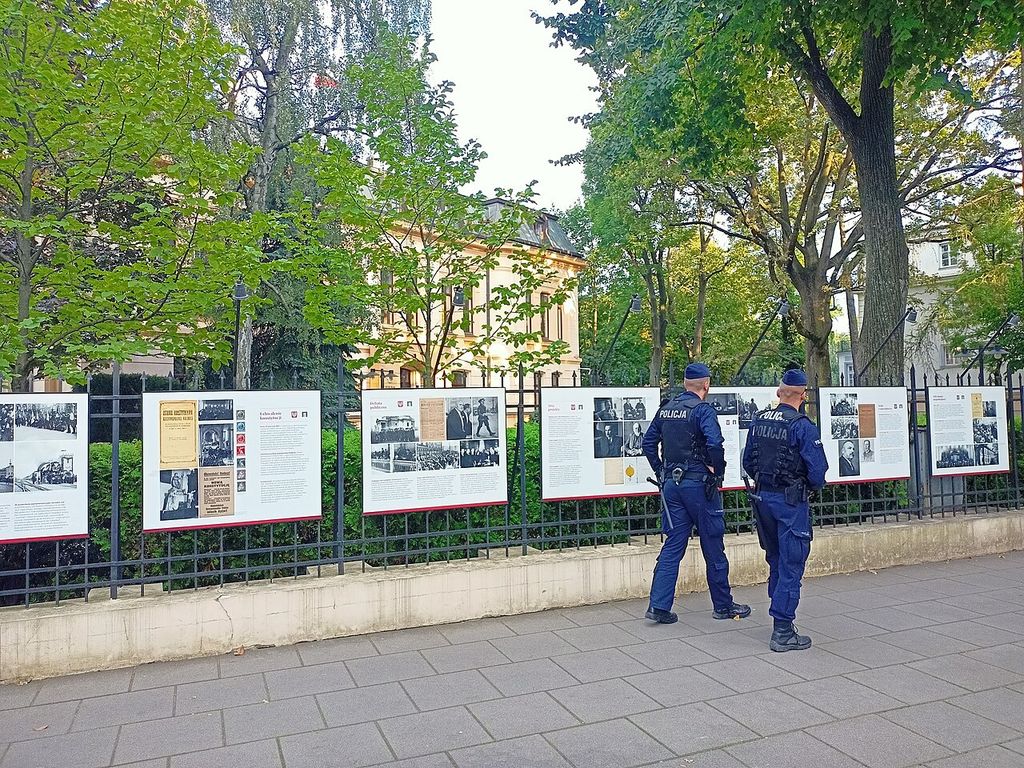
The confrontation also spilled onto the streets. Hundreds of people gathered outside the Tribunal. Police detained three protesters after some demonstrators threw objects and tried to breach a security fence, according to reporting by the Associated Press. The scene underlines how an institutional struggle has become a public test of political authority, with both sides presenting their actions as a defence of constitutional order.
A dispute rooted in 2015
The current confrontation is the latest stage of a judicial dispute that began in 2015, when the PiS-led government made controversial appointments to the Constitutional Tribunal, including seats critics said had already been filled. Later changes to the courts drew criticism from Polish opposition figures and European institutions, which argued that safeguards for judicial independence had been weakened. The former PiS government rejected that interpretation and defended its reforms as legitimate changes to an inefficient system.
Tusk’s coalition took office in 2023 promising to restore judicial independence and improve compliance with European legal standards. Its efforts have encountered resistance in the presidency and parliament, and some reforms have been delayed or blocked. The government argues that judicial repair requires changes to appointments and the operation of the courts; opponents warn that using contested procedures to remove officials risks repeating the institutional instability it says it wants to end.
What EU law does and does not settle
In December 2025, the Court of Justice of the European Union ruled in Case C-448/23 that serious appointment irregularities meant Poland’s Constitutional Tribunal did not satisfy EU-law requirements for an independent and impartial tribunal established by law. The judgment added weight to Europe’s long-running rule-of-law dispute with Poland, and the wider reforms introduced during the PiS years had already exposed the country to EU legal and financial pressure.
That ruling does not, by itself, resolve the specific domestic-law question now in dispute: whether the procedure used in October 2026 can lawfully suspend the Tribunal’s president, who has power to issue such an order, or what remedy is available. EU-level findings about judicial independence and the validity of a particular domestic suspension are connected issues, but they are not interchangeable. Treating one as an automatic answer to the other would go beyond the available evidence.
What happens next
The immediate priority is a verifiable legal record. The full suspension order, its statutory basis, the official court register and any prompt decision by a competent body should establish whether the suspension has legal effect and who can exercise the president’s functions. It also remains important to clarify the status of judges elected by parliament but not sworn in by the president, and whether they will be admitted to the Tribunal’s work.
For Poland, the crisis is not simply a contest between Tusk and Nawrocki. It tests whether the country’s institutions can settle a dispute over judicial legitimacy through transparent, reviewable legal procedures rather than rival declarations of authority. Until those procedures and their legal basis are clear, claims that either side has conclusively taken control should be treated with caution.
ForensicTimes · forensictimes.com · Investigative Journalism on Crime, Justice & Forensic Science · © 2026 ForensicTimes. All rights reserved.