
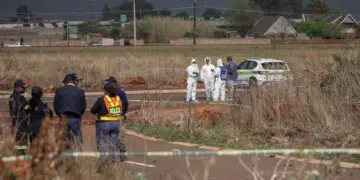
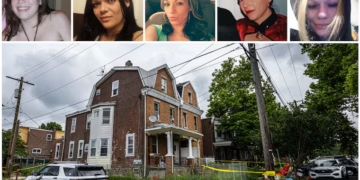







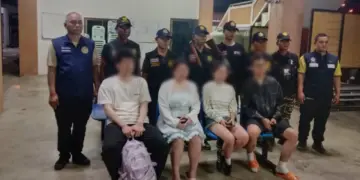


A June arrest over guns, drugs and alleged fake federal credentials opened the door to a far larger investigation in Philadelphia’s Olney neighborhood. Months later, police and the FBI are examining a home linked to five women believed to be dead, two other missing women, and a digital archive containing more than one million images and videos.
Table of Contents
- The Arrest That Opened the Door
- Inside the West Chew Avenue House
- Five Women and a Growing List of Questions
- The Digital Evidence May Be the Key
- What Investigators Say the Images Show
- Chemicals, Pipes and the Search for Physical Evidence
- The Father and Son at the Centre of the Investigation
- Why the Case Is Moving So Slowly
- What the Investigation Has and Has Not Established
- The Evidence Trail Still Has No Final Answer
The Arrest That Opened the Door
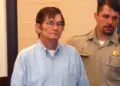
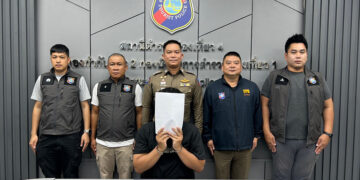
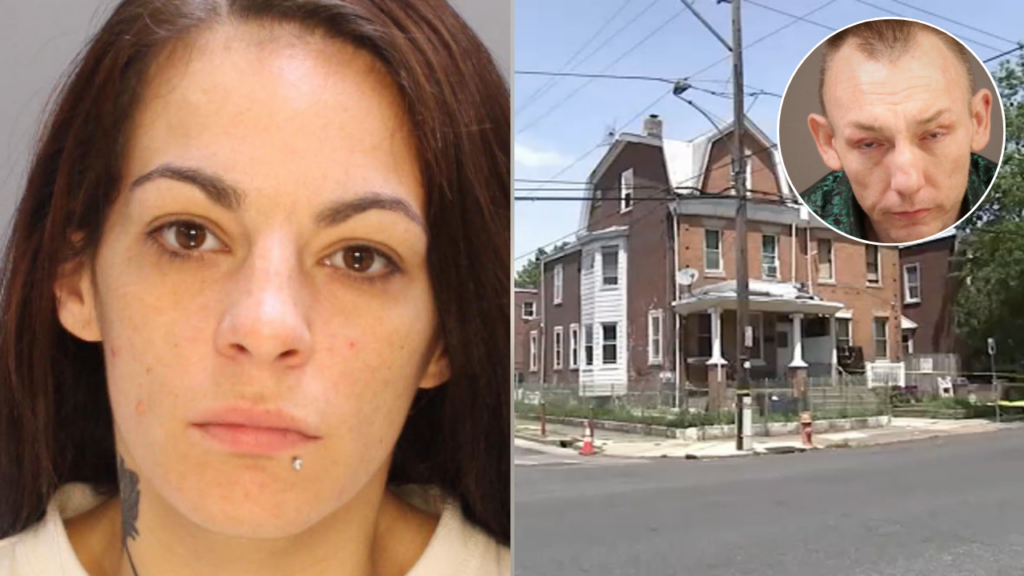
The investigation surrounding a house on West Chew Avenue in Philadelphia’s Olney neighborhood began with something that looked, at first, like an ordinary police encounter. On June 19, a National Park Service ranger noticed a BMW parked where it was not supposed to be near Independence National Historical Park. Inside were 44-year-old Eugene Horsch and a woman. When the ranger asked for identification, the woman produced identification belonging to Blair Tonzelli, a Philadelphia woman who had been reported missing in 2023. The discovery immediately changed the nature of the encounter. According to the criminal complaint, the ranger and investigators also found guns, drugs, drug paraphernalia and documents that allegedly represented Horsch as a federal law-enforcement officer. Horsch was arrested. What investigators found afterward at his Olney home would turn the case into something much larger. At the beginning, the case was not publicly described as a homicide investigation. The original charges against Horsch involved firearms, drugs and allegedly fraudulent federal credentials. The missing-person connection emerged as investigators worked backward from the June arrest. That evidence is now being examined on a scale rarely seen in an ordinary missing-person case.
Inside the West Chew Avenue House
When investigators searched the property, they found a collection of objects that raised questions far beyond the original firearms case. Authorities described a makeshift laboratory containing more than 20 containers of unknown substances. A 55-gallon drum was connected to hoses and piping, and investigators later removed sections of pipes from outside the property. The significance of those materials remains under examination. Investigators have sent the unknown substances to a federal laboratory in Chicago for testing. One of the questions being examined is whether chemicals could have been used to destroy or conceal biological evidence. Police have also investigated the possibility of wet cremation, a process involving chemicals to break down human remains. No human remains have been recovered from the house. That fact has shaped the entire investigation. Without remains, investigators cannot simply rely on conventional forensic pathology to establish a cause of death. They must instead build cases from photographs, videos, digital metadata, witness accounts, missing-person records, biological traces and whatever physical evidence can still be recovered.
The house also contained five urns believed to contain cremated remains. Investigators have not established publicly whose remains are in the urns. One is believed to be associated with Raymond Charles Horsch, Eugene’s father, while other remains have not been conclusively identified. Police have executed numerous search warrants and returned repeatedly to examine areas that may have been missed during earlier searches. Investigators also excavated and removed portions of the property’s plumbing infrastructure in July.
Five Women and a Growing List of Questions
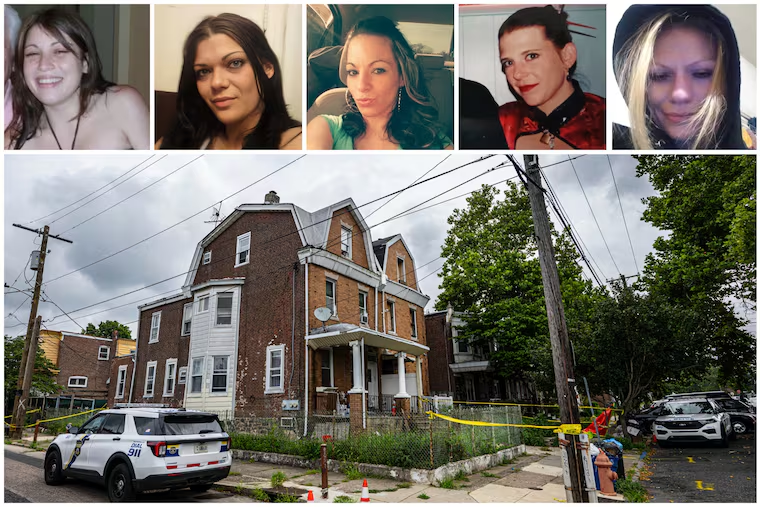
Police have now linked at least five missing women to the investigation. They are Blair Tonzelli, Amy McHale, Gabrielle Amarando, Maribel Fresses and Nicole Fusaro. Their disappearances span more than a decade, with the earliest known case dating to 2012. Amarando disappeared in 2012. She was 22 at the time. Her family spent years without knowing what had happened to her before investigators informed them in August that digital evidence recovered from the Olney home appeared to show her alive and later appearing to be dead. Maribel Fresses disappeared in 2018. Police said she also appeared in photographs and videos recovered from the property. Investigators believe the material indicates that both women died, although their bodies have not been recovered and the medical examiner has not been able to determine a cause of death. Nicole Fusaro, who disappeared in 2018, was more recently linked to the investigation. Police sources told CBS Philadelphia that investigators had recovered video that appears to show Raymond Horsch interacting with Fusaro shortly before she becomes unconscious. The precise interpretation of the footage remains part of the investigation.
Amy McHale was last seen in 2016. Her connection to the house is especially significant because she had previously been married to Raymond Horsch, Eugene’s father. Her family has said she was last seen at the West Chew Avenue property. Blair Tonzelli was reported missing in 2023. Her identification was found in the possession of a woman who was with Eugene Horsch when he was arrested. Investigators subsequently learned information that led them to believe Tonzelli would not be seen again. Those five cases are now being examined together, but the investigation is wider than five names. Police said dozens of women appear in the photographs and videos recovered from the property. As of the latest update, investigators said they had identified 58 women in the digital evidence. Some have been located alive. Others remain under investigation. Two additional women connected to the material have not been publicly identified in the same way as the five women believed to be dead. One is known to investigators but has not been publicly named at the family’s request, while another remains unidentified.
The Digital Evidence May Be the Key
The most extraordinary evidence recovered from the house may not be the chemicals or firearms. It may be the digital archive. Philadelphia police have said investigators recovered more than one million photographs and videos, along with thousands of pages of writings, manuscripts and drawings. At one stage, detectives had reviewed only a small fraction of the material. The FBI later increased the number of personnel assigned to the digital review, with agents and analysts working through the files and attempting to identify people shown in them. Police said the investigation had identified 58 women appearing in the material. Some have been interviewed and located. Others remain missing or require further investigation. The scale of the archive creates a forensic problem of its own. Investigators must determine when each file was created, whether it has been altered, what device produced it, where it was stored and whether multiple copies exist. Metadata can potentially establish dates, file paths and device information. But metadata can also be missing, altered or unreliable, which means investigators must corroborate digital evidence with other sources.
The content itself must also be authenticated. This is particularly important because police have acknowledged that some material may depict staged sexual or violent activity. Raymond Horsch was involved in adult filmmaking, and investigators have said that some of the digital material may represent performances rather than actual crimes. That distinction creates one of the central forensic challenges in the case. A video can look disturbing without proving that a homicide occurred. Conversely, a video that appears to show a real death could become critical evidence if investigators can establish the identity of the victim, the people present, the location and the authenticity of the recording. Detectives therefore have to examine the material frame by frame while comparing it with missing-person records, witness accounts and physical evidence from the house.
What Investigators Say the Images Show
In August, Philadelphia police announced that investigators had found videos and photographs appearing to show Gabrielle Amarando and Maribel Fresses alive and later appearing to be dead. Police said the medical examiner could not issue death certificates because no bodies had been recovered, but investigators believed the evidence strongly indicated that the women had died. The later investigation identified additional women and produced more disturbing footage. Police sources said video appears to show Nicole Fusaro with Raymond Horsch. According to investigators, the footage shows drug use, money being exchanged and Fusaro being restrained. Police said a zip tie is then placed around her neck and she becomes unconscious. Authorities have also said that another woman appears injured or unconscious in the material and that a separate unidentified woman appears in a similar condition. At the same time, police have emphasized that some people appearing in the recordings have been found alive.
That fact prevents investigators from treating every disturbing image as proof of a killing. Police Deputy Commissioner Frank Vanore has described the digital collection as containing both material that appears to be staged and material investigators believe may document real deaths. Determining which is which requires authentication and corroboration. This is where digital forensics and conventional homicide investigation intersect. A recording may provide an apparent event, but investigators still need to establish who the people are, where the recording was made and whether the sequence has been edited. They can compare backgrounds within the footage with the physical layout of the Chew Avenue house. They can examine timestamps, camera systems, storage devices and other files created around the same period. But investigators must also preserve the original files and document the chain of custody. In a future criminal proceeding, the reliability of the evidence will be tested closely.
Chemicals, Pipes and the Search for Physical Evidence
The digital investigation is only one part of the forensic puzzle. Physical evidence recovered from the house has raised its own questions. Investigators found a collection of chemicals in what police described as a laboratory. More than 20 containers were removed and sent to Chicago for testing. Authorities have been examining whether any of the substances could have been used to destroy biological material. Police also searched the property’s plumbing system and removed pipes, including a sewer line, lateral and trap. Investigators were looking for evidence that might have passed through or been concealed in the system. That type of forensic search is painstaking. Even when investigators believe a chemical process may have been used to destroy remains, they still need to identify residues, determine whether the substances are capable of the suspected process and establish whether there is any connection to a particular victim. The same applies to the five urns.
The presence of cremated remains is not itself evidence that a homicide occurred. Investigators need to determine whose remains they are, how they were obtained and whether they are legally and forensically connected to any missing person. The firearms and ballistic evidence recovered from the house form another evidence stream. Police have described approximately 120 pieces of ballistic evidence. Eugene Horsch is facing federal firearms charges, including allegations involving a firearm with an obliterated serial number. That separation is legally important. Evidence that a person possessed illegal firearms does not by itself establish responsibility for a disappearance or homicide. The homicide investigation must produce its own evidentiary foundation. Forensic teams are therefore working on several parallel tracks: digital evidence, chemical analysis, biological material, ballistic evidence, physical searches and victim identification.
The Father and Son at the Centre of the Investigation
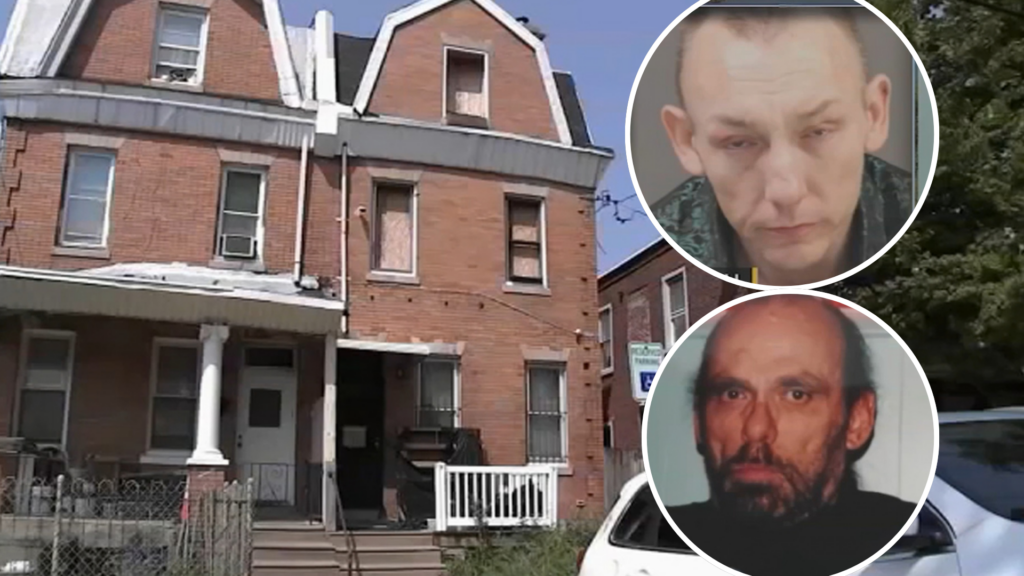
The investigation has increasingly focused on Eugene Horsch and his late father, Raymond Charles “R.C.” Horsch, who lived at the West Chew Avenue property before his death in 2025. Eugene Horsch remains in federal custody. His current criminal case concerns firearms and alleged fraudulent federal identification documents rather than charges relating to the missing women. Raymond Horsch cannot be prosecuted because he died last year, but investigators are examining his history and his connection to the women and the property. Publicly available reporting has also brought renewed attention to Horsch’s earlier life. A former Bucks County police chief recalled arresting Raymond Horsch in 2009 after a woman reported hearing noises at his home. Officers subsequently discovered a marijuana-growing operation, firearms and identification documents belonging to women. That earlier episode is being examined in the context of the current investigation, but it does not by itself prove a connection to any of the missing women in Philadelphia. Raymond Horsch also publicly discussed his work in adult filmmaking and cultivated a provocative public persona. Police have recovered writings and manuscripts from the Chew Avenue house, some of which investigators are examining for potential relevance. Again, the existence of violent or disturbing writings does not establish that the author committed a murder. The challenge for investigators is to separate personality, performance and fantasy from evidence of actual criminal conduct.
Why the Case Is Moving So Slowly
To the outside observer, months of searching a single house can appear excessive. Forensic investigators see something different: an evidence environment so large that speed can become the enemy of accuracy. The FBI has said agents are working through an enormous digital archive. Police have reported more than one million photographs and videos, while only a portion has been reviewed. Every potentially relevant image must be identified, preserved and compared against names, faces, missing-person records and other evidence. The process becomes even slower when investigators encounter people who are difficult to locate or unwilling to cooperate. Police have interviewed some individuals appearing in the material and are seeking interviews with others. Investigators have said approximately 25 people still need to be contacted as part of the effort to identify everyone who may have information about the house. A photograph can suggest one identity and later prove to belong to another person. A video can appear to show a death and turn out to be staged. A chemical container can look suspicious without containing anything connected to a crime. Every possibility has to be tested. FBI Philadelphia Special Agent in Charge Wayne Jacobs has described the objective as thoroughness rather than speed. That approach reflects the central problem facing the investigation: authorities are not simply searching for a suspect; they are trying to establish what happened to people who may have disappeared years ago.
What the Investigation Has and Has Not Established
The investigation has established that a substantial body of evidence exists inside and around the West Chew Avenue property. It has established that at least five missing women are now linked to the investigation and that police have identified 58 women appearing in recovered digital material. It has also established that some women shown in the evidence have been located alive, while investigators believe other women depicted in the files are dead. But several critical facts remain unresolved. No human remains connected to the missing women have been recovered from the property. The medical examiner has therefore been unable to determine causes of death for women whom investigators believe have died based on photographs and videos. No homicide charges have been filed in connection with the missing women. Police have not publicly established that Eugene Horsch killed any of the women, and they have not announced charges against him for those disappearances. The investigation has also not established publicly how many people may have been involved. Raymond Horsch’s role remains under investigation even though he died in 2025. Police are examining his writings, digital material and history alongside evidence connected to Eugene.
The Evidence Trail Still Has No Final Answer
The Olney investigation began with a missing woman’s identification found during an arrest. It has grown into a complex forensic operation involving a Philadelphia house, a father and son, five women believed to be dead, two additional women of concern, dozens of other people appearing in digital files and more than one million photographs and videos awaiting review. The scale of the evidence is both the investigation’s greatest opportunity and its greatest challenge. Digital files may identify victims who have remained missing for years. Chemical analysis may determine whether suspicious substances have any connection to the destruction of biological evidence. Plumbing and excavation work may reveal physical traces. DNA testing could connect material from the house to missing people or their families. But none of those possibilities should be treated as established facts until investigators produce the evidence. The same caution applies to the increasingly common description of the property as a “house of horrors” and to speculation about a serial killer. Police are investigating potential serial killings, but the investigation has not yet produced a publicly proven account of how the women died or who was responsible.
For the families, the uncertainty is measured in years rather than months. Gabrielle Amarando disappeared in 2012. Amy McHale disappeared in 2016. Maribel Fresses and Nicole Fusaro disappeared in 2018. Blair Tonzelli disappeared in 2023. The discovery of digital evidence has finally given some families an answer they had feared but could not prove: investigators now believe certain missing women are dead. Yet belief is not the same as a completed criminal case. Police and the FBI are expected to return to the West Chew Avenue property with additional search warrants. Investigators are also continuing to process the digital archive and locate people who appear in the material. What happened inside the Olney house may eventually be reconstructed through a combination of digital forensics, physical evidence and testimony. For now, the evidence tells investigators that something extraordinary happened there, but it has not yet supplied every answer. For the families waiting for certainty, that distinction is painful. For investigators, it is the reason the search continues.
ForensicTimes · forensictimes.com · Global Investigative Journalism on Crime, Justice, and Forensic Science · This report reflects verified open-source and wire reporting current as of publication. © 2026 ForensicTimes. All Rights Reserved.