




















The discovery of a ninth woman’s body in Ekurhuleni has pushed an already alarming investigation into a new phase. Police are comparing forensic evidence, victim profiles, locations and timelines to determine whether the deaths are connected, while residents across the east of Johannesburg fear that a killer — or several killers — may still be at large.
Table of Contents
- The Ninth Body Changes the Investigation
- Nine Women, Two Months, One Municipality
- The Victims Are More Than a Number
- What the Crime Scenes Are Telling Investigators
- The Forensic Evidence That Could Link the Cases
- Serial Killer, Multiple Offenders or Copycat?
- A Community That No Longer Feels Safe
- South Africa’s Wider Femicide Crisis
- Police Response and the Race for Evidence
- What Is Known — and What Remains Unresolved
The Ninth Body Changes the Investigation
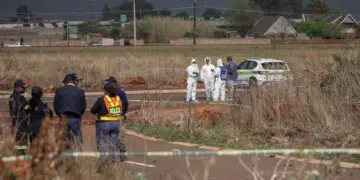
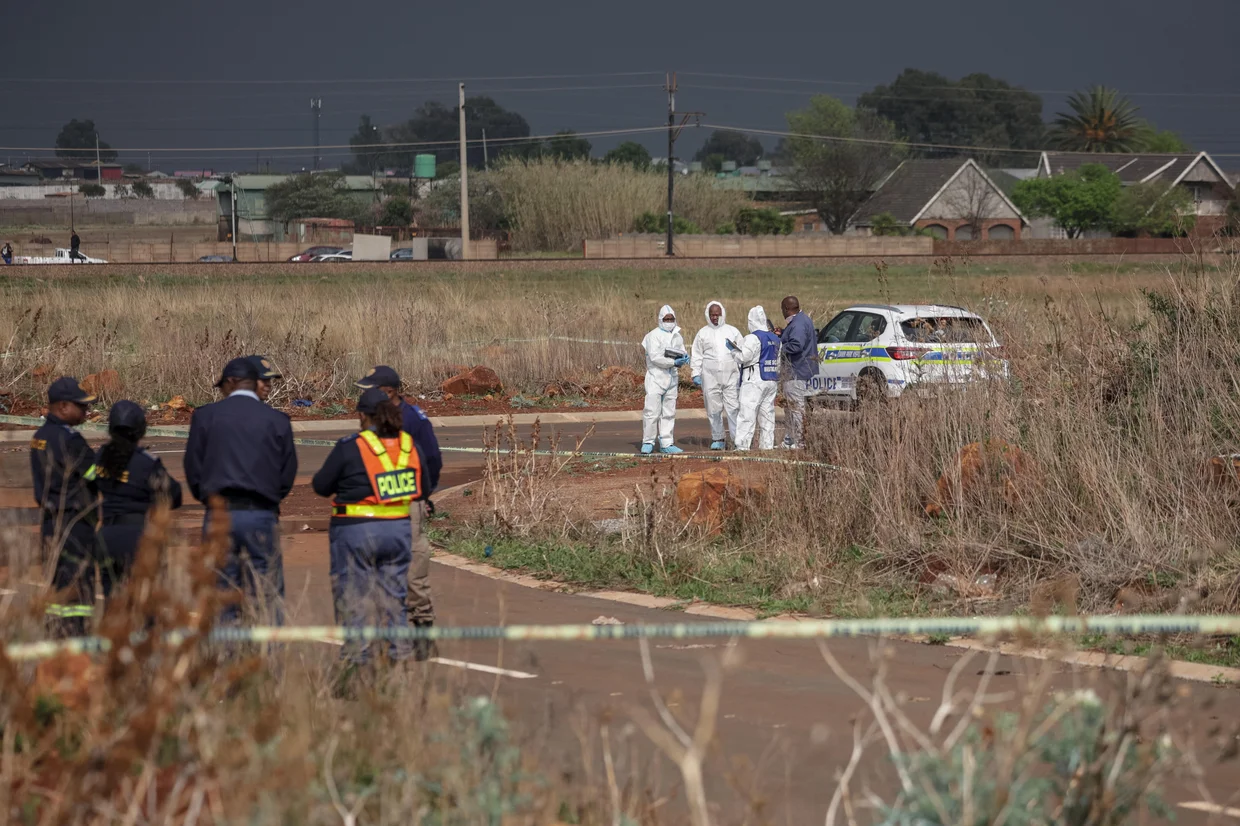
For weeks, the deaths of women across Ekurhuleni could still be treated, at least officially, as separate homicide investigations. That became increasingly difficult on September 17, when police found the body of another woman in Dawn Park, bringing the number of women discovered dead in the municipality since July to nine.
The latest victim was found near a construction or development site after a passerby alerted police. She was believed to be about 30 years old, although reports from local media have also circulated a younger age and a possible identification that had not been formally confirmed by police. Investigators were still working to establish her identity and the circumstances of her death.
Police said the woman had an apparent stab wound to her side and an injury to her throat. She was found partially clothed. Preliminary indications suggested that she may have been killed somewhere else and that her body had been dumped at the discovery site. That detail could prove important.
If the victim was killed elsewhere, Dawn Park may not be the primary crime scene. Investigators would then have to locate the place where the fatal assault occurred, identify how the body was transported and establish whether the person who dumped the body left behind evidence linking the scene to the victim.
Acting Gauteng police commissioner Fred Kekana said investigators had not established that the latest death was connected to the other cases. Police are examining multiple possibilities, including the possibility of separate offenders or a copycat killing.
That caution matters because the phrase “serial killer” has already entered public conversation. The police investigation, however, is operating on a different standard. Detectives need evidence that can connect individual deaths, not simply a frightening sequence of events.
Nine Women, Two Months, One Municipality
The geography of the investigation is one of the reasons it has become so difficult to ignore. Ekurhuleni lies east of Johannesburg and contains a mixture of densely populated residential communities, townships, industrial areas, major highways, airport infrastructure, open land and rapidly developing neighbourhoods. The bodies have been found in several locations rather than at a single site. Police have identified communities including Kempton Park, Pomona, Clayville, Olifantsfontein, Rhodesfield, KwaThema and Dawn Park among the locations connected to the investigation.
The first known case dates to July. A 37-year-old woman was found naked and restrained with cable ties in a field in the Kempton Park area. A suspect, reported to be the victim’s boyfriend, was arrested in connection with that case. Police have not publicly linked that arrest to the wider series. Another victim, 32-year-old Itumeleng Kekana, disappeared from Kempton Park on July 17. Her family searched police stations, hospitals and mortuaries before her body was found on Great North Road in Pomona on August 3.
In late August, another woman in her early 30s was found partially clothed near the R21. In September, bodies were found in Clayville, near Mall of Thembisa, and along the R21 in Kempton Park. One was reportedly in an advanced state of decomposition. On September 15, another woman was found beside a road in KwaThema, Springs. Her family later identified her as 38-year-old Dineo Evelyn Motapane. Then came the Dawn Park discovery.
The Victims Are More Than a Number
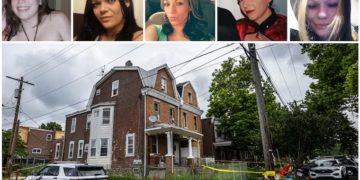
There is a danger in reporting a case like this only through a number: nine bodies, nine victims, nine investigations. Behind that number are women with families, jobs, routines and relationships who disappeared from ordinary life and left people searching for answers.
Itumeleng Kekana’s case illustrates how painful that search can become. She was 32 when she disappeared from Kempton Park. Her relatives travelled to the area and checked hospitals, police stations and mortuaries before learning that her remains had been found weeks earlier. That process depends on identification systems, DNA testing, fingerprints, dental records, family reference samples and communication between police units.
Elizabeth Moselakgomo’s disappearance created a different kind of public reaction. She was known for running, and her routine was familiar to people around her. When she failed to return, her eight-year-old daughter alerted family members. Fellow runners joined the search, turning a missing-person case into a widely followed public appeal. Her eventual death demonstrated how quickly an ordinary routine can become part of a homicide investigation.
Dineo Evelyn Motapane, also 38, was identified by her family after her body was discovered beside a road in KwaThema. Police said she had last been seen alive on the Sunday before her body was found.
Other victims remain unidentified or have not been publicly named. That uncertainty creates another layer of distress for families who may be searching hospitals, police stations and mortuaries without knowing whether their missing relative is among the victims.
Investigators can compare the time a woman was last seen with phone records, CCTV footage, transport movements, financial transactions and witness accounts. The final hours of a victim’s life may reveal where she went, whom she contacted and whether she entered a vehicle or building associated with another case. That advice has particular importance in a case where investigators are trying to reconstruct a pattern. A missing-person report filed early can preserve a timeline that might otherwise disappear.
What the Crime Scenes Are Telling Investigators
The similarities between the cases are the reason the serial-killer theory cannot simply be dismissed as social-media speculation. Police have said the victims were women in their 20s or 30s and that the bodies were found either naked or partially clothed. Some showed similar bruising. Several bodies were found in open areas or near roads, while police have indicated that at least some women may have been killed somewhere other than where their bodies were discovered. But these similarities have to be interpreted carefully.
A body found beside a road does not automatically mean the killing occurred there. A victim may have been transported after death. Clothing can be removed for different reasons. Bruising can result from many forms of violence. A similar location can reflect opportunity rather than a common offender. That is why investigators are comparing more than the appearance of the bodies. They are examining timelines, locations, victim profiles and the circumstances of each death. Police have also brought in specialists from the Investigative Psychology Unit, which deals with complex and potentially serial violent crimes.
If one offender is responsible, the locations could correspond to places that person knows well or routes that person regularly travels. If bodies were transported by vehicle, investigators may be able to identify common roads or disposal areas. But the same map can tell a different story if several offenders are involved.
The Forensic Evidence That Could Link the Cases
The most important evidence may never appear in the dramatic photographs coming out of the crime scenes. It may instead be hidden in microscopic traces collected by forensic teams. Every body requires a detailed post-mortem examination. Pathologists must establish the cause of death, document injuries and determine, where possible, when and how the injuries occurred.
The latest victim’s reported stab wound and throat injury will have to be examined in that context. Investigators need to know whether the injuries were fatal, whether they occurred before death and whether they are consistent with injuries documented in earlier cases. DNA could provide one of the clearest links between separate investigations.
If the same unknown DNA profile appears in biological material recovered from multiple victims, investigators could have a direct forensic connection. That would not automatically identify the offender, but it could establish that the cases share biological evidence. Fingerprints, fibres, hairs, soil, paint, glass and other trace evidence can also become important. If a victim was transported in a vehicle, investigators may look for material transferred between the victim and that environment.
Mobile-phone records can help reconstruct movements. CCTV cameras can establish where a victim travelled before disappearing. Messaging applications may reveal the last person who contacted her. Ride-hailing records, banking transactions and social-media activity can help establish a timeline. If the cases have no shared DNA, no common vehicle, no common phone contacts and substantially different injury patterns, the theory of one offender becomes harder to sustain. That is one of the most important safeguards against confirmation bias in a complex criminal investigation.
Serial Killer, Multiple Offenders or Copycat?
Police have been careful not to officially label the case a serial-killer investigation, even while deploying specialists who investigate complex serial violent crime. Acting Gauteng police commissioner Fred Kekana has said investigators are considering all possibilities, including multiple suspects and separate perpetrators. Police are comparing the evidence, timelines, locations, victim profiles and circumstances before reaching a conclusion. That approach is particularly important because a highly publicized crime series can create its own investigative risks. Once the public begins looking for a single killer, every new death can be interpreted through that lens. Investigators have to resist that pressure and ask whether each case actually fits the evidence. South Africa has a severe violent-crime problem, and Ekurhuleni is a large urban region. Separate killings can occur close together without being part of a single series. That does not make the current pattern less serious. It simply means investigators have to prove the relationship. If investigators find that several victims had contact with the same individual, travelled through the same area or were targeted under remarkably similar circumstances, the common-offender theory could become stronger. If the victims had no meaningful connections and the physical evidence points in different directions, investigators may conclude that the apparent pattern was misleading. For now, the only defensible conclusion is that police are investigating a possible connection among nine deaths.
A Community That No Longer Feels Safe
The investigation is unfolding against a backdrop of growing fear in communities where women say they no longer feel comfortable performing ordinary daily activities alone. Residents gathered around the Dawn Park crime scene after the latest discovery. Some had rushed from their homes after hearing what had happened. The presence of police vehicles, forensic personnel and investigators transformed an ordinary residential area into another active homicide scene. For many residents, the location was frightening precisely because it was familiar. Women have described sharing live locations with friends, avoiding isolated roads and reconsidering whether to walk or exercise alone. Families have become more anxious when daughters travel by themselves. Police have advised women in affected areas to take extra precautions and avoid going out alone where possible. At the same time, women’s rights advocates have pointed out that safety cannot ultimately depend on women shrinking their lives to avoid potential attackers. Residents are also demanding better policing, lighting, surveillance and faster responses to missing-person reports.
The circulation of information online has become another issue. Police have specifically urged the public not to circulate photographs of the bodies or unverified claims, warning that such material can increase fear and potentially encourage copycat crimes. Social media can also generate false suspects. In a case this emotional, a photograph, vehicle number or rumour can quickly become treated as evidence even when investigators have not verified it.
South Africa’s Wider Femicide Crisis
The deaths have reopened a much larger national conversation about femicide and gender-based violence. South Africa has struggled for years with extremely high levels of violence against women. The latest police figures cited in reporting show thousands of rape and sexual-offence cases being reported each quarter, while researchers and international organizations have repeatedly highlighted the scale of violence experienced by women. The Ekurhuleni deaths have therefore struck a particularly sensitive nerve. In November 2025, South Africa classified gender-based violence and femicide as a national disaster, following sustained pressure from civil society organizations and campaigners. The current investigation has raised familiar questions about whether enough has changed. These questions matter whether the nine deaths eventually prove connected or not. If they are connected, investigators will need to establish how a suspected offender was able to operate repeatedly without being stopped. If they are not connected, the concentration of deaths will still demonstrate the scale of lethal violence facing women in the region.
Police Response and the Race for Evidence
Authorities have responded by escalating the investigation and bringing together a multidisciplinary team of experts. Police have offered a R400,000 reward for information leading to arrests. The Democratic Alliance has separately announced a R500,000 reward for information leading to successful prosecution. Police have also increased operations in Kempton Park and surrounding areas, including roadblocks and heightened patrol activity.
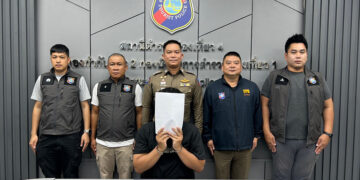
Gauteng Premier Panyaza Lesufi said investigators were making progress in two or three cases but did not disclose operational details. Authorities have urged the public to allow investigators time to gather evidence rather than drawing conclusions from incomplete information. Every unidentified woman represents a missing piece of the investigation. Once identified, investigators can begin reconstructing her life and final movements. Police are also reportedly pursuing a person of interest in the wider investigation, although authorities have not publicly disclosed the person’s identity or established a connection to the nine deaths. That caution is appropriate. An arrest or person-of-interest designation does not establish guilt, and the wider case will require evidence linking an individual to specific offences. The objective is not simply to make an arrest. It is to build a case that explains what happened to each victim and can withstand scrutiny in court.
What Is Known — and What Remains Unresolved
As of September 18, nine women have been found dead in Ekurhuleni over roughly two months. Police have identified possible similarities between the cases and have escalated the investigation, but they have not confirmed that a single serial killer is responsible.
The latest victim was found in Dawn Park on September 17. She was believed to be around 30, had apparent stab and throat injuries and was partially clothed. Police have indicated that she may have been killed elsewhere and that her body may have been dumped at the discovery site. At least three victims have been publicly identified by their families: Itumeleng Kekana, Elizabeth “Tsontso” Moselakgomo and Dineo Evelyn Motapane. Other victims remain unidentified or have not been publicly named. One suspect has been arrested in connection with the earliest reported killing, but police have not publicly established that the suspect is responsible for the broader series. Investigators are still trying to answer the central question: are the nine deaths connected? That answer could come from DNA, fingerprints, trace evidence, digital records, CCTV, vehicle movements, witness testimony or a combination of several forms of evidence. The geography may prove important, but geography alone cannot identify an offender. Similar victim profiles may be significant, but similarity alone cannot prove a common perpetrator.
Every body has a story written into the evidence: injuries, biological material, trace transfers, movements, communications and the circumstances in which the body was found. Investigators now have to reconstruct those stories and determine whether they lead back to the same person, several people or entirely separate events. For the families, the urgency is obvious. They need names, answers and accountability. For the investigators, the challenge is to deliver those answers without allowing fear or public pressure to substitute for evidence. Until then, the most important fact is also the simplest: nine women are dead, and the investigation is still searching for the evidence that explains why.
ForensicTimes · forensictimes.com · Global Investigative Journalism on Crime, Justice, and Forensic Science · This report reflects verified open-source and wire reporting current as of publication. © 2026 ForensicTimes. All Rights Reserved.