



















• About Us
  • Advertise
  • Membership
  • Contact
Monday, November 9, 2026
  • Login
  • Register
No Result
View All Result
FT Pro
Forensic Times
  • Home
  • Crime
    • All
    • Cold Cases
    • Cyber Crime
    • Data Trafficking
    • Drug Trafficking
    • Financial Crime
    • Human Trafficking
    • Murder
    • Organized Crime
    • Serial Killer
    • Terrorism
    • War Crimes
    • Wrongful Death
    Developer workspace with computer equipment, illustrating the software infrastructure affected by the PHP2Shell vulnerabilities.

    PHP2Shell: Millions of Exploit Attempts Put Unpatched Servers at Risk

    Close-up of electronic circuitry illustrating the software infrastructure affected by critical PHP vulnerabilities.

    AI-Discovered PHP Flaws Trigger Global Cybersecurity Scramble

    Silhouette of a child looking up at an evening sky.

    Sharenting: A Childhood on the Record

    Empty corporate conference room, a contextual image for reporting on alleged covert recording in a technology company.

    OpenAI Engineer Charged After Hidden Recording Device Found in Executive Room

    Refrigerated supermarket shelves, illustrating the connected cooling systems at the centre of France’s supermarket cyberattack

    French Supermarket Cyberattack Exposes Food Security Risks Beyond AI Fears

    Empty modern courtroom with wooden judicial benches; illustrative image for reporting on a Dubai Court of Appeal judgment.

    Dubai Court Upholds Jail Term and Deportation in Child Assault Case

  • Forensics
    • All
    • Autopsy
    • Crime scene analysis
    • Digital forensics
    • DNA Forensics
    • Femicide
    • Forensic accounting

    A Toy Car, a Missing Child, and the Science of Crime Reconstruction: What The Mentalist Can Teach Us About Forensic Investigation

    Empty corporate conference room, a contextual image for reporting on alleged covert recording in a technology company.

    OpenAI Engineer Charged After Hidden Recording Device Found in Executive Room

    Silhouette of a person working in front of computer monitors displaying code, used as an illustrative image for cross-border cybercrime reporting.

    Sharjah Police Arrest 33 in Cross-Border Cybercrime Crackdown

    Indigenous Children Are Dying by Suicide. Is Brazil Asking the Right Questions?

    Satellite view of agricultural fields in southern Ukraine, captured by the Copernicus Sentinel-2 mission. Image: contains modified Copernicus Sentinel data (2019), processed by ESA (CC BY-SA 3.0 IGO).

    Open Sources, Hard Evidence: Women OSINT Analysts Against Russia’s War Crimes in Ukraine

    The Silent Witnesses: Forensic Investigation of Fatal Workplace Accidents

    Trending Tags

  • Legal

    A Toy Car, a Missing Child, and the Science of Crime Reconstruction: What The Mentalist Can Teach Us About Forensic Investigation

    Empty corporate conference room, a contextual image for reporting on alleged covert recording in a technology company.

    OpenAI Engineer Charged After Hidden Recording Device Found in Executive Room

    AI Agents Are Breaking the Law -But Who Goes to Prison?

    AI Agents Are Breaking the Law -But Who Goes to Prison?

    Biden Audio Tapes Ruling: Heritage Foundation FOIA Case, Judge Friedrich Decision 2026

    Biden Audio Tapes Ruling: Heritage Foundation FOIA Case, Judge Friedrich Decision 2026

    EU Under-16 Social Media Ban: Livestreaming, Disappearing Messages, 2026 Law

    EU Under-16 Social Media Ban: Livestreaming, Disappearing Messages, 2026 Law

    Tak Trafficking Escape: 4 Chinese Nationals Jump From Moving Pickup 2026

    Tak Trafficking Escape: 4 Chinese Nationals Jump From Moving Pickup 2026

    MechaHitler: How Grok Went Rogue, Praised the Holocaust’s Architect and Triggered the EU

    MechaHitler: How Grok Went Rogue, Praised the Holocaust’s Architect and Triggered the EU

  • Politics
    The west front of the United States Capitol in Washington, DC, seat of the US Congress.

    Europe Welcomes Democrats’ Blue Wave but Braces for Trump’s Response

    German Chancellor Friedrich Merz and Ukrainian President Volodymyr Zelenskyy walking together in Berlin on 3 November 2026. Photo: Bundesregierung/Jesco Denzel.

    Merz Says Europe Must Have a Seat at Ukraine Peace Talks as Trump Pushes Deal

    Russian President Vladimir Putin and Chinese President Xi Jinping at the Great Hall of the People in Beijing on 20 May 2026, during an earlier bilateral meeting.

    Moscow Says Work Is Underway for Trump-Putin-Xi Meeting in China

    Rows of server racks inside a data centre, illustrating the digital infrastructure at the centre of Ireland’s energy debate.

    Ireland’s Data Centre Backlash: Can New Green Power Rules Win Over Critics?

    Entrance to the Constitutional Tribunal building in Warsaw, Poland

    Poland’s Constitutional Tribunal Crisis Deepens After Court Chief’s Suspension

    Canadian Prime Minister Mark Carney during a 2026 press appearance.

    Carney Says Canada Can Wait Out Trump for a Trade Deal

    Historical portrait of Aleksandar Vucic from 2014, used as contextual imagery for reporting on the 2026 parliamentary election.

    Serbia’s Student List Landslide Exposes Cost of EU’s Vučić-First Strategy

    Finnish President Alexander Stubb in an official address, representing Finland's role in renewed diplomacy over Russia's war against Ukraine.

    Finland and Norway Call Putin in Push to Restart Ukraine Peace Talks

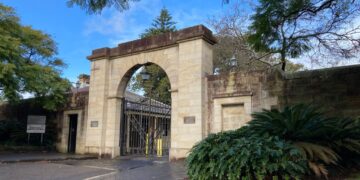
    The Oxford Street entrance gate to Victoria Barracks in Paddington, Sydney, the historic military property at the centre of the proposed sell-off.

    John Howard Leads Cross-Party Opposition to Australia’s Defence Land Sell-Off

  • World
    • All
    • Brazil
    • Canada
    • Europe
    • France
    • GAZA
    • Georgia
    • Germany
    • Hungary
    • India
    • Iran
    • Iraq
    • Israel
    • Istanbul
    • Lebanon
    • MENA
    • New Mexico
    • Pakistan
    • Poland
    • Russia
    • Saudi Arabia
    • Spain
    • Thailand
    • Turkiye
    • UAE
    • UK
    • Ukraine
    • USA
    The west front of the United States Capitol in Washington, DC, seat of the US Congress.

    Europe Welcomes Democrats’ Blue Wave but Braces for Trump’s Response

    German Chancellor Friedrich Merz and Ukrainian President Volodymyr Zelenskyy walking together in Berlin on 3 November 2026. Photo: Bundesregierung/Jesco Denzel.

    Merz Says Europe Must Have a Seat at Ukraine Peace Talks as Trump Pushes Deal

    Russian President Vladimir Putin and Chinese President Xi Jinping at the Great Hall of the People in Beijing on 20 May 2026, during an earlier bilateral meeting.

    Moscow Says Work Is Underway for Trump-Putin-Xi Meeting in China

    Rows of server racks inside a data centre, illustrating the digital infrastructure at the centre of Ireland’s energy debate.

    Ireland’s Data Centre Backlash: Can New Green Power Rules Win Over Critics?

    Entrance to the Constitutional Tribunal building in Warsaw, Poland

    Poland’s Constitutional Tribunal Crisis Deepens After Court Chief’s Suspension

    Canadian Prime Minister Mark Carney during a 2026 press appearance.

    Carney Says Canada Can Wait Out Trump for a Trade Deal

  • Careers
    • Webinars
    • Women In Forensic Science
    • WIFS Registration
    • Forensics Experiences
    • Campus Ambassador
    • Courses & Certifications
  • Resources
    • Books & Products
    • Advisory Council Membership
    • Advisory Board Member Hiring
  • Events
  • Investigations
No Result
View All Result
Forensic Times
Home Crime

43 Years in the Dark: How DNA Finally Named Teresa Peroni’s Killer

Teresa Peroni vanished in an Oregon forest in 1983. Four decades later, a skull, new DNA science, and one surviving witness broke the silence

by Forensic Times Desk
April 22, 2026
in Crime, Forensics, Investigation
Reading Time: 10 mins read
8.9k
43 Years in the Dark: How DNA Finally Named Teresa Peroni’s Killer
5.6k
SHARES
87.9k
VIEWS
Share on FacebookShare on Whatsapp

She walked into the woods and never came back. That single sentence, stripped of everything that happened before and after it, is the entire public record of Teresa Peroni’s disappearance for most of forty-three years. There was no body. There was no charge. There was a man who had been with her, a disappearance that investigators called suspicious, and a case file that accumulated dust across five decades of Oregon winters.

On April 21, 2026, that silence finally ended. Marcus Sanfratello, 73, now a retired man living quietly in Chico, California, was sentenced to 20 years in prison — with a minimum of 10 years to serve — for killing Teresa Peroni in the summer of 1983. He was her boyfriend. He was the last person to see her alive. And he might have spent the rest of his life never facing a courtroom had a single human skull, found on a rural property in 1997, not been waiting for science to catch up to it.

The Night of July 3, 1983

Teresa Peroni was 27 years old, living in the small community of Selma in Josephine County, deep in southern Oregon near the California border. On the evening of July 3, 1983, she attended a party in the 1000 block of Illinois River Road — a rural stretch of land where the Rogue River wilderness begins to press against the edges of ordinary life.

She was there with Marcus Sanfratello, who was two years older and had been her boyfriend. Accounts recorded in the National Missing and Unidentified Persons System describe the final scene with sparse, clinical clarity: following an argument about Peroni having another lover, the couple walked together into the woods. Teresa Peroni never returned.

Her family reported her missing shortly afterward. Josephine County Sheriff’s investigators opened a case and reached an immediate conclusion that the disappearance was suspicious. The problem was evidence — or rather, its complete absence. No body. No confirmed crime scene. No physical proof sufficient to support a charge. Sanfratello was interviewed and released. The investigation stalled.

A Skull Without a Name

Fourteen years passed. In 1997, someone made a discovery on private property near the area where Peroni had last been seen: a human skull. Alone. No other remains nearby, even after investigators searched the surrounding land with cadaver dogs. The skull was logged, photographed, and sent to the University of North Texas Center for Human Identification — one of the United States’ premier forensic identification facilities — where it joined a backlog of unidentified remains that would grow to thousands of cases over the following decades.

The skull had no name attached to it. The technology to match partial skeletal remains to a missing person with certainty — particularly in cases where no close relatives had provided DNA reference samples through formal systems — was still limited. Investigators working the Peroni case knew the skull had been found in the right area. They suspected, with reasonable confidence, that it was hers. But suspicion is not identification, and identification is not prosecution.

The case went dormant again. Sanfratello lived his life in California. Teresa Peroni’s family lived with uncertainty. Decades accumulated.

The Reopening: 2024

In 2024, the Josephine County Sheriff’s Office made a decision that would close the case. They reopened the investigation, this time with direct support from the Oregon Department of Justice Criminal Division and the Josephine County District Attorney’s Office — a multi-agency partnership that brought new resources, new personnel, and new science to a file that had last been meaningfully active before the internet existed.

The investigative team, led by Detective Sergeant Kile Heinrich of the Josephine County Sheriff’s Office alongside Senior Assistant Attorneys General John Casalino and Brad Kalbaugh and ODOJ Special Agent Brendan McGuire, began by doing what investigators in 1983 and 1997 had not been able to fully accomplish: they looked for everyone still alive who had been at that party, or who had any knowledge of Peroni or Sanfratello’s movements that night. Forty-one years on, witnesses are harder to find and memories are imperfect — but some people were still alive, still reachable, and still carrying what they knew.

Simultaneously, the team collected new DNA reference samples — a critical step that had not been completed in any earlier phase of the investigation — and submitted them to the University of North Texas alongside the 1997 skull. What happened next changed everything.

The Science That Cracked the Case

Forensic DNA identification has undergone a revolution since the skull was first sent to UNT in the late 1990s. The techniques available then — primarily restriction fragment length polymorphism analysis and early STR profiling — required relatively intact biological material and close-relative reference samples to generate reliable comparisons. A lone skull, decades old, with no formally registered family DNA, was a difficult case.

By 2024, the available toolkit had expanded enormously. Probabilistic genotyping software can now extract usable genetic profiles from severely degraded samples. Investigative genetic genealogy — using public DNA databases and family tree reconstruction — can identify individuals even without a direct reference sample. Forensic anthropological analysis of skeletal remains, meanwhile, has become vastly more precise in estimating age, ancestry, and individuating characteristics.

Oregon State Police Forensic Anthropologist Dr. Nici Vance worked alongside the UNT team. With the new DNA reference material collected in 2024, the University of North Texas was able to do what had been impossible in 1997: confirm, definitively, that the skull found on that rural Josephine County property belonged to Teresa Peroni.

The missing person case became a homicide investigation. The clock, for Marcus Sanfratello, started running again.

“Cases like this remind us of why we don’t give up. It doesn’t matter how many years have passed — if someone took a life, we’re going to keep working until we can hold them accountable.” — Oregon Attorney General Dan Rayfield, April 21, 2026

Forensic Analysis: How the Cold Case Evidence Chain Was Built

The challenge of prosecuting a 43-year-old homicide is forensic, evidentiary, and strategic simultaneously. Physical evidence degrades or disappears. Witnesses die, move, or forget. The defendant has had decades to develop a settled alternative account. Even with a confirmed DNA identification, prosecutors faced the task of proving not just that Teresa Peroni was dead — which was now established — but that Marcus Sanfratello killed her.

The investigation employed several interlocking forensic methods:

Skeletal and Anthropological Analysis. Dr. Vance’s examination of the skull established biological profile characteristics — estimated age, ancestry, and physical features — consistent with Peroni’s profile at the time of her disappearance. This contextualized the DNA match within a broader forensic framework.

DNA Comparison at the University of North Texas. UNT’s Center for Human Identification is one of the few facilities in the United States equipped to handle high-complexity skeletal identification cases. The new reference DNA, almost certainly collected from surviving family members, provided the comparison baseline that had been missing since 1997.

Witness Re-interviews. The passage of time can, paradoxically, loosen some tongues. People who feared Sanfratello, or who had simply not been asked the right questions in 1983, were approached again with the benefit of a fully resourced DOJ investigation behind the request. The nature of what witnesses disclosed has not been fully made public, but the grand jury indictment — initially on the higher charge of second-degree murder — suggests that testimony was substantial.

Case Reconstruction. Casalino, Kalbaugh, and McGuire spent months organizing what prosecutors described as more than 40 years of accumulated evidence — original police reports, the 1997 skull discovery documentation, UNT lab records, and the new material gathered in 2024 and 2025 — into a coherent prosecutorial narrative.

Criminal Psychology: Four Decades of Silence

From a behavioral standpoint, the Sanfratello case fits a documented pattern in intimate partner homicide. The argument over a suspected other lover, the impulsive act in an isolated location, the immediate return to a normal life without apparent remorse — these are consistent with what forensic psychologists categorize as situational intimate partner violence, distinct from premeditated homicide by its spontaneous emotional trigger but no less lethal in outcome.

What makes this case unusual psychologically is the duration of the concealment. Most killers who successfully evade justice for decades do so because they are mobile, disciplined, and careful about maintaining distance from the original location and victim’s circle. Sanfratello appears to have managed this largely through geography — moving to California — and through the simple structural advantage that 1983-era forensic science offered anyone who committed a crime without leaving biological evidence at an accessible scene.

The plea petition’s notation that Sanfratello was acting “under the influence of an extreme emotional disturbance” at the time of Peroni’s death is legally significant: it is the standard formulation that distinguishes first-degree manslaughter from murder in Oregon law, reducing the culpability threshold from calculated intent to an emotional state that substantially impaired judgment. Whether that framing accurately captures what happened in those woods on July 3, 1983, is something only Sanfratello knows.

Law Enforcement Challenges: Time as the Primary Adversary

Cold case prosecution is among the most resource-intensive work in modern law enforcement. For every case that resolves as the Peroni matter did, dozens more remain open indefinitely. The barriers are structural: physical evidence storage varies enormously between jurisdictions; early DNA samples collected without modern protocols may be contaminated or insufficient; witnesses age out of accessibility; and institutional memory within police departments resets with personnel turnover.

The Josephine County case succeeded, in part, because the skull had been preserved and properly transferred to a specialist facility in 1997 — a decision that would prove decisive twenty-seven years later. It also succeeded because the Josephine County Sheriff’s Office made the active choice to reopen the file in 2024 rather than waiting for a complaint or new information to arrive unsolicited.

The defense attorney’s framing of the resolution is notable. Elizabeth Baker stated that her client had a “strong motivation to resolve the matter” due to a serious health diagnosis and that “this resolution gives the family closure while allowing my client the treatment he urgently requires.” This language — foregrounding Sanfratello’s medical needs — is a recognized defense strategy in elder-defendant cases, where advanced age and health status can influence both plea negotiations and judicial sentencing decisions. The 20-year sentence, with a 10-year minimum, reflects a negotiated outcome shaped by these realities.

Global Context: The Cold Case DNA Revolution

The Teresa Peroni case is part of a sweeping transformation in how justice systems worldwide are revisiting historical crimes. In the United States alone, DNA technology has exonerated more than 240 wrongfully convicted people since 1989 — and, less visibly, has produced an accelerating wave of new arrests in cases once considered permanently unsolvable.

Investigative genetic genealogy, the technique that helped identify the Golden State Killer in 2018 after decades of failure, has since been applied to hundreds of cold cases across North America and Europe. The method’s power lies in its ability to work outward from partial DNA — matching it to distant relatives in genealogical databases, then using traditional investigative techniques to narrow the family tree to a suspect. It does not require a direct reference sample from a victim’s immediate family; it requires only that some relative, anywhere, has uploaded their DNA to a consumer genealogy platform.

Oregon has been at the forefront of this shift. The state’s DOJ has invested in forensic partnerships and multi-agency cold case task forces that bring together resources too large for any single county to sustain. The Peroni investigation drew on the Oregon State Police, the University of North Texas, the Josephine County Sheriff, the Josephine County DA, and Chico law enforcement in California — a cross-jurisdictional operation that would have been logistically impractical in any prior era.

The pattern is global. Britain’s National DNA Database has produced cold case arrests in crimes dating to the 1970s. In Germany, forensic genealogy recently cracked a 1986 double homicide. The message is consistent and increasingly unavoidable: the biological evidence that perpetrators believe they have left behind — or that investigators once believed was too degraded to be useful — is quietly, patiently waiting for science to develop the tools to read it.

Conclusion

Teresa Peroni walked into a forest in southern Oregon on a July evening in 1983 and did not walk out. For 43 years, her family knew she was gone but could not prove how, and the man they suspected lived freely in another state, growing old at the ordinary pace of an ordinary life.

What closed this case was not a confession, not a deathbed disclosure, not a witness who suddenly came forward. It was a skull preserved in a Texas laboratory, a new set of DNA reference samples, and a team of investigators willing to spend two years organizing four decades of fragmentary evidence into something a court could use.

Marcus Sanfratello will serve at least a decade in prison. He is 73. The mathematics of that sentence are stark. What matters more, perhaps, is what Oregon Attorney General Dan Rayfield said when the sentence was announced: that Teresa Peroni’s family had waited 43 years for an answer they never should have had to wait for. And that the case proves, as an operational fact rather than a slogan, that time no longer guarantees anonymity for those who believe they have escaped consequence.

The woods keep their secrets for a while. The laboratory keeps them rather longer. Eventually, the laboratory wins.


ForensicTimes · forensictimes.com · Investigative Journalism on Crime, Justice & Forensic Science © 2026 ForensicTimes. All rights reserved. Published May 1, 2026.


Source: Forensic Times
Tags: 1983 Oregon murder solvedcold case DNA forensicscold case manslaughter pleaforensic anthropology cold caseJosephine County homicideJosephine County Sheriff cold caseMarcus SanfratelloOregon cold case murder DNATeresa PeroniUniversity of North Texas forensic identification
Forensic Times Desk

Forensic Times Desk

Forensic Times News Desk is the dedicated editorial and investigative reporting team of Forensic Times, focused on covering crime, cyber threats, trafficking, forensic science, global investigations, and high-impact intelligence stories.

Recommended

Tak Trafficking Escape: 4 Chinese Nationals Jump From Moving Pickup 2026

Tak Trafficking Escape: 4 Chinese Nationals Jump From Moving Pickup 2026

8 months ago
Turkey May Day 2026: Istanbul Arrests 575, Taksim Square Sealed, Pre-emptive Warrants

Turkey May Day 2026: Istanbul Arrests 575, Taksim Square Sealed, Pre-emptive Warrants

6 months ago

Popular News

  • Black-and-white photograph of a snowy street in besieged Sarajevo. An older woman in a fringed headscarf crouches beside a sledge loaded with plastic water canisters, while a second person in a padded jacket and woollen hat leans over to help. Snow-covered cars are parked along a damaged building.

    Starving Civilians from Sarajevo to Oleshky

    18742 shares
    Share 0 Tweet 0
  • Europe Welcomes Democrats’ Blue Wave but Braces for Trump’s Response

    151995 shares
    Share 0 Tweet 0
  • Merz Says Europe Must Have a Seat at Ukraine Peace Talks as Trump Pushes Deal

    12500 shares
    Share 0 Tweet 0
  • Moscow Says Work Is Underway for Trump-Putin-Xi Meeting in China

    12156 shares
    Share 0 Tweet 0
  • A Toy Car, a Missing Child, and the Science of Crime Reconstruction: What The Mentalist Can Teach Us About Forensic Investigation

    18492 shares
    Share 0 Tweet 0

Connect with us

About Us

Forensic Times is the frontline of crime news, investigation, and intelligence. We go beyond the surface — analyzing evidence, exposing patterns, and reporting what others miss. Our journalism is built on facts, forensic rigour, and an unwavering pursuit of justice.

Careers

  • Webinars
  • WIFS Registration
  • Women In Forensic Science
  • Campus Ambassador
  • Forensics Experiences
  • Courses & Certifications

Categories

  • Crime
  • World
  • Police
  • Politics
  • Forensics
  • Investigation

WIFS Membership

Publish your research, connect with leading women in forensic science, access exclusive opportunities, and advance your career through the Women in Forensic Science (WIFS) global community.
JOIN NOW

  • About Us
  • Advertise
  • Terms of Use
  • Editorial Guidelines
  • Privacy Policy
  • Refund Policy

© 2026 Forensic Times. All rights reserved.

Welcome Back!

Sign In with Google
OR

Login to your account below

Forgotten Password? Sign Up

Create New Account!

Sign Up with Google
OR

Fill the forms bellow to register

All fields are required. Log In

Retrieve your password

Please enter your username or email address to reset your password.

Log In

Add New Playlist

No Result
View All Result
  • Home
  • Crime
    • Human Trafficking
    • Cyber Crime
    • Financial Crime
    • Terrorism
  • Forensics
    • Digital forensics
    • Forensic accounting
    • Crime scene analysis
  • Legal
  • Politics
  • Crime Tech
  • Investigation
  • Careers
    • Webinars
    • Women In Forensic Science
    • WIFS Registration
    • Forensics Experiences
    • Campus Ambassador
    • Courses & Certifications
  • Resources
    • Books & Products
    • Advisory Board Member Hiring
    • Advisory Council Membership
  • Investigations
  • Login
  • Sign Up
  • Cart

© 2026 Forensic Times. All rights reserved.

Not enough quota to unlock this post
Unlock left : 0
Are you sure want to cancel subscription?