


















• About Us
  • Advertise
  • Membership
  • Contact
Monday, November 9, 2026
  • Login
  • Register
No Result
View All Result
FT Pro
Forensic Times
  • Home
  • Crime
    • All
    • Cold Cases
    • Cyber Crime
    • Data Trafficking
    • Drug Trafficking
    • Financial Crime
    • Human Trafficking
    • Murder
    • Organized Crime
    • Serial Killer
    • Terrorism
    • War Crimes
    • Wrongful Death
    Developer workspace with computer equipment, illustrating the software infrastructure affected by the PHP2Shell vulnerabilities.

    PHP2Shell: Millions of Exploit Attempts Put Unpatched Servers at Risk

    Close-up of electronic circuitry illustrating the software infrastructure affected by critical PHP vulnerabilities.

    AI-Discovered PHP Flaws Trigger Global Cybersecurity Scramble

    Silhouette of a child looking up at an evening sky.

    Sharenting: A Childhood on the Record

    Empty corporate conference room, a contextual image for reporting on alleged covert recording in a technology company.

    OpenAI Engineer Charged After Hidden Recording Device Found in Executive Room

    Refrigerated supermarket shelves, illustrating the connected cooling systems at the centre of France’s supermarket cyberattack

    French Supermarket Cyberattack Exposes Food Security Risks Beyond AI Fears

    Empty modern courtroom with wooden judicial benches; illustrative image for reporting on a Dubai Court of Appeal judgment.

    Dubai Court Upholds Jail Term and Deportation in Child Assault Case

  • Forensics
    • All
    • Autopsy
    • Crime scene analysis
    • Digital forensics
    • DNA Forensics
    • Femicide
    • Forensic accounting

    A Toy Car, a Missing Child, and the Science of Crime Reconstruction: What The Mentalist Can Teach Us About Forensic Investigation

    Empty corporate conference room, a contextual image for reporting on alleged covert recording in a technology company.

    OpenAI Engineer Charged After Hidden Recording Device Found in Executive Room

    Silhouette of a person working in front of computer monitors displaying code, used as an illustrative image for cross-border cybercrime reporting.

    Sharjah Police Arrest 33 in Cross-Border Cybercrime Crackdown

    Indigenous Children Are Dying by Suicide. Is Brazil Asking the Right Questions?

    Satellite view of agricultural fields in southern Ukraine, captured by the Copernicus Sentinel-2 mission. Image: contains modified Copernicus Sentinel data (2019), processed by ESA (CC BY-SA 3.0 IGO).

    Open Sources, Hard Evidence: Women OSINT Analysts Against Russia’s War Crimes in Ukraine

    The Silent Witnesses: Forensic Investigation of Fatal Workplace Accidents

    Trending Tags

  • Legal

    A Toy Car, a Missing Child, and the Science of Crime Reconstruction: What The Mentalist Can Teach Us About Forensic Investigation

    Empty corporate conference room, a contextual image for reporting on alleged covert recording in a technology company.

    OpenAI Engineer Charged After Hidden Recording Device Found in Executive Room

    AI Agents Are Breaking the Law -But Who Goes to Prison?

    AI Agents Are Breaking the Law -But Who Goes to Prison?

    Biden Audio Tapes Ruling: Heritage Foundation FOIA Case, Judge Friedrich Decision 2026

    Biden Audio Tapes Ruling: Heritage Foundation FOIA Case, Judge Friedrich Decision 2026

    EU Under-16 Social Media Ban: Livestreaming, Disappearing Messages, 2026 Law

    EU Under-16 Social Media Ban: Livestreaming, Disappearing Messages, 2026 Law

    Tak Trafficking Escape: 4 Chinese Nationals Jump From Moving Pickup 2026

    Tak Trafficking Escape: 4 Chinese Nationals Jump From Moving Pickup 2026

    MechaHitler: How Grok Went Rogue, Praised the Holocaust’s Architect and Triggered the EU

    MechaHitler: How Grok Went Rogue, Praised the Holocaust’s Architect and Triggered the EU

  • Politics
    The west front of the United States Capitol in Washington, DC, seat of the US Congress.

    Europe Welcomes Democrats’ Blue Wave but Braces for Trump’s Response

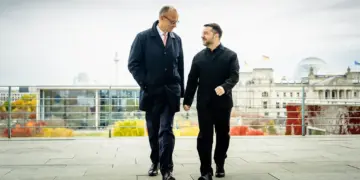
    German Chancellor Friedrich Merz and Ukrainian President Volodymyr Zelenskyy walking together in Berlin on 3 November 2026. Photo: Bundesregierung/Jesco Denzel.

    Merz Says Europe Must Have a Seat at Ukraine Peace Talks as Trump Pushes Deal

    Russian President Vladimir Putin and Chinese President Xi Jinping at the Great Hall of the People in Beijing on 20 May 2026, during an earlier bilateral meeting.

    Moscow Says Work Is Underway for Trump-Putin-Xi Meeting in China

    Rows of server racks inside a data centre, illustrating the digital infrastructure at the centre of Ireland’s energy debate.

    Ireland’s Data Centre Backlash: Can New Green Power Rules Win Over Critics?

    Entrance to the Constitutional Tribunal building in Warsaw, Poland

    Poland’s Constitutional Tribunal Crisis Deepens After Court Chief’s Suspension

    Canadian Prime Minister Mark Carney during a 2026 press appearance.

    Carney Says Canada Can Wait Out Trump for a Trade Deal

    Historical portrait of Aleksandar Vucic from 2014, used as contextual imagery for reporting on the 2026 parliamentary election.

    Serbia’s Student List Landslide Exposes Cost of EU’s Vučić-First Strategy

    Finnish President Alexander Stubb in an official address, representing Finland's role in renewed diplomacy over Russia's war against Ukraine.

    Finland and Norway Call Putin in Push to Restart Ukraine Peace Talks

    The Oxford Street entrance gate to Victoria Barracks in Paddington, Sydney, the historic military property at the centre of the proposed sell-off.

    John Howard Leads Cross-Party Opposition to Australia’s Defence Land Sell-Off

  • World
    • All
    • Brazil
    • Canada
    • Europe
    • France
    • GAZA
    • Georgia
    • Germany
    • Hungary
    • India
    • Iran
    • Iraq
    • Israel
    • Istanbul
    • Lebanon
    • MENA
    • New Mexico
    • Pakistan
    • Poland
    • Russia
    • Saudi Arabia
    • Spain
    • Thailand
    • Turkiye
    • UAE
    • UK
    • Ukraine
    • USA
    The west front of the United States Capitol in Washington, DC, seat of the US Congress.

    Europe Welcomes Democrats’ Blue Wave but Braces for Trump’s Response

    German Chancellor Friedrich Merz and Ukrainian President Volodymyr Zelenskyy walking together in Berlin on 3 November 2026. Photo: Bundesregierung/Jesco Denzel.

    Merz Says Europe Must Have a Seat at Ukraine Peace Talks as Trump Pushes Deal

    Russian President Vladimir Putin and Chinese President Xi Jinping at the Great Hall of the People in Beijing on 20 May 2026, during an earlier bilateral meeting.

    Moscow Says Work Is Underway for Trump-Putin-Xi Meeting in China

    Rows of server racks inside a data centre, illustrating the digital infrastructure at the centre of Ireland’s energy debate.

    Ireland’s Data Centre Backlash: Can New Green Power Rules Win Over Critics?

    Entrance to the Constitutional Tribunal building in Warsaw, Poland

    Poland’s Constitutional Tribunal Crisis Deepens After Court Chief’s Suspension

    Canadian Prime Minister Mark Carney during a 2026 press appearance.

    Carney Says Canada Can Wait Out Trump for a Trade Deal

  • Careers
    • Webinars
    • Women In Forensic Science
    • WIFS Registration
    • Forensics Experiences
    • Campus Ambassador
    • Courses & Certifications
  • Resources
    • Books & Products
    • Advisory Council Membership
    • Advisory Board Member Hiring
  • Events
  • Investigations
No Result
View All Result
Forensic Times
Home Forensics

Drawing the Guilty Face: Forensic Art and the Portrait of a Fictional Killer

A veteran NYPD forensic artist sat down with Karl Ove Knausgaard to sketch his fictional killer. The result reveals everything about how forensic art actually works — and what faces confess

by Forensic Times Desk
December 6, 2025
in Forensics
Reading Time: 12 mins read
9.1k
Drawing the Guilty Face: Forensic Art and the Portrait of a Fictional Killer
6.8k
SHARES
87.4k
VIEWS
Share on FacebookShare on Whatsapp

The witness sits across from the artist. She has seen a face — once, briefly, in difficult conditions — and now she is being asked to reconstruct it from the inside out. Not to describe it the way she would a painting, or a photograph, or a person she loves. But to retrieve it, feature by feature, from the layered and imperfect archive of human memory, and hand it over piece by piece to someone whose job is to make it exist again on paper.

Stephen Mancusi has conducted that interview thousands of times. He was a senior forensic artist and first-grade detective with the New York City Police Department for nearly twenty-seven years, one of fewer than a hundred full-time forensic artists working in law enforcement in the entire United States. He drew the faces of people who had done terrible things, from the descriptions of people to whom terrible things had been done. The drawings he made were distributed to precincts, broadcast in newspapers, sent across databases. Some of them led to arrests. Some of them led nowhere. All of them began the same way: with a conversation, a blank page, and a face that only existed inside someone else’s mind.

In December 2025, T Magazine asked Mancusi to apply that same process to an entirely different kind of witness: Karl Ove Knausgaard, whose novel The School of Night had just been published in English. The subject was Kristian Hadeland — the novel’s narrator and protagonist, a Norwegian photographer who moves to London in 1985, makes a Faustian bargain with an eccentric Dutch artist named Hans, kills a man, ascends to international fame, and eventually faces the collapse of everything he built on that original act of violence. Hadeland was fictional. But Knausgaard had spent months inhabiting him, describing his face, his expression, the way his ambition and moral vacancy arranged themselves in his features. He knew what Hadeland looked like from the inside.

Mancusi’s job was to make that interior image visible.

What Forensic Art Actually Is

The popular image of the police sketch artist — a detective-adjacent figure sitting across from a shaken witness, pencil moving across paper while the witness says “more angular” or “no, the eyes were closer together” — captures part of the reality of forensic art but misses most of what makes it technically demanding and investigatively consequential.

Forensic art is a discipline, not an activity. It encompasses composite sketching, age progression, image modification and identification, demonstrative evidence for courtroom use, postmortem reconstructions from decomposed remains or skeletal material, and two- and three-dimensional facial approximation from skulls. Most practitioners specialize in one or two of these areas; it is rare, Mancusi notes, for a single forensic artist to work across all of them at a professional level. What connects them is the translation of visual information from one form — memory, a skull, a blurred surveillance image, a decades-old photograph — into another form that can be used by investigators or a jury.

Composite sketching is the best known and the most cognitively complex. A composite is not a portrait. Mancusi is precise about this distinction: a composite is a drawing of a witness’s or victim’s perception of somebody. The witness’s memory is the only source material the artist has. That memory is not a photograph. It is a reconstruction, subject to the distortions of stress, lighting, duration of exposure, emotional state, and the ordinary processes by which the human brain encodes and retrieves faces. The artist’s job is to navigate all of that — to interview the witness in a way that draws out the most reliable elements of their recollection without contaminating or over-directing it — and to produce an image that is useful for identification, not merely faithful to what the witness believes they remember.

The process begins before a single line is drawn. Mancusi describes the opening words of a session — “Hi, I’m Stephen Mancusi, I’m the department artist, we’re going to try to do a sketch of the person that you saw” — as the beginning of the interview. The witness’s response to those words, their posture, their level of anxiety, the way they organize their first description: all of it is data. The artist is reading the witness at the same time as the witness is trying to read their own memory.

From there, the conversation moves through the face systematically but not mechanically. Hair first — its shape and volume frame the entire composition and establish proportion. Then the facial structure: the shape of the face, the relationship between forehead, cheekbones, and jaw. Then individual features, working from the top down: brows, eyes, nose, lips, chin. At each stage, the artist is asking open-ended questions rather than leading ones, showing reference materials when useful without anchoring the witness to an image that doesn’t quite fit. The goal is to stay inside the witness’s memory rather than importing another face that becomes confused with it.

The Knausgaard Session: Describing a Face That Only Exists in Prose

The collaboration between Mancusi and Knausgaard inverted the usual dynamic in a way that is both disorienting and, for anyone interested in how faces are known and rendered, deeply illuminating.

In a standard forensic interview, the witness has seen the face. The image exists somewhere in their neural encoding, imperfect and time-stamped but grounded in a real perceptual event. The artist is helping to retrieve something that happened. In the Knausgaard session, the face had never been seen by anyone except in the act of invention. Knausgaard had written Hadeland into existence — described his expressions, his manner, the quality of his gaze, the way his features registered his internal state — but he had not drawn him. He had constructed a face through language and let readers construct their own visual interpretation from those words.

Knausgaard has said in interviews that Hadeland was not drawn from outside himself: “it wasn’t like I found him outside myself. I took him from within. It’s not that I’m like him, but there are some elements of myself that I magnified and put in him.” In the novel, those magnified elements are ambition stripped of conscience, artistic will divorced from human feeling — a man who crosses lines because lines, to him, are abstractions. The face that would belong to such a person is not neutral. It is a face that has made a decision about what it is.

That is precisely what Mancusi had to work with: not a memory of a visual event, but a writer’s phenomenology of a character he had built from the inside. The questions Mancusi asks in a forensic session — about the shape of the brow line, the set of the eyes, whether the face is narrow or broad at the jaw — had to be translated into a different register, drawing out not what Knausgaard remembered seeing but what he knew about a person he had created.

The resulting image — a pencil portrait of Hadeland as Knausgaard described him — is a document of this unusual epistemological territory. It is a composite of something that never happened, drawn from a witness who never witnessed, rendered by a technique developed to reconstruct the faces of those who have done real harm.

The Discipline’s Origins: From Wanted Posters to Digital Rendering

The history of forensic art in the United States runs from the hand-lettered wanted posters of the Old West — distributed in saloons, churches, post offices, and schools — through the formal systematization pioneered by French criminologist Alphonse Bertillon in the 1890s, whose anthropometric identification methods laid the groundwork for modern composite theory, to the post-war development of proprietary facial composite kits and, from the 1980s onward, digital imaging systems.

Bertillon’s 1893 treatise on anthropometrical identification introduced the concept of the portrait parlé — the “spoken portrait” — a standardized verbal description of a subject’s physical characteristics organized by anatomical region and rendered in precise, reproducible terminology. The portrait parlé was not an image; it was a protocol for creating consistent verbal descriptions that could be compared across jurisdictions and time. It was, in essence, the first attempt to make the description of a face interoperable — to ensure that what one officer recorded as a “wide nasal bridge with slight dorsal hump” would mean the same thing to another officer three cities away.

That systematizing impulse runs directly into the modern composite session. Mancusi and his colleagues at the NYPD worked from a canon of descriptive terminology — standardized language for facial features — that allowed images to be described, compared, and modified consistently. When Mancusi describes asking a witness about the nose, he is using a vocabulary of shape categories — convex, concave, bifurcated, wide-based — that allow the artist and the witness to triangulate toward a shared image without the artist imposing their own interpretation.

The introduction of digital tools in the 1990s and 2000s changed the production workflow — pencil-on-paper composites are slower and require physical revision when a witness says “the chin was wider” — but left the interview process largely intact. Mancusi continued to work primarily in pencil and paper for composite sketches even after digital alternatives became available, because the subtlety required to capture the nuances of a face — the slight asymmetry, the way the eyelids hang, the angle of the jaw — remains more naturally expressed through direct drawing than through the assembly of pre-constructed feature modules.

Faces and Memory: The Cognitive Science Underneath

What makes forensic composite art both powerful and limited is grounded in the cognitive science of face recognition and memory retrieval — a field that has expanded considerably since the NYPD established its forensic art unit in the mid-twentieth century.

Faces are processed by a dedicated neural system. The fusiform face area, identified in the 1990s through neuroimaging studies, responds selectively to faces in a holistic, configural manner: humans perceive faces as unified wholes rather than as collections of independent features. This is why composite systems that build faces feature by feature — choose an eye shape, choose a nose shape, assemble them together — often produce results that witnesses immediately reject as wrong even when each individual feature seems correct in isolation. The assembled whole does not match the stored whole, because the brain encoded the face as a configuration, not a parts list.

Experienced forensic artists compensate for this through the interview process. Rather than asking a witness to describe features in isolation and then assembling them, a skilled artist draws continuously, showing the emerging composite to the witness and asking for holistic reactions — does this feel right, does the face as a whole feel like what you remember — before making incremental adjustments. The goal is to keep the witness in configural mode, reacting to a whole face, rather than analytical mode, evaluating individual features.

The challenge this poses for the Knausgaard collaboration is subtle but real. A novelist’s knowledge of a character’s face is not stored holistically in the way a witness’s memory of a real person is. It is constructed from the narrative decisions that gave the character form — the scene in which Hadeland’s expression betrays his contempt, the moment when his face becomes unreadable to the people around him. Knausgaard retrieves Hadeland’s face through language and intention, not through perceptual memory. The cognitive pathway Mancusi’s interview technique is designed to navigate simply does not exist in the same form.

Criminal Psychology and the Readable Face

The question that haunts both forensic art and The School of Night from different angles is the same: does the face tell us anything reliable about what a person is capable of?

Forensic art makes no such claim. A composite is a tool for identification, not a tool for character assessment. Mancusi is careful to distinguish between what a composite is — a drawing of perception — and what it is often taken to be: a portrait of guilt. The history of law enforcement is full of cases in which composite-aided misidentification contributed to wrongful arrests and convictions; the problem is not in the technique but in how the resulting image is used, and in the cognitive biases that cause witnesses and investigators alike to see confirmation of guilt in a face they have already decided to suspect.

Knausgaard’s Hadeland presents a different kind of forensic question. He is a man whose face, by the novel’s logic, becomes more compelling and more artistically resonant as a direct consequence of his violence — as if the act of having crossed an irreversible moral line has made something visible in him that was not visible before. This is a literary device, an echo of the Faustian bargain structure that shapes the novel. But it is also a version of a question that has occupied criminologists and psychologists for two centuries: whether guilt leaves traces in the body and the face, whether transgression marks its perpetrator in ways that others can perceive.

The evidence, for what it is worth, is that it does not — at least not in the systematic, reliably detectable way that would make it forensically useful. The literature on facial cues to deception consistently finds that untrained observers perform barely above chance in detecting lying from facial expression, and that trained observers do only marginally better. The idea that a killer’s face reveals their nature belongs to the history of physiognomy and phrenology — discredited sciences that nevertheless left persistent sediment in popular imagination and, for a time, in law enforcement practice.

What faces do reveal, under sufficiently skilled interpretation, is emotional state: micro-expressions, gaze behavior, the relationship between verbal and nonverbal communication during an interview. This is the territory of behavioral analysis, not composite art. Mancusi’s skill is in extracting what a witness saw and remembers, not in reading what the subject reveals about themselves.

Hadeland, in the novel, is a man who has stopped allowing his face to reveal anything. That control — the face as managed surface rather than transparent window — is, Knausgaard suggests, both the product and the price of his Faustian success.

Forensic Art in the Age of Algorithmic Faces

The encounter between Knausgaard and Mancusi arrived at a moment of significant technological disruption in the field Mancusi spent his career practicing. Facial recognition software, AI-generated composite systems, and deepfake-adjacent image generation tools have collectively altered what forensic art means, what it can do, and what risks it introduces.

Algorithmic facial recognition can compare an image against a database of millions of faces in seconds. AI composite tools can generate a photorealistic image from a verbal description without a human artist as intermediary. These capabilities are, in theory, faster and more scalable than anything a pencil-and-paper forensic artist can produce. In practice, they introduce new error modes — racial bias in facial recognition training data, the uncanny-valley problem of generated faces that are plausible but wrong — that Mancusi’s techniques are not subject to.

The more consequential shift may be in how facial evidence is understood by juries. The authority of a pencil composite, drawn by a human in direct interaction with a human witness, is psychologically different from the authority of an algorithmically generated image. The former carries the implicit credibility of craft and individual judgment. The latter carries the implicit credibility of computation and objectivity. Neither is more accurate than the process that produced it. But both shape how a jury receives the evidence — and in the history of wrongful conviction, how a jury receives evidence matters enormously.

Mancusi’s instinct to continue working in pencil even when digital tools became available may be understood, in retrospect, not as conservatism but as an intuition about the relationship between process and trust. The face he draws is visibly the product of a human act. That visibility is itself forensically significant.

What the Portrait of Hadeland Reveals

The composite of Kristian Hadeland that emerged from the session between Mancusi and Knausgaard is, by design, something other than a criminal suspect’s composite. It is not being distributed to precincts. It will not appear on a wanted poster. Its evidentiary value is literary rather than investigative.

What it reveals, more than anything, is the strangeness of the territory that forensic art occupies — between perception and representation, between memory and imagination, between what a face is and what it is taken to mean. Knausgaard described a person he invented, and Mancusi drew the description, and the result is a face that exists nowhere in the world except on paper and in the space between a novelist’s imagination and a forensic artist’s pencil.

That is a strange place for a discipline developed to catch killers to find itself. But it is not an entirely unfamiliar one. Forensic art has always been, at its core, a practice of making visible what does not yet have a fixed form — the face of a suspect known only to a traumatized witness, the face of a victim known only to decomposed bone. The move from the remembered face of a real perpetrator to the imagined face of a fictional one is a change in subject matter. The underlying act — translating interior knowledge into a legible image — is the same.

Mancusi once said that what he found most gratifying about his career was that every case was different, that the work never became routine. What the Knausgaard collaboration made visible was the outer edge of that variety: a case in which the person being described had never existed, drawn by a man who had spent a career drawing people who had.

The pencil still moved the same way.


ForensicTimes · forensictimes.com · Investigative Journalism on Crime, Justice & Forensic Science © 2026 ForensicTimes. All rights reserved.


Source: Forensic Times
Tags: facial composite criminal investigationforensic art discipline historyforensic portraiture eyewitness memoryKarl Ove Knausgaard School of NightKristian Hadeland portraitliterary forensic collaborationNYPD sketch artist techniquepolice composite sketch processStephen Mancusi NYPD forensic artist
Forensic Times Desk

Forensic Times Desk

Forensic Times News Desk is the dedicated editorial and investigative reporting team of Forensic Times, focused on covering crime, cyber threats, trafficking, forensic science, global investigations, and high-impact intelligence stories.

Recommended

INTERPOL Americas Conference in Guyana Targets Organized Crime, Fraud and Illicit Finance

INTERPOL Americas Conference in Guyana Targets Organized Crime, Fraud and Illicit Finance

1 month ago
Official UK Parliament photograph of Andy Burnham, 2026, showing his face and upper body in a landscape composition.

Burnham Says Russia Interfered in Brexit Vote

4 weeks ago

Popular News

  • Black-and-white photograph of a snowy street in besieged Sarajevo. An older woman in a fringed headscarf crouches beside a sledge loaded with plastic water canisters, while a second person in a padded jacket and woollen hat leans over to help. Snow-covered cars are parked along a damaged building.

    Starving Civilians from Sarajevo to Oleshky

    18742 shares
    Share 0 Tweet 0
  • Europe Welcomes Democrats’ Blue Wave but Braces for Trump’s Response

    151995 shares
    Share 0 Tweet 0
  • Merz Says Europe Must Have a Seat at Ukraine Peace Talks as Trump Pushes Deal

    12500 shares
    Share 0 Tweet 0
  • Moscow Says Work Is Underway for Trump-Putin-Xi Meeting in China

    12156 shares
    Share 0 Tweet 0
  • A Toy Car, a Missing Child, and the Science of Crime Reconstruction: What The Mentalist Can Teach Us About Forensic Investigation

    18492 shares
    Share 0 Tweet 0

Connect with us

About Us

Forensic Times is the frontline of crime news, investigation, and intelligence. We go beyond the surface — analyzing evidence, exposing patterns, and reporting what others miss. Our journalism is built on facts, forensic rigour, and an unwavering pursuit of justice.

Careers

  • Webinars
  • WIFS Registration
  • Women In Forensic Science
  • Campus Ambassador
  • Forensics Experiences
  • Courses & Certifications

Categories

  • Crime
  • World
  • Police
  • Politics
  • Forensics
  • Investigation

WIFS Membership

Publish your research, connect with leading women in forensic science, access exclusive opportunities, and advance your career through the Women in Forensic Science (WIFS) global community.
JOIN NOW

  • About Us
  • Advertise
  • Terms of Use
  • Editorial Guidelines
  • Privacy Policy
  • Refund Policy

© 2026 Forensic Times. All rights reserved.

Welcome Back!

Sign In with Google
OR

Login to your account below

Forgotten Password? Sign Up

Create New Account!

Sign Up with Google
OR

Fill the forms bellow to register

All fields are required. Log In

Retrieve your password

Please enter your username or email address to reset your password.

Log In

Add New Playlist

No Result
View All Result
  • Home
  • Crime
    • Human Trafficking
    • Cyber Crime
    • Financial Crime
    • Terrorism
  • Forensics
    • Digital forensics
    • Forensic accounting
    • Crime scene analysis
  • Legal
  • Politics
  • Crime Tech
  • Investigation
  • Careers
    • Webinars
    • Women In Forensic Science
    • WIFS Registration
    • Forensics Experiences
    • Campus Ambassador
    • Courses & Certifications
  • Resources
    • Books & Products
    • Advisory Board Member Hiring
    • Advisory Council Membership
  • Investigations
  • Login
  • Sign Up
  • Cart

© 2026 Forensic Times. All rights reserved.

Not enough quota to unlock this post
Unlock left : 0
Are you sure want to cancel subscription?