



























On 19 October 2026 the High Court in Mombasa convicted Paul Mackenzie, founder of the Good News International Church, together with 28 co-accused of murdering 191 people whose bodies were recovered from the Shakahola forest. All but one of the victims were children under 16. The defence had argued that the victims had fasted of their own free will. The court rejected that claim. Starvation was the leading cause of death. Other victims showed signs of strangulation, suffocation or physical violence.
On 6 November 2026 Lady Justice Diana Kavedza delivered the sentence. Mackenzie received a total of 200 years’ imprisonment: 100 years for the starvation-related murders (to run concurrently) and a further 100 years for eight counts of direct homicide (also concurrent), with the two sets of sentences to run consecutively. His deputy Smart Deri Mwakalama received 160 years. The remaining co-accused were sentenced to terms ranging from 10 to 160 years. Prosecutors had sought the death penalty. The judge declined, reasoning that capital punishment risked being interpreted by remaining believers as martyrdom and would remove any possibility of obtaining further information about missing children.
The sentencing decision is significant not only for its length but for the reasoning that accompanied it. Justice Kavedza described the crimes as “cold and calculated.” She noted that Mackenzie had directed that children should be the first to fast, had presided over clandestine burials he called “weddings,” and had authorised violence against those who resisted or tried to escape. The court confronted the central legal difficulty that has frustrated prosecutions of cult mass deaths for decades: the consent defence.
Far from Anyone
Control usually begins with distance. The Peoples Temple, led by Jim Jones, built a settlement in the jungle of Guyana and called it Jonestown. When a US congressman Leo Ryan visited in November 1978, a resident passed his delegation a note asking for help to leave. Isolation removes external reality checks and makes leaving logistically and psychologically costly.
Mackenzie’s followers settled in the remote Shakahola forest. A Kenyan Senate committee later found that he had preached fasting to death as a way to meet Jesus before the end of the world, which he expected in August 2023. Complaints received by the authorities described adults who had quit their jobs to join the church and people being held against their will. From an OSINT perspective, isolation leaves traces: public land records, satellite imagery of sudden clearings, local news reports of families searching for missing relatives. Social-media posts from concerned relatives often form the first observable pattern. In the Shakahola case, such open indicators existed years before the mass graves were found.
Night After Night
Exhaustion and fear tightened their grip. In Jonestown, Jim Jones regularly declared what he called “White Nights”, periods of intense crisis. On two or three occasions the entire community was ordered to arm itself and stay awake for days, waiting for an attack that never came. There were also about a dozen meetings where people publicly pledged to die if necessary. Almost every week the settlement held long, draining all-night sessions. Over time, the constant sleep deprivation, the repeated rehearsals of death and the routine of living under arms wore people down and slowly eroded their ability to think clearly or resist.
On 18 November 1978, after Ryan’s delegation was attacked at the Port Kaituma airstrip, Jones told the community that the time had come for what the Temple called “revolutionary suicide.” That day 918 people died.
A Date With The End
Many of these groups operate with a deadline in mind. In Uganda, the Movement for the Restoration of the Ten Commandments of God told its followers the world would end on 31 December 1999. A few months later, in March 2000, hundreds of them died when their church in Kanungu was locked from the inside and set on fire. In California, the 39 members of Heaven’s Gate who died in a house in Rancho Santa Fe in March 1997 believed they were leaving their bodies to board a spacecraft trailing the Hale-Bopp comet.
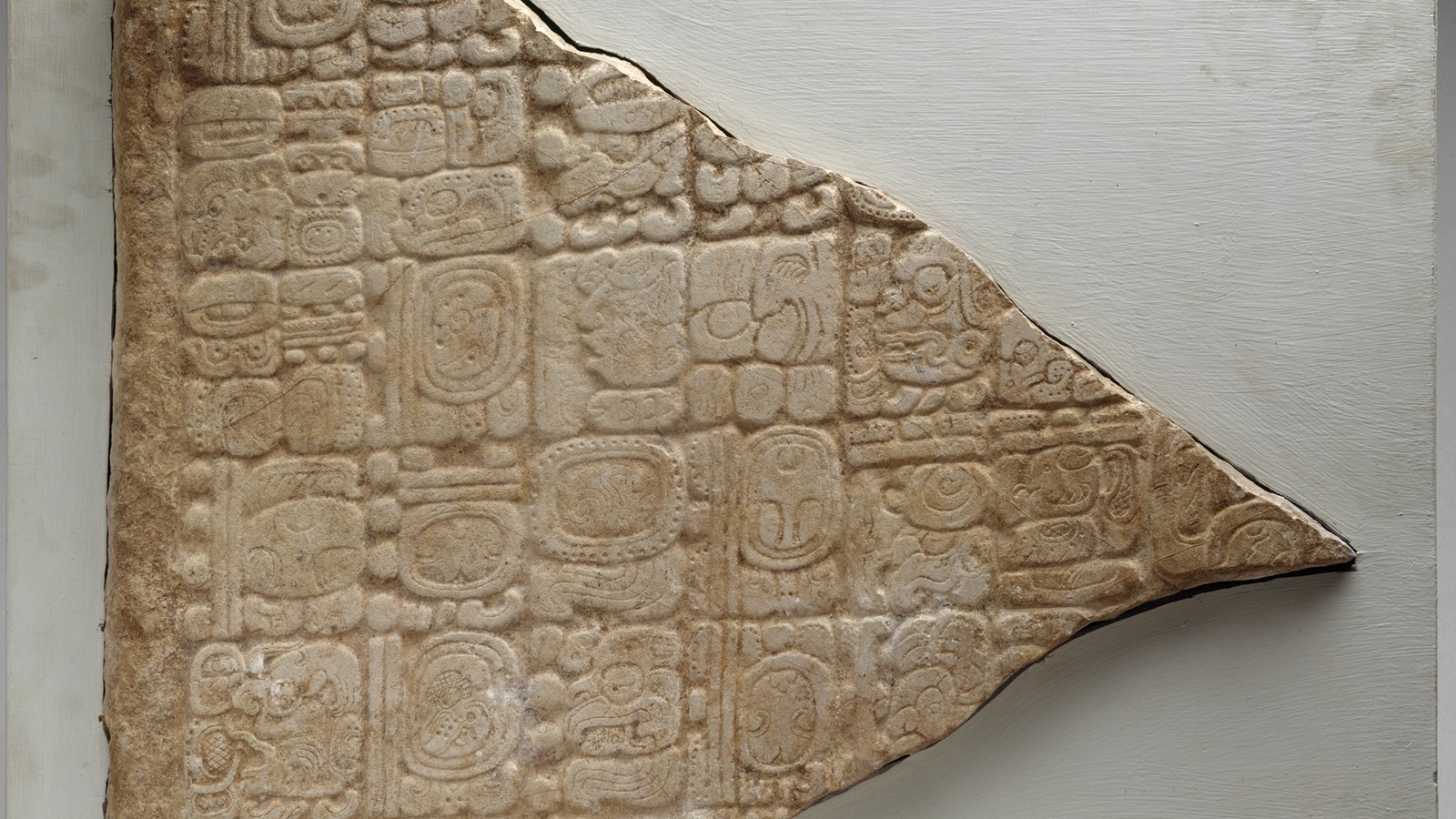
But a deadline doesn’t always need a strong leader to become dangerous. As 21 December 2012 approached, the idea that the Maya calendar predicted the end of the world spread quickly across the internet, television, books and social media. The date simply marked the end of a long 5,125-year cycle in the Maya calendar. Experts repeatedly explained that the ancient Maya never spoke of it as an apocalypse. It was more like turning the page in a cosmic book. Still, the story took on a life of its own.
France’s agency for monitoring cults, Miviludes, publicly warned that the prophecy could push vulnerable people toward suicide or other extreme acts. A NASA scientist David Morrison said he was receiving a steady stream of worried and sometimes suicidal messages from young people who truly believed the world was about to end. Some asked if they should stockpile food or take more drastic steps. In the end, nothing catastrophic happened on that day. Yet the episode showed something important: even without a single charismatic leader, a powerful story about the end of the world, amplified by the internet, could still create real fear and self-destructive thoughts.
What happened around 2012 reveals a pattern that also appears in cases like Shakahola. Apocalyptic dates act like psychological accelerators. They shrink time, raise the pressure and make extreme sacrifices feel reasonable inside the group’s own logic. Once a leader then gives a concrete order (to fast to death, drink poison, or seal a building), much of the mental preparation has already been done. In Mackenzie’s case the expected date was August 2023. The mechanism, however, was strikingly similar to the widespread anxiety that surrounded the Maya calendar a few years earlier.
No Doctors, No School
Dependence closes the trap. Kenyan investigators said Mackenzie used his position as a religious leader to convince followers to stop eating, reject medical treatment and pull their children out of school. Once someone has left their job, abandoned education and cut themselves off from the health system, there is almost nowhere left to turn.
Children taken out of school lose contact with the outside world and with other sources of information. Adults who refuse medical care, for themselves or their children, create constant crises that only deepen their isolation from everyone outside the group.
These are the same methods often seen in investment frauds: cut people off from anyone who might ask difficult questions, give them a deadline, and make them completely dependent on one source of truth. The difference is the price. A scam victim loses money. A cult member can lose their life.
Open-source information can track this slow withdrawal. Sudden stops in school attendance, jobs that end without explanation, complaints from relatives about children no longer going to school, local reports of families refusing medical help: all of these create a visible timeline of isolation.
Brainwashing on Trial
Whether any of this should be called “brainwashing” remains disputed. In 1990, a US federal court in the case of United States v. Fishman refused to allow expert testimony on “thought reform” in religious groups. The court ruled that such theories were not widely accepted by scientists, noting that the American Psychological Association had already rejected a report on the subject in 1988.
Influence is real, but it does not work like a simple switch that can be flipped on or off. Survivors often describe a slow wearing-down of their independence through isolation, lack of sleep, control of information and emotional pressure. Researchers can document these methods and show how they affect thinking and decision-making over time. What they still find difficult is measuring exactly how much came from outside pressure and how much from a person’s own beliefs or vulnerabilities. That uncertainty is where many court cases lose momentum.
Today, forensic psychiatrists and psychologists tend to focus less on the loaded word “brainwashing” and more on clear patterns of coercive control. In the Shakahola case, the prosecution managed to close that gap by combining medical evidence, proof of a strict hierarchy, and material gathered from open sources.
The Empty Dock
The first obstacle is often that there is no one left to try. Jones died with his followers. The founders of the Order of the Solar Temple were found among the dead in Switzerland in 1994. Marshall Applewhite died with the members of Heaven’s Gate. Twenty years after Kanungu, the whereabouts of the Ugandan movement’s leaders were still unknown. When the principal actors are dead or missing, the legal system is left with secondary figures whose roles may be harder to prove beyond reasonable doubt. Mackenzie’s survival and presence in the dock made Shakahola unusual.
Evidence in Ashes
When the dead are many and the scene is remote, evidence disappears quickly. After Jonestown, US military pathologists autopsied only seven bodies, and the remains had been embalmed before toxicology tests. Guyana’s medical examiner reported marks suggesting that a significant share of the bodies he examined had been injected, although his figures varied and his specimens were later lost.
Seventy-four members of the Order of the Solar Temple died in Switzerland, Canada and France between 1994 and 1997. Their bodies were found burned. Several had been shot or asphyxiated and many drugged. In Kanungu more than 500 bodies were found in the burned church. The toll rose as mass graves were uncovered elsewhere. What first looked like a mass suicide soon appeared to be organised murder. In Shakahola, 429 bodies were exhumed: some victims have never been identified. Mass graves, fire and advanced decomposition destroy soft-tissue evidence of restraint, injection sites or defensive injuries. When physical evidence is degraded, open-source material (archived sermons, recorded broadcasts, financial trails and contemporaneous complaints) often becomes the most durable record.
The Consent Defence
The deepest problem is legal. Children cannot consent to their own deaths, and children make up a large share of the dead. One analysis of the Jonestown victims counted 279 people aged 17 or younger and at least 162 aged 65 or older, and concluded that murder far outweighed suicide. In Shakahola the overwhelming majority of identified victims in the murder counts were children under 16. Where minors are involved, the consent defence collapses.
For adults, prosecutors must prove that someone else’s influence, rather than the victim’s own choice, caused the death. That is hard to do. The one person brought to trial in France over the Solar Temple deaths, Michel Tabachnik, was acquitted in 2001; the acquittal was upheld on appeal in 2006. Courts demand evidence of coercion that meets the criminal standard. Mere persuasion, however intense, is often insufficient.
Some states have tried to write influence into law. In May 2024 France created a new offence of placing or keeping a person in a state of psychological or physical subjection. In Kenya, the Senate committee called on parliament to pass a bill regulating religious organisations. The Shakahola judgment shows that existing murder statutes can still reach organised group deaths when the evidence of hierarchy, isolation and enforced deprivation is strong enough.
Warnings on Record and the Role of OSINT
In several cases the warning signs were on record long before the deaths. Kenyan police had logged complaints about Mackenzie’s preaching since 2017. That year he was charged and acquitted of radicalisation. In 2019 he was accused in connection with the deaths of two children who had died of hunger and suffocation, and was released on bail. The Senate committee concluded that the criminal justice system had “failed to prevent” his activities. In Uganda, police had wanted to close the Kanungu compound six months before the fire, but officers who belonged to the movement made that harder.
Much of this record is open. Sermons, broadcasts, court files and recordings become evidence once a case reaches court. The Heaven’s Gate website was still online in 2014, maintained by surviving members. For relatives, the signals are usually more ordinary: someone who stops answering calls, quits a job, takes children out of school or refuses medical care for them.
This is where systematic OSINT becomes decisive. Publicly available material (archived religious broadcasts, social-media activity of the group and its leaders, local news reports of missing persons, court records of earlier charges, satellite imagery of remote compounds, and even the continued online presence of group websites after the deaths) can reconstruct the timeline of control. In the Shakahola case, the combination of earlier police complaints, public sermons and reports from families formed an open-source pattern that later supported the prosecution’s argument that the deaths were not spontaneous acts of free will.
OSINT does not replace forensic pathology or witness testimony. It does, however, preserve the sequence of events when physical evidence is incomplete, and it can demonstrate that the isolation, dependency and escalating demands were observable and documented long before the final crisis.
The Word Suicide
Mackenzie is alive and in custody, which makes Shakahola unusual. Most of the people who led their followers to their deaths never faced a judge. The verdict and the 200-year sentence in Mombasa do not settle every philosophical tension between individual autonomy and organised influence. They do show that a court can look past the word “suicide” when the forensic evidence (patterns of trauma, the ages of the victims, the presence of restraint or force, and the systematic isolation that preceded the deaths) points elsewhere, and when the open-source record reveals a sustained system of control.
Forensic science cannot by itself resolve the deeper questions of belief and free will. It can, however, document the physical realities that the consent defence seeks to obscure: the bodies of children, the marks of violence, the medical consequences of prolonged starvation, and the deliberate construction of environments in which exit became nearly impossible. Those realities remain the strongest available counterweight when courts are asked to decide whether death was chosen or imposed.
If you or someone you know is struggling, help is available. Free and confidential helplines in many countries are listed at findahelpline.com.
REFERENCES
Actu-Juridique. (2024). Publication de la loi sur les dérives sectaires. https://www.actu-juridique.fr/breves/droit-penal/publication-de-la-loi-sur-les-derives-sectaires/
Africanews. (2023, October 23). Kenya: Failures of justice allowed the Shakahola massacre. https://www.africanews.com/amp/2023/10/23/kenya-failures-of-justice-allowed-the-shakahola-massacre/
Associated Press. (2026, November 6). The leader of a Kenyan doomsday cult is sentenced to 200 years in prison [As published by KPBS]. https://www.kpbs.org/news/international/2026/11/06/the-leader-of-a-kenyan-doomsday-cult-is-sentenced-to-200-years-in-prison
Capital FM. (2026, October 19). Court convicts all 29 Shakahola accused of murder, sets sentencing for November 6. https://capitalfm.africa/court-convicts-all-29-shakahola-accused-of-murder-sets-sentencing-for-november-6/
CBS News. (2026, October 19). Starvation cult leader found guilty of murder of 190 children, 1 adult in Kenya. https://www.cbsnews.com/news/kenya-starvation-cult-leader-paul-mackenzie-guilty/
Christian Science Monitor. (2000, March 21). Uganda seeks answers in wake of mass cult suicide. https://www.csmonitor.com/layout/set/amphtml/2000/0321/p8s3.html
Cowan, W. (1979, April 24). Report on autopsies to Justice Department. Jonestown & Peoples Temple: A Digital Archive, San Diego State University. https://jonestown.sdsu.edu/?p=94364
Dieckman, J. (2006). Murder vs. suicide: What the numbers show. The Jonestown Report, 8. https://jonestown.sdsu.edu/?p=31969
Doyle, J. (2015, May 29). “The blood was pooled, the skulls were piled”: Maya star wars and a misconstrued doomsday. The Metropolitan Museum of Art. https://www.metmuseum.org/perspectives/tortuguero
Evans, C. L. (2014, April 2). Higher Source: The immortal web design of the suicide cult “Heaven’s Gate”. Vice. https://www.vice.com/en/article/heavens-gate-web-designers-higher-source-suicide-cult/
History.com Editors. (2010, February 9). Heaven’s Gate cult members found dead. History. https://history.com/this-day-in-history/heavens-gate-cult-members-found-dead
Jonestown & Peoples Temple: A Digital Archive. (n.d.-a). What are White Nights? San Diego State University. https://jonestown.sdsu.edu/?p=35371
Jonestown & Peoples Temple: A Digital Archive. (n.d.-b). What was the disposition of Jim Jones’ body? San Diego State University. https://jonestown.sdsu.edu/?p=35334
Makong, B. (2026, November 6). Kenya: Paul Mackenzie sentenced to 200 years in prison over Shakahola deaths. Capital FM [As published by AllAfrica]. https://allafrica.com/stories/202611060352.html
Muriuki, B. (2026, November 6). Paul Mackenzie jailed for 200 years over Shakahola massacre. Citizen Digital. https://citizen.digital/article/controversial-preacher-paul-mackenzie-sentenced-to-200-years-in-prison-n393446
National Geographic. (2011, December 20). End of world in 2012? Maya “doomsday” calendar explained. https://www.nationalgeographic.com/science/article/111220-end-of-world-2012-maya-calendar-explained-ancient-science
Pappas, S. (2012, November 28). 2012 Mayan apocalypse rumors have dark side, NASA warns. Space.com. https://www.space.com/18678-2012-mayan-apocalypse-fears-nasa.html
PBS. (n.d.). November 18, 1978. American Experience. https://www.pbs.org/wgbh/americanexperience/features/jonestown-nov-18-1978/
Princewill, N. (2026, November 6). Kenyan cult leader sentenced to 200 years in prison over the deaths of 190 children. CNN. https://www.cnn.com/2026/11/06/africa/kenyan-cult-leader-sentenced-intl
Probert, R. (2001, April 17). Solar Temple trial raises hopes of new leads. Swissinfo. https://www.swissinfo.ch/eng/solar-temple-trial-raises-hopes-of-new-leads/1990644
Swissinfo. (2006, December 20). Swiss conductor acquitted of sect killings. https://www.swissinfo.ch/eng/swiss-conductor-acquitted-of-sect-killings/5637928
The Local. (2011, June 16). French hamlet sanctuary for “end of world” in 2012. https://www.thelocal.fr/20110616/345
The Star. (2020, March 21). Uganda doomsday massacre: No justice, lessons 20 years later. https://www.the-star.co.ke/news/2020-03-21-uganda-dooms-day-massacre-no-justice-lessons-20-years-later
United States v. Fishman, 743 F. Supp. 713 (N.D. Cal. 1990). https://law.justia.com/cases/federal/district-courts/FSupp/743/713/2593631/